Garfield Park in Chicago in Cook County, Illinois — The American Midwest (Great Lakes)
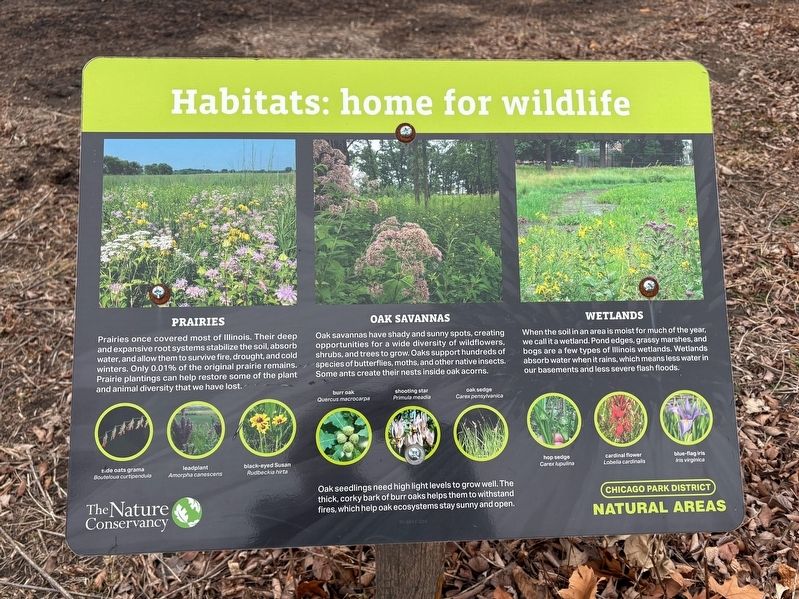
Habitats: Home for Wildlife
Photographed by Sean P. Flynn, February 5, 2025
1. Habitats: Home for Wildlife Marker
Oak seedlings need high light levels to grow well. The thick, corky bark of burr oaks helps them to withstand fires, which help oak ecosystems stay sunny and open.
Erected by hicago Park District; The Nature Conservancy.
Topics. This historical marker is listed
this page online
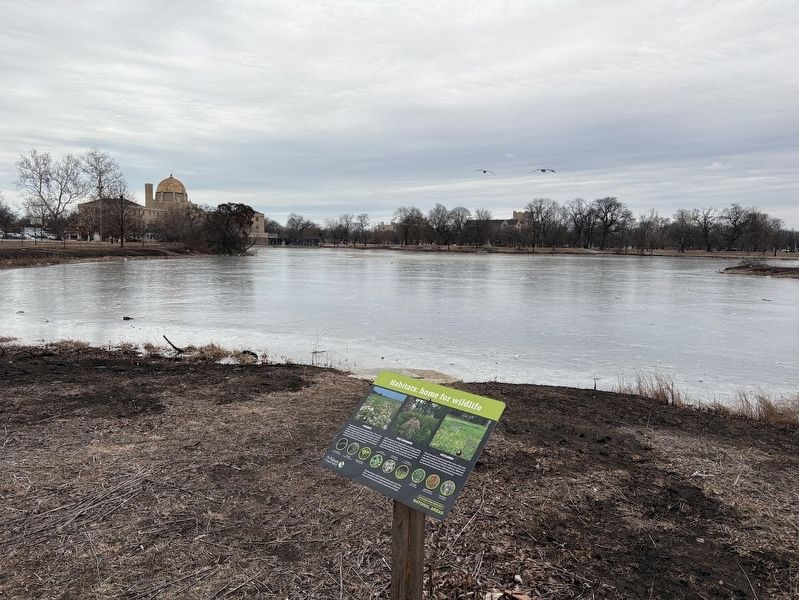
Location. 41° 53.043′ N, 87° 43.135′ W. Marker is in Chicago, Illinois, in Cook County. It is in Garfield Park. It is on Schraeder Drive 0.1 miles west of Central Park Avenue, on the left when traveling west. The marker is on the north side of the west lagoon at Garfield Park. Touch for map. Marker is in this post office area: Chicago IL 60624, United States of America. Touch for directions.

Regionally, this marker is on Chicago’s West Side. It is also in the American Midwest. Globally, it is in North America, on the Great Lakes, in the Western Hemisphere, in the Western World, and in the Anglosphere. Historically, it finds itself in what was once the Viceroyalty of New France, the territory of the Mississippian Culture, and the Northwest Territory.
Other nearby markers. At least 8 other markers are within walking distance of this marker: Garfield Park (about 600 feet away, measured in a direct line); Garfield Park Natural Area (about 600 feet away); a different marker also named
Photographed by Sean P. Flynn, February 5, 2025
2. Habitats: Home for Wildlife Marker
The Garfield Park Field House is in the background, across the lagoon.
More about this marker. An identical marker can be found east of here, across the street from the park's fieldhouse.
Also see . . . Chicago Park District: Garfield Park Natural Area. (Submitted on February 5, 2025, by Sean P. Flynn of Oak Park, Illinois.)
Photographed by Sean P. Flynn, February 5, 2025
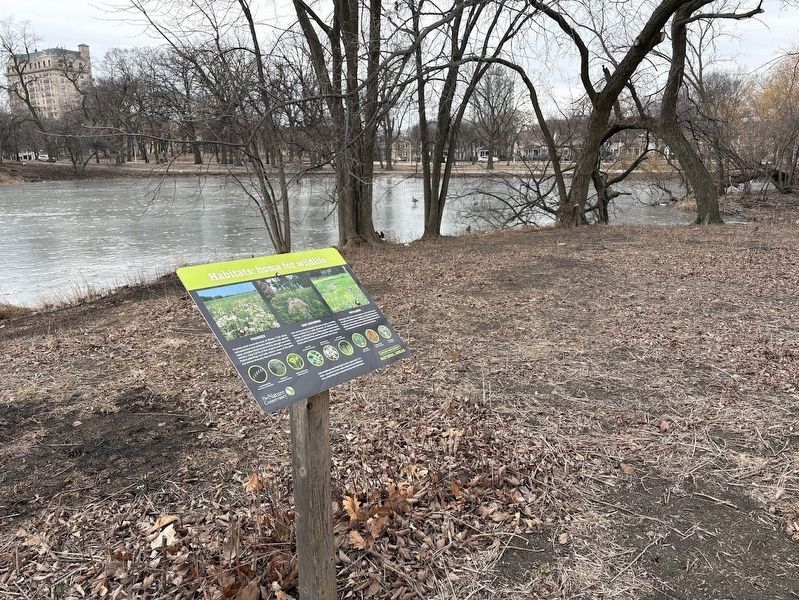
3. Habitats: Home for Wildlife Marker
Some geese can be seen walking on the frozen lake in this west-facing photo. The Midwest Athletic Club Building towers in the background.
Credits. This page was last revised on February 5, 2025. It was originally submitted on February 5, 2025, by Sean P. Flynn of Oak Park, Illinois. This page has been viewed 101 times since then and 18 times this year. Photos: 1, 2, 3. submitted on February 5, 2025, by Sean P. Flynn of Oak Park, Illinois.
