Portsmouth in Scioto County, Ohio — The American Midwest (Great Lakes)
James M. Ashley and the Abolition of Slavery
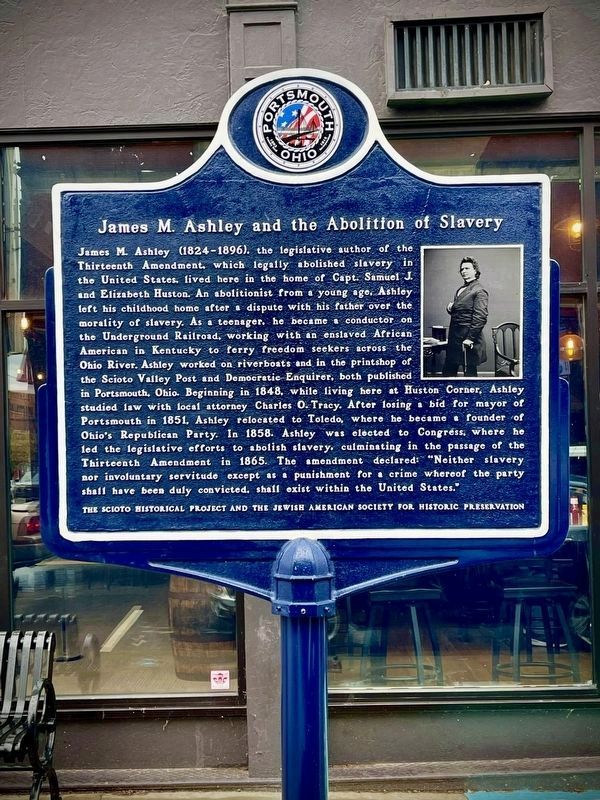
Photographed by Andrew Feight
1. James M. Ashley and the Abolition of Slavery Marker
this page online
Erected 2025 by the Scioto Historical Project and the Jewish American Society for Historic Preservation.
Topics. This historical marker is listed in these topic lists: Abolition & Underground RR • Civil Rights • Government & Politics. A significant historical year for this entry is 1865.
Location. 38° 43.892′ N, 83° 0.061′ W. Marker is in Portsmouth, Ohio, in Scioto County. It is at the intersection of 2nd Street and Court Street, on the right on 2nd Street. Touch for map. Marker is at or near this postal address: 546 2nd Street, Portsmouth OH 45662, United States of America. Touch for directions.

Regionally, this marker is in Southern Ohio Hill Country. It is also in the American Midwest, in the Ohio River Valley, in Appalachia, and specifically in Northern Appalachia. Globally, it is in North America, the Western Hemisphere, the Western World, and the Anglosphere. Historically, it finds itself in what was once the Haudenosaunee (Iroquois) Confederacy, the territory of the Mississippian Culture, and the Northwest Territory.
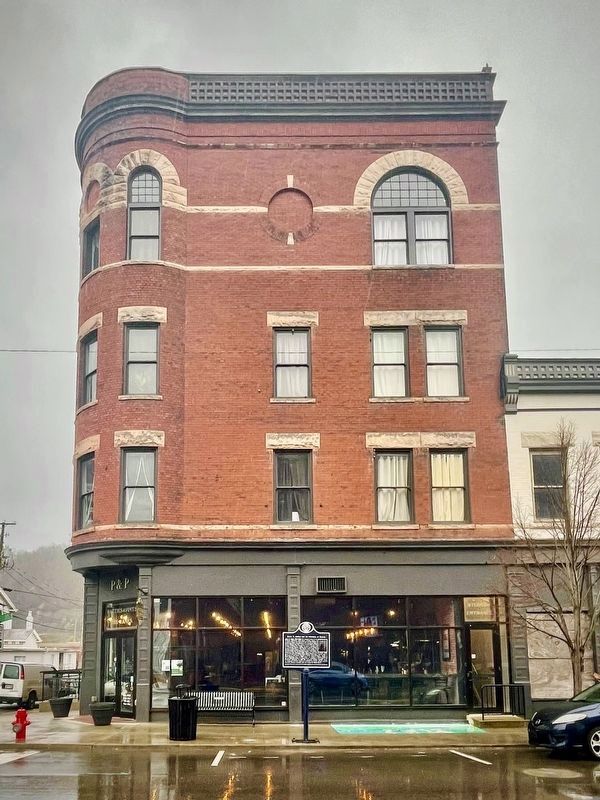
Photographed by Andrew Feight
2. James M. Ashley and the Abolition of Slavery Marker
Other nearby markers. At least 8 other markers are within walking distance of this marker: Flood of 1937 (within shouting distance of this marker); First Presbyterian Church (about 300 feet away, measured in a direct line); Platting of Portsmouth, 1803 / The 1810 House / The 1812 Era / Flood Gate House / Early Boneyfiddle (about 300 feet away); Introduction / The Mound Builders / Early Shawnee Village, 1730 / Celeron de Blainville, 1749 (about 300 feet away); Stagecoach / Hanging Rock Region / Ohio and Erie Canal / Early Industries (about 300 feet away); Alexandria / Alexandria Flood / Stone House / Court Street Gateway (about 300 feet away); Portsmouth and the Ohio River (about 500 feet away); All Saints' Episcopal Church (about 500 feet away). Touch for a list and map of all markers in Portsmouth.
Other markers no longer nearby. Scioto County, Experience Our Heritage (was about 300 feet away but has been replaced with another marker now near it); a different marker also named Scioto County, Experience Our Heritage (was about 300 feet away but has been replaced with another marker now near it); a different marker also named
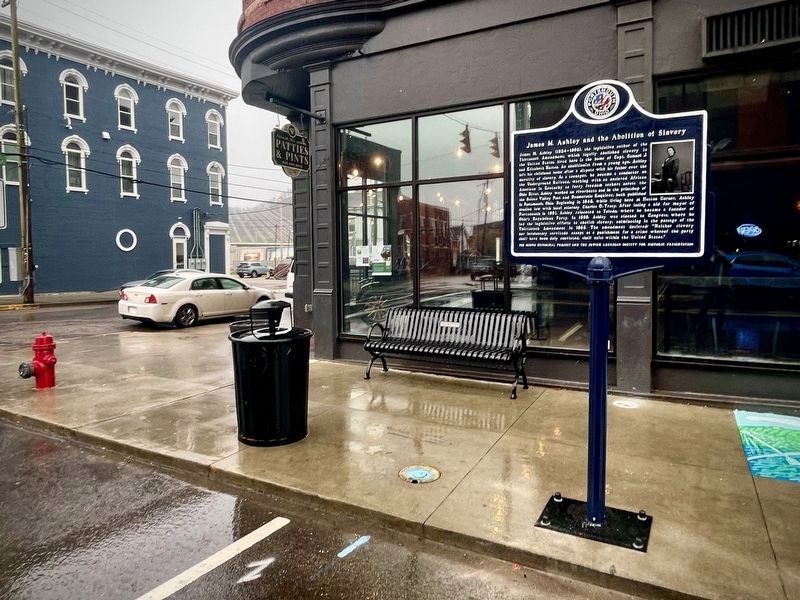
Photographed by Andrew Feight
3. James M. Ashley and the Abolition of Slavery Marker
Regarding James M. Ashley and the Abolition of Slavery. Abraham Lincoln freed the Slaves. He did not end Slavery. The Constitution did not prevent the re-institutionalization of Slavery in the newly readmitted former Slave states after the Civil War. James M. Ashley, a Radical Republican, recognized the problem. He was the moving force behind the 13th amendment which ended Slavery Constitutionally and in turn ended Slavery in the United States forever.
Also see . . .
1. James M. Ashley and the Thirteenth Amendment.
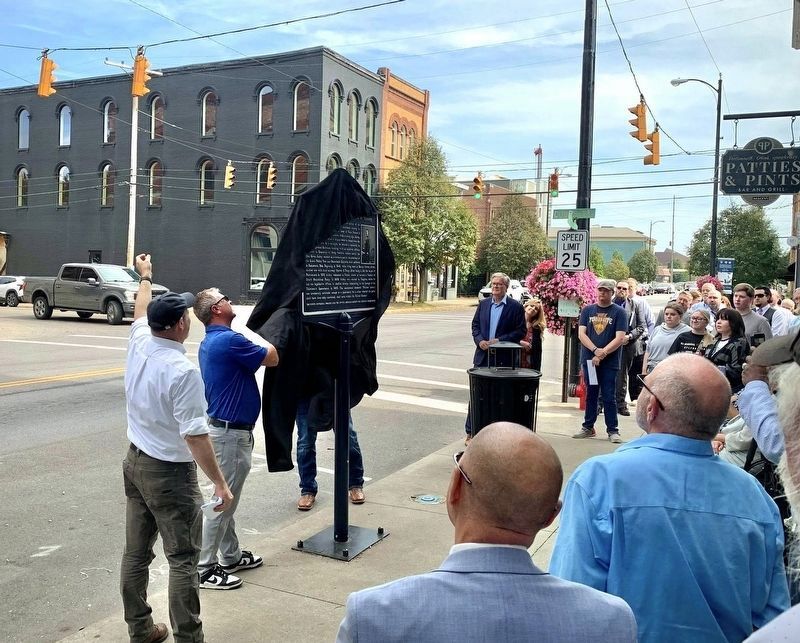
Ashley’s defeat at the polls combined with revelations regarding his involvement with the Underground Railroad, led him to relaunch his political career in northwest Ohio, where he abandoned(Submitted on April 7, 2025, by Jerry Klinger of Boynton Beach, Florida.)the Democratic Party and helped establish the new Republican Party. Ashley was elected to Congress just in time for the outbreak of the Civil War, and, in 1863, he filed legislation in Congress proposing the Thirteenth Amendment to the Constitution, forever abolishing slavery in the United States.Photographed by Andrew Feight4. James M. Ashley and the Abolition of Slavery Marker - unveiling
2. Visitors from Congress: James M. Ashley (1824-1896).
In the early days of the war, Ashley was determined that strong efforts would be needed – including emancipation – for the Union to achieve victory. According to biographer Robert F. Horowitz, Ashley “maintained that under the war powers clause of the Constitution, the government had the right to interfere with slavery in the states and to initiate complete abolition, and that the power should be used against the oligarchic slaveholders. He firmly believed that his views would eventually be accepted by the administration and the American people.”4(Submitted on April 7, 2025, by Jerry Klinger of Boynton Beach, Florida.)
And he clashed with President Lincoln on reconstruction. One day after another irritating confrontation, President Lincoln said to Ashley as he was about to leave the White House: “Ashley, that was a great speech you made out in Ohio the other day.” Irritated, Ashley denied he had made any recent Ohio speech because he hadn’t left the Capital. But the President defused the situation with a joke and said: “Come again Ashley, and we will take up reconstruction again.” Several decades later, Ashley recalled: “By the gentlest of methods this great leader held together all the discordant elements in the Republican party, both in Congress and the country.”
3. James M. Ashley.
Ohioan James Mitchell Ashley rests near a body of water in Toledo’s Woodlawn Cemetery. Ashley was a journalist-turned-politician; a five-term congressman who represented Ohio’s 5th district from 1859 to 1863 and its 10th district from 1863 to 1869. Highlights of Ashley’s time in Washington include his efforts in successfully passing the Thirteenth Amendment to the Constitution, which outlaws slavery and indentured servitude, “except as a punishment for crime whereof the party shall have been duly convicted.” On January 7, 1867, Ashley became the first member of Congress to formally call for an impeachment inquiry against President Andrew Johnson because of his Reconstruction policies(Submitted on April 7, 2025, by Jerry Klinger of Boynton Beach, Florida.)
4. James M. Ashley, ended Slavery in the U.S., Not Lincoln.
It became very clear to Ashley that the Constitution of the United States had a fundamental flaw. Slavery was legal. If the Civil War ended, and the formerly rebellious slave states were readmitted to the Union, they could legally reestablish Slavery. The Constitution needed to be amended, to be fixed. Ashley became the driving force for the 13th Amendment to the Constitution, legally ending slavery forever.(Submitted on April 16, 2025, by Jerry Klinger of Boynton Beach, Florida.)
Credits. This page was last revised on October 1, 2025. It was originally submitted on April 7, 2025, by Jerry Klinger of Boynton Beach, Florida. This page has been viewed 835 times since then and 88 times this year. Photos: 1, 2, 3. submitted on April 7, 2025, by Jerry Klinger of Boynton Beach, Florida. 4. submitted on September 27, 2025. • Bernard Fisher was the editor who published this page.
