Near Nageezi in San Juan County, New Mexico — The American Mountains (Southwest)
Chaco Culture
The Heart of Chaco
Photographed by James Hulse, March 26, 2025
1. Chaco Culture Marker
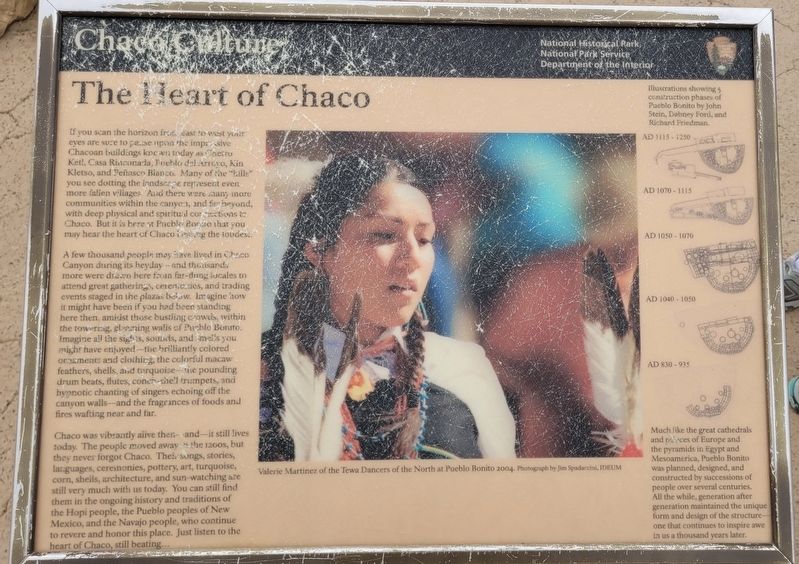
A few thousand people may have lived in Chaco Canyon during its heyday - and thousands more were drawn bere from far-flung locales to attend great gatherings, ceremonies, and trading events staged in the plazas below. Imagine how it might have been if you had been standing here then, amidst those bustling crowds, within the towering, gleaning walls of Pueblo Bonito. Imagine all the sights, sounds, and smells you might have enjoyed- the brilliantly colored ornaments and clothing, the colorful macaw feathers, shells, and turquoise - the pounding drum beats, flutes, conch-shell trumpets, and hypnotic chanting of singers echoing
this page online
Chaco was vibrantly alive then - and - it still lives today. The people moved away in the 1200s, but they never forgot Chaco. Their songs, stories, languages, ceremonies, pottery, art, turquoise, corn, shells, architecture, and sun-watching are still very much with us today. You can still find them in the ongoing history and traditions of the Hopi people, the Pueblo peoples of New Mexico, and the Navajo people, who continue to revere and honor this place. Just listen to the heart of Chaco, still beating...
Much like the great cathedrals and races of Europe and the pyramids in Egypt and Mesoamerica, Pueblo Bonito was planned, designed, and constructed by successions of people over several centuries. All the while, generation after generation maintained the unique form and design of the structure - one that continues to inspire awe in us a thousand years later.
Captions
(Photo #1) Valerie Martinez of the Tewa Dancers of the North at Pueblo Bonito 2004. Photograph by Jim Spadaccini, IDEUM
(Photo #2) Illustrations showing 5 construction phases of Pueblo Bonito by John Stein, Dabney Ford, and Richard Friedman.
Erected by National

Photographed by James Hulse, March 26, 2025
2. The view of the Chaco Culture Marker above Pueblo Benito
Topics. This historical marker is listed in these topic lists: Anthropology & Archaeology • Indigenous Peoples and Communities • Settlements & Settlers. A significant historical year for this entry is 2004.
Location. 36° 3.649′ N, 107° 57.653′ W. Marker is near Nageezi, New Mexico, in San Juan County. It is at the intersection of Navajo Service Route 14 and North Side Loop Road, on the right when traveling west on Navajo Service Route 14. The marker is located at the northeast side of the Pueblo Bonito archeological site. Touch for map. Marker is in this post office area: Nageezi NM 87037, United States of America. Touch for directions.

Regionally, this marker is in the Navajo Nation and in the San Juan Basin. It is also in the American Southwest, in the Mountain West, on the Colorado Plateau, and at the Four Corners. Globally, it is in North America, the Rocky Mountains, the Western Hemisphere, the Western World, and the Anglosphere. Historically, it finds itself in what was once New Spain and also the territory of the Ancestral Puebloans.

Photographed by James Hulse, March 26, 2025
3. The view of the Chaco Culture Marker looking toward the west
Other nearby markers. At least 8 other markers are within 4 miles of this marker, measured as the crow flies: Pueblo Bonito (about 700 feet away, measured in a direct line); Chetro Ketl (approx. 0.2 miles away); Wetherill Cemetery (approx. ¼ mile away); Casa Rinconada Community (approx. 0.4 miles away); Chacoan Stairway (approx. half a mile away); Kin Kletso (approx. 0.6 miles away); Pueblo Alto Trail (approx. 0.6 miles away); Chaco: A World Heritage Site (approx. 3½ miles away). Touch for a list and map of all markers in Nageezi.
Also see . . . The Center of an Ancient World. National Park Service, U.S. Department of the Interior
Explore the monumental structures and breathtaking landscape at Chaco, a thriving regional center for the ancestral Pueblo people from 850 to 1250 CE (Common Era), through guided tours, hiking & biking trails, evening campfire talks, night sky programs, and more. Chaco Canyon is a sacred and deeply personal place for many Indigenous peoples throughout the Southwest. Please visit with respect.(Submitted on April 16, 2025, by James Hulse of Medina, Texas.)

Photographed by James Hulse, March 26, 2025
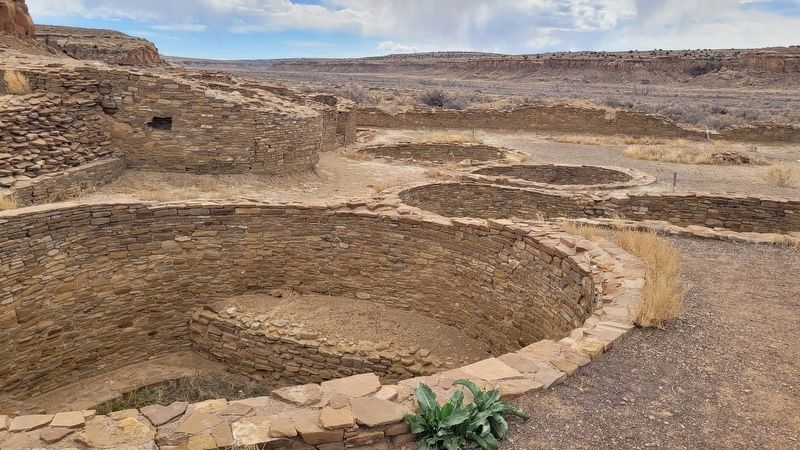
4. Kiva at Pueblo Bonito
Photographed by James Hulse, March 26, 2025
5. Multiple Kivas
Credits. This page was last revised on April 17, 2025. It was originally submitted on April 15, 2025, by James Hulse of Medina, Texas. This page has been viewed 143 times since then and 12 times this year. Photos: 1, 2, 3, 4, 5. submitted on April 16, 2025, by James Hulse of Medina, Texas.
