Downtown Augusta in Richmond County, Georgia — The American South (South Atlantic)
Civil War and Emancipation

Photographed by J.T. Lambrou, April 10, 2025
1. Civil War and Emancipation Marker
With the end of the Civil War in 1865, Union soldiers arrived in Augusta to assist in establishing peace. As slavery's legal and economic defenses collapsed, the Springfield church emerged as a religious, social and political forum for black Augustans. By 1880, Springfield's membership surpassed 1200 congregants. Throughout the Emancipation and Reconstruction eras, Springfield members played leading roles in the formation of the Georgia Equal Rights Association, the establishment of an office of the Freedmen's Bureau, the development of schools, and the publication of the Colored American and Loyal Georgian newspapers. In an article announcing a meeting of freed persons at Springfield, a writer for the Colored American remarked: "We are living in an important era in the history of the world. A large number of our citizens were, but a few months ago since, held in bondage; now, that they are free men they are entitled to all the rights of citizenship. How to secure these rights is the important question." (Colored American, December 30, 1865)
In the aftermath of the Civil War, African Americans in Augusta and around
this page online
Freedmen's Convention.
To the friends of equal justice in Georgia
You are invited to send Delegates to a Convention to be held is the city of Augusta, on Wednesday, the 10th day of January next.
Believing that the time has come when we should consult together, and that important questions demand our immediate attention. We feel that it is important that the friends from every part of the State meet, and carefully consider the present state of affairs.
We are living in an important era in the history of the world. A large number of our citizens were, but a few months since, held in bondage: now, that, they are freemen they are entitled to all the rights of citizenship. How to secure these rights in the important
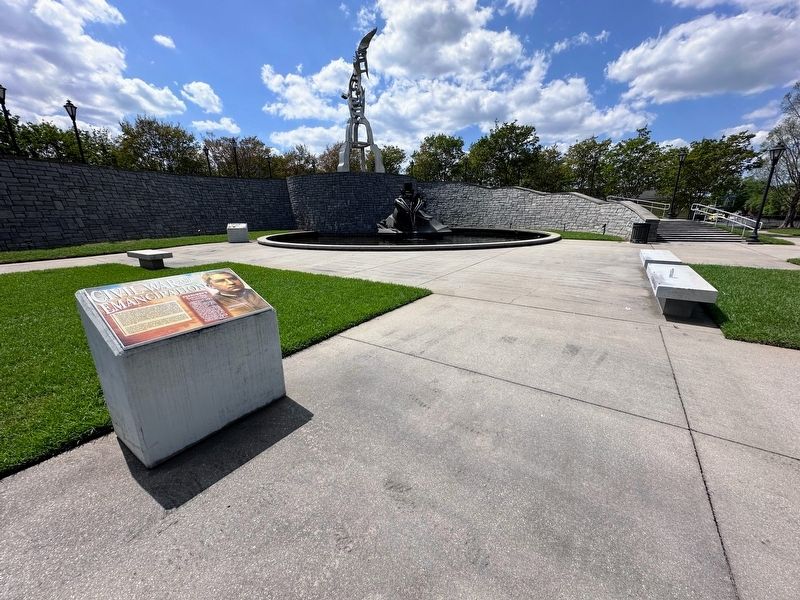
Photographed by J.T. Lambrou, April 10, 2025
2. Civil War and Emancipation Marker
Counties that have large cities in them are invited to send five delegates, and those that have small towns are invited to send three, by the request of
Many Citizens
(caption) Image of Henry McNeal Turner, one of the founders of the Equal Rights Convention that began at Springfield and set the stage for the Republican Party in Georgia.
Courtesy of the New York Public Library Date: 1904
Topics. This historical marker is listed in these topic lists: African Americans • Civil Rights • War, US Civil. A significant historical year for this entry is 1865.
Location. 33° 28.746′ N, 81° 58.355′ W. Marker is in Augusta, Georgia, in Richmond County. It is in Downtown Augusta. It can be reached from the intersection of Reynolds Street and 12th Street, on the right when traveling east. Located in Springfield Village Park. Touch for map. Marker is at or near this postal address: 1211 Jones
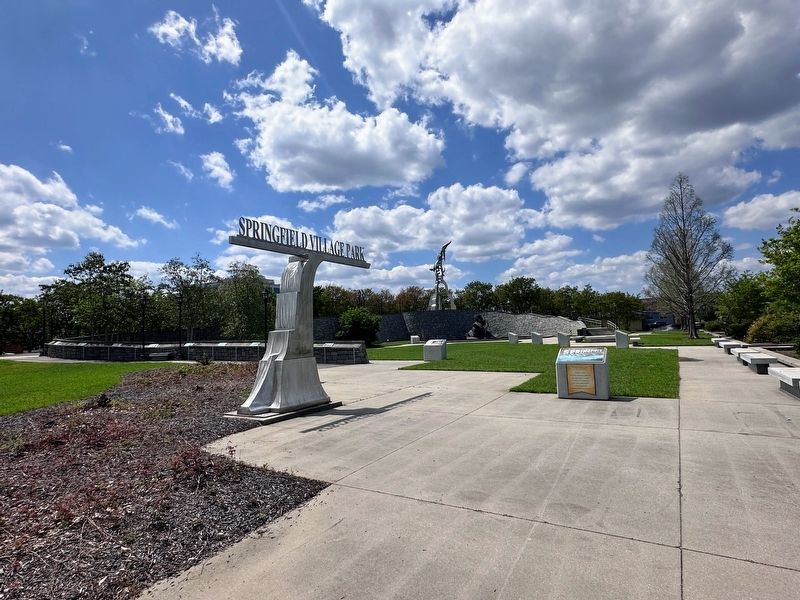
Photographed by J.T. Lambrou, April 10, 2025
3. Location of the marker

Regionally, this marker is in the American South and specifically in the Deep South. Globally, it is in North America, the Western Hemisphere, the Western World, and the Anglosphere. Historically, it finds itself in what was once the territory of the Mississippian Culture, one of the original Thirteen Colonies, one of the Confederate States of America, and the Antebellum South.
Other nearby markers. At least 8 other markers are within walking distance of this marker: Baptism (a few steps from this marker); The Oldest Black Church in America (a few steps from this marker); Education (a few steps from this marker); Transition (a few steps from this marker); A Historical Timeline of Augusta (within shouting distance of this marker); a different marker also named A Historical Timeline of Augusta (within shouting distance of this marker); a different marker also named A Historical Timeline of Augusta (within shouting distance of this marker); a different marker also named A Historical Timeline of Augusta (within shouting distance of this marker). Touch for a list and map
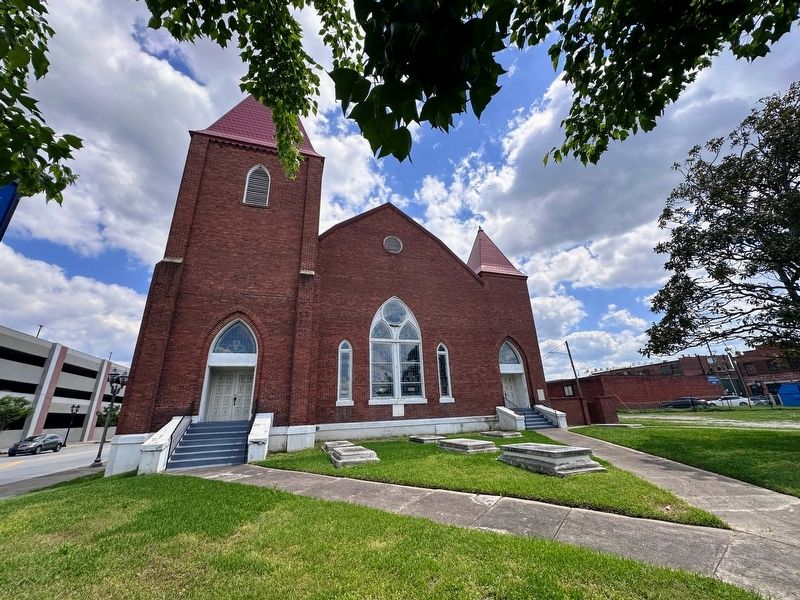
Photographed by J.T. Lambrou, April 10, 2025
4. Springfield Baptist Church
Located across the street from the marker, this church was the site of the convention.
Credits. This page was last revised on April 25, 2025. It was originally submitted on April 24, 2025, by J.T. Lambrou of New Boston, Michigan. This page has been viewed 168 times since then and 29 times this year. Photos: 1, 2, 3, 4. submitted on April 24, 2025, by J.T. Lambrou of New Boston, Michigan. • Bernard Fisher was the editor who published this page.
