Sault Ste. Marie in Algoma District, Ontario — Central Canada (North America)
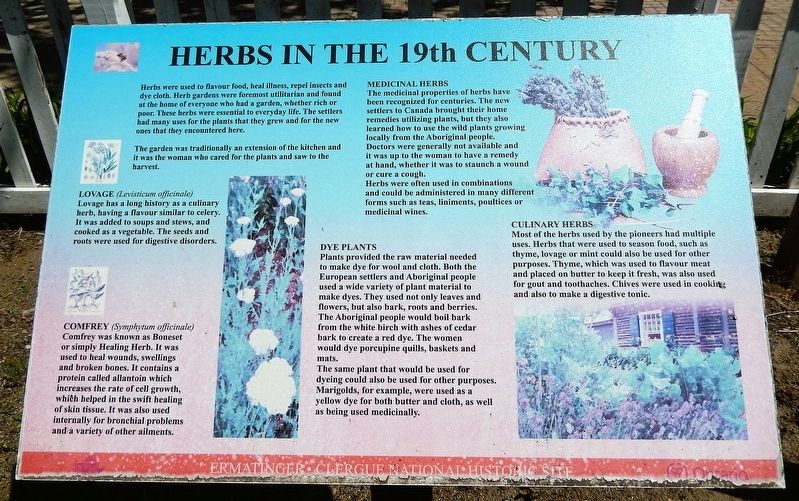
Herbs in the 19th Century
| — | Ermatinger • Clergue National Historic Site | — |
Photographed by Cosmos Mariner, June 11, 2024
1. Herbs in the 19th Century Marker
Herbs were used to flavour food, heal illness, repel insects and dye cloth. Herb gardens were foremost utilitarian and found at the home of everyone who had a garden, whether rich or poor. These herbs were essential to everyday life. The settlers had many uses for the plants that they grew and for the new ones that they encountered here.
The garden was traditionally an extension of the kitchen and it was the woman who cared for the plants and saw to the harvest.
Lovage (Levisticum officinale)
Lovage has a long history as a culinary herb, having a flavour similar to celery. It was added to soups and stews, and cooked as a vegetable. The seeds and roots were used for digestive disorders.
Comfrey (Symphytum officinale)
Comfrey was known as Boneset or simply Healing Herb. It was used to heal wounds, swellings and broken bones. It contains a protein called allantoin which increases the rate of cell growth, which helped in the swift healing of skin tissue. It was also used internally for bronchial problems and a variety of other ailments.
Medicinal Herbs
The medicinal properties of herbs have been recognized for centuries. The new
this page online
Herbs were often used in combinations and could be administered in many different forms such as teas, liniments, poultices or medicinal wines.
Dye Plants
Plants provided the raw material needed to make dye for wool and cloth. Both the European settlers and Aboriginal people used a wide variety of plant material to make dyes. They used not only leaves and flowers, but also bark, roots and berries. The Aboriginal people would boil bark from the white birch with ashes of cedar to create a red dye. The women would dye porcupine quills, baskets and mats.
The same plant that would be used for dyeing could also be used for other purposes. Marigolds, for example, were used as a yellow dye for both butter and cloth, as well as being used medicinally.
Culinary Herbs
Most of the herbs used by the pioneers had multiple uses. Herbs that were used to season
Photographed by Cosmos Mariner, June 11, 2024
2. Herbs in the 19th Century Marker
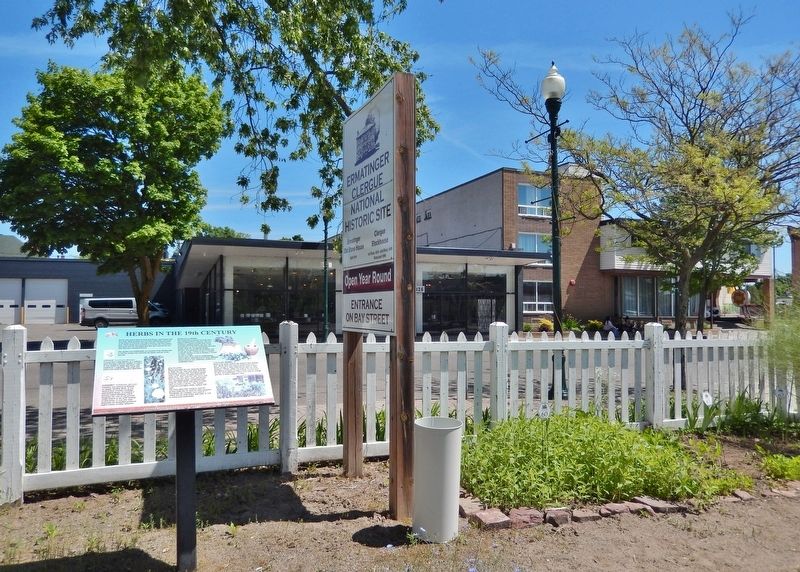
Looking north; Queen Street East is beyond the fence.
Topics. This historical marker is listed in these topic lists: Horticulture & Forestry • Indigenous Peoples and Communities • Science & Medicine • Settlements & Settlers.
Location. 46° 30.387′ N, 84° 19.462′ W. Marker is in Sault Ste. Marie, Ontario, in Algoma District. It can be reached from Bay Street just west of Pim Street, on the left when traveling east. The marker and demonstration garden are located at the north end of the Ermatinger • Clergue National Historic Site grounds. Touch for map. Marker is at or near this postal address: 800 Bay Street, Sault Ste Marie ON P6A 3G4, Canada. Touch for directions.

Regionally, this marker is in the Sault Ste. Marie and Algoma Area and in Northern Ontario. It is also in Central Canada. Globally, it is in North America, in the Great North Woods, on the Great Lakes,

Photographed by Cosmos Mariner, June 11, 2024
3. Demonstration Garden
Looking southeast from the marker.
Other nearby markers. At least 8 other markers are within walking distance of this marker: Clergue Blockhouse (here, next to this marker); Ermatinger Old Stone House (a few steps from this marker); Blossoms and Berries (within shouting distance of this marker); The Three Sisters Garden (within shouting distance of this marker); Sacred Mountain Ash Tree (within shouting distance of this marker); Elderberries and Roses (within shouting distance of this marker); Ermatinger House (about 90 meters away, measured in a direct line); Precious Blood Cathedral (about 150 meters away). Touch for a list and map of all markers in Sault Ste. Marie.
Related markers. Click here for a list of markers that are related to this marker. Ermatinger • Clergue National Historic Site
Credits. This page was last revised on May 13, 2025. It was originally submitted on May 11, 2025, by Cosmos Mariner of Cape Canaveral, Florida. This page has been viewed 140 times since then and 23 times this year. Photos: 1, 2, 3. submitted on May 13, 2025, by Cosmos Mariner of Cape Canaveral, Florida.
