
Ripley in Brown County, Ohio — The American Midwest (Great Lakes)
Liberty Monument
The Men Who Wrought For Liberty and The Men Who Fought For Liberty
Photographed by J. J. Prats, June 11, 2019
1. Liberty Monument
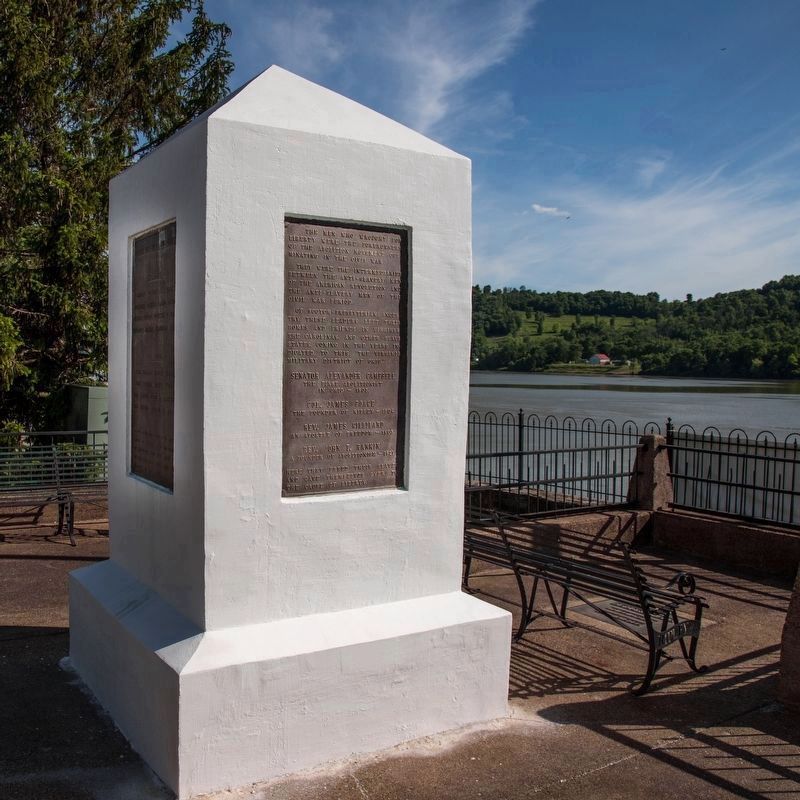
This image shows the west and north faces of the monument. The Kentucky shoreline can be seen in the distance across the Ohio River.
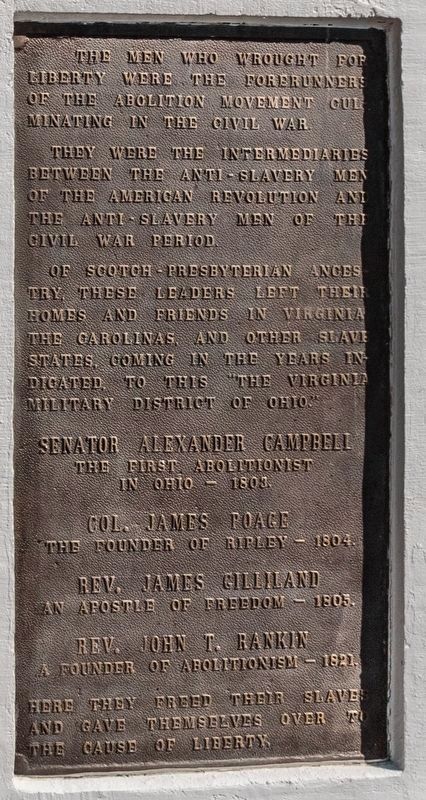
The men who wrought for Liberty were the forerunners of the Abolition Movement culminating in the Civil War. • They were the intermediaries between the anti-slavery men of the American Revolution and the anti-slavery men of the Civil War period. • Of Scotch-Presbyterian ancestry, these leaders left their homes and friends in Virginia, the Carolinas, and other slave states, coming in the years indicated to this “the Virginia Military District of Ohio.” •• Senator Alexander Campbell, the first abolitionist in Ohio — 1803. • Colonel James Poage, the founder of Ripley — 1804. • Rev. James Gilliand, an apostle of freedom — 1805. Rev John T. Rankin, a founder of Abolitionism — 1821. •• Here they freed their slaves and gave themselves over to the Cause of Liberty.
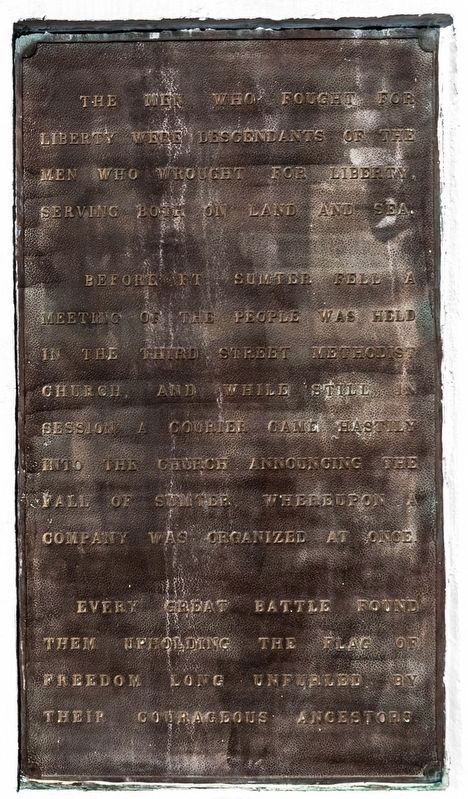
The men who fought for Liberty were descendants of the men who wrought for Liberty, serving both on land and sea. • Before Fort Sumter fell a meeting of the people was held in the Third Street Methodist Church, and while still in session, a courier came hastily into the church announcing the fall of Sumter, whereupon a Company was organized at once. • Every great
this page online
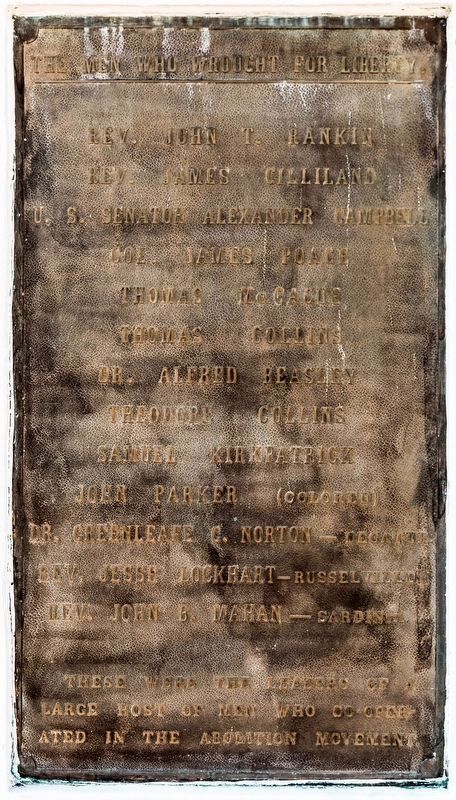
<--east-facing--> The Men Who Wrought for Liberty. Rev. John T. Rankin, Rev. James Gilliland, U.S. Senator Alexander Campbell, Col. James Poage, Thomas McCague, Thomas Collins, Dr. Alfred Beasley, Theodore Collins, Samuel Kirkpatrick, John Parker (colored), Dr. Greenleafe C. Norton — Decatur, Rev. Jesse Lockhart — Russelville, Rev. John B. Mahan — Sardinia. These were the leaders of a large host of men who co-operated in the Abolition Movement.
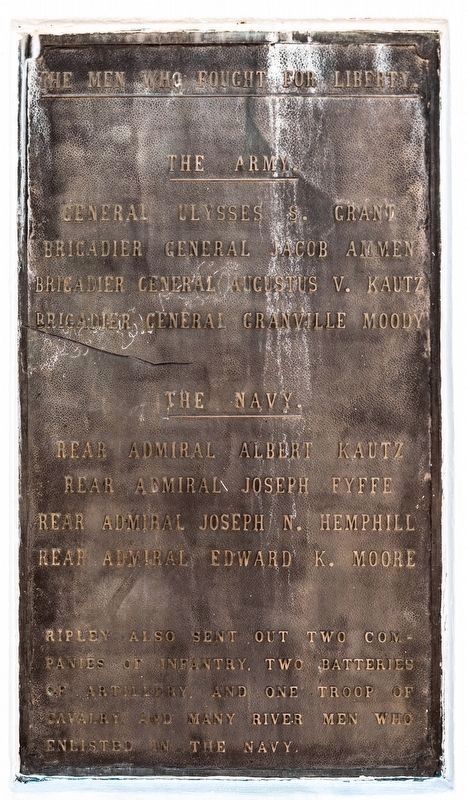
The Men Who Fought for Liberty. The Army: General Ulysses S. Grant, Brigadier General Jacob Ammen, Brigadier General Augustus V. Kautz, Brigadier General Granville Moody. The Navy: Rear Admiral Albert Kautz, Rear Admiral Joseph Fyffe, Rear Admiral Joseph N. Hemphill, Rear Admiral Edward R. Moore. Ripley also sent out two companies of infantry, two batteries of artillery, and one troop of cavalry. And many river men who enlisted in the Navy.
Erected 1912 by Frank M. Gregg.
Topics. This historical marker and monument is listed in these topic lists: Abolition & Underground RR • African Americans
Photographed by J. J. Prats, June 11, 2019
2. Liberty Monument
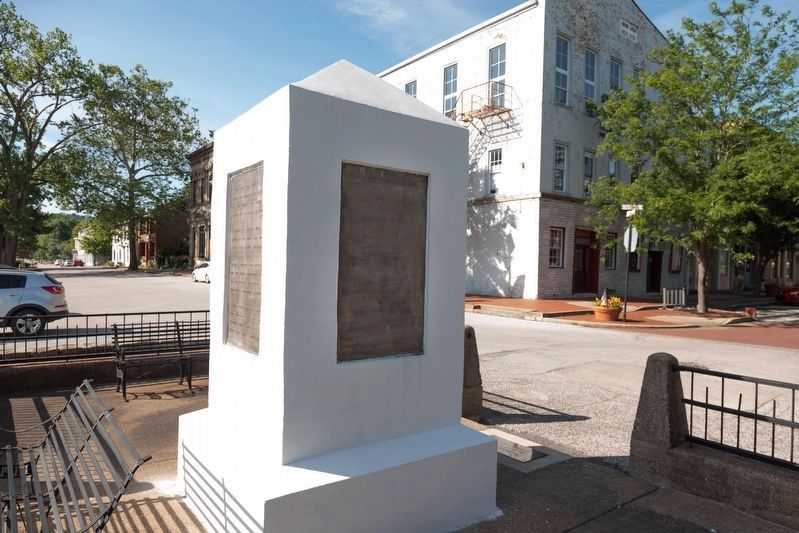
This view shows the south and east faces of the monument and the intersection of Front Street, running left to right, and Main Street, on the right. The building across the street is the Union Lodge, built in 1855.
Location. Marker has been reported missing. It was located near 38° 44.704′ N, 83° 50.801′ W. Marker was in Ripley, Ohio, in Brown County. It was at the intersection of Front Street and Main Street on Front Street. It is at the foot of Main Street at the Ohio River. Touch for map. Marker was at or near this postal address: 2 Main St, Ripley OH 45167, United States of America. Touch for directions.

Regionally, this marker and monument was in Greater Cincinnati and in Southern Ohio Hill Country. It was also in the American Midwest, in the Ohio River Valley, in Appalachia, and specifically in Northern Appalachia. Globally, it was in North America, the Western Hemisphere, the Western World, and the Anglosphere. Historically, it found itself in what was once the Haudenosaunee (Iroquois) Confederacy, the territory of the Mississippian Culture, and the Northwest Territory.
Other nearby markers. At least 8 other markers are within walking distance of this location: Eli Collins House (within shouting distance of this marker); James Poage House
Photographed by J. J. Prats, June 11, 2019
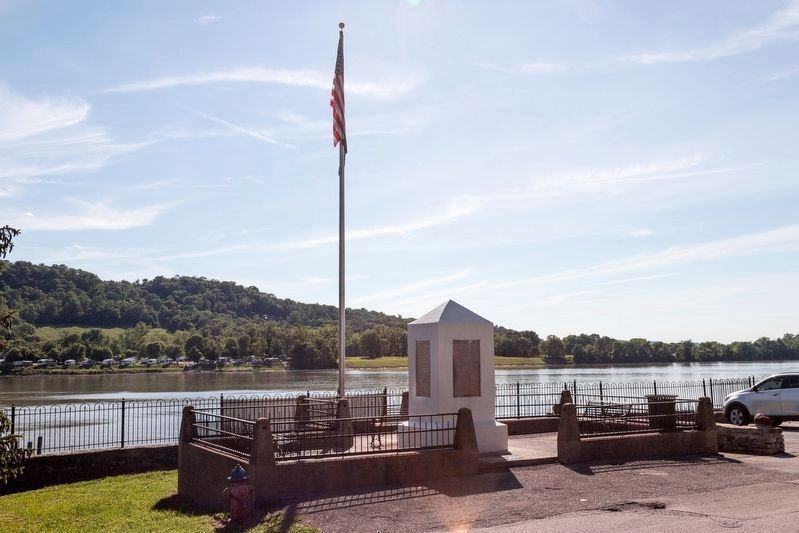
3. Liberty Monument at the Ohio River
Another marker is no longer nearby. Ripley and the Ohio River (was about 300 feet away, measured in a direct line but has been confirmed missing).
More about this marker. The phrase “wrought for” as it is used in this monument can be thought to mean “worked to establish”: “The men who worked to establish Liberty.”
Regarding Liberty Monument. This monument has also been called Freedom Landing.
Also see . . .
1. Wikipedia entry for Virginia Military District of Ohio. “The Virginia Military District was an approximately 4.2 million acre area of land in what is now the state of Ohio that was reserved by Virginia to use as payment in lieu of cash for its veterans of the American Revolutionary War. ... The land was
Photographed by J. J. Prats, June 11, 2019
4. Liberty Monument, west-facing tablet
2. James Poage. “He disliked and was opposed to human slavery. In 1804, he took up one thousand acres of Survey No. 418 in Ohio, along the Ohio River, the center of which contains the town of Ripley, and here he made his home and laid out a town ... He located this tract because he wanted to free his slaves, and to do it, had to remove to a free state.” (Submitted on June 17, 2019.)
3. Rev. James Gilliland. “From 1805 until his death forty years later Rev Gilliland preached at Red Oak against slavery and for the first seventeen years of that time was pre-eminent among abolition leaders in southern Ohio. In 1830 he headed an effort to compose a pastoral letter, together with Samuel Crothers, on the subject of slavery. Eighteen-thousand copies of this letter were printed.” (Submitted on June 17, 2019.)
4. John Rankin, Abolitionist. “Within a few months, however, despite Tennessee’s
Photographed by J. J. Prats, June 11, 2019
5. Liberty Monument, south-facing tablet
This tablet faces the Ohio River and Kentucky
Photographed by J. J. Prats, June 11, 2019
6. Liberty Monument, east-facing tablet
Photographed by J. J. Prats, June 11, 2019
7. Liberty Monument, north-facing tablet
Credits. This page was last revised on May 18, 2025. It was originally submitted on June 17, 2019, by J. J. Prats of Powell, Ohio. This page has been viewed 1,153 times since then and 46 times this year. Last updated on May 17, 2025, by Craig Doda of Napoleon, Ohio. Photos: 1, 2, 3, 4, 5, 6, 7. submitted on June 17, 2019, by J. J. Prats of Powell, Ohio. • Devry Becker Jones was the editor who published this page.
