The Annex in Toronto, Ontario — Central Canada (North America)
Queen Alexandra Gateway
Photographed by Tim Boyd, June 1, 2025
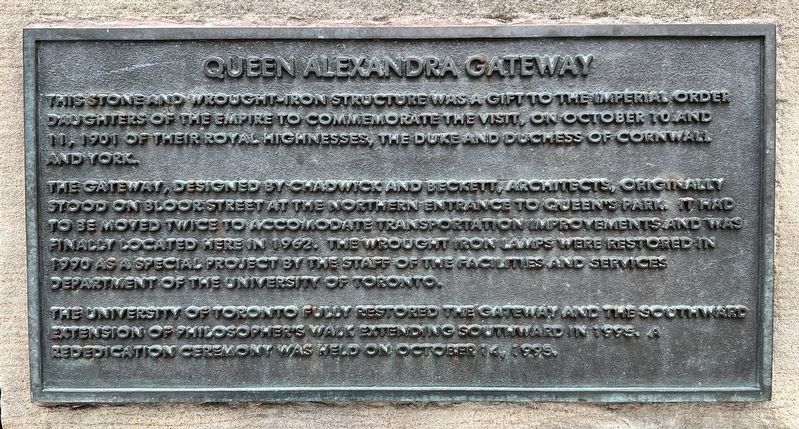
1. Queen Alexandra Gateway Marker
The gateway, designed by Chadwick and Beckett, architects, originally stood on Bloor Street at the northern entrance to Queen's Park. It had to be moved twice to accommodate transportation improvements and was finally located here in 1962. The wrought iron lamps were restored in 1990 as a special project by the staff of the Facilities and Services Department of the University of Toronto.
The University of Toronto fully restored the gateway and the southward extension of philosopher's walk extending southward in 1995. Rededication ceremony was held on October 14, 1995.
Topics. This historical marker is listed in these topic lists: Man-Made Features • Parks & Recreational Areas. A significant historical date for this entry is October 10, 1901.
Location. 43° 40.118′ N, 79° 23.754′ W. Marker is in Toronto, Ontario. It is in The Annex. It is on Bloor Street West 0.1 kilometers west of Queen’s Park, on the right when
this page online

Regionally, this marker is in Greater Toronto and on the Golden Horseshoe. It is also in Central Canada. Globally, it is in North America, on the Great Lakes, in the Western Hemisphere, in the Western World, and in the Anglosphere. Historically, it finds itself in what was once a British colony, the Viceroyalty of New France, the Haudenosaunee (Iroquois) Confederacy, and Rupert’s Land.
Other nearby markers. At least 8 other markers are within walking distance of this marker: John M. Lyle Studio (about 120 meters away, measured in a direct line); Charles Trick Currelly 1876-1957 (about 150 meters away); Taddle Creek (about 150 meters away); Church of the Redeemer (about 150 meters away); The Lillian Massey Laboratory of Household Science (about 180 meters away); The Grey Cup / La Coupe Grey (about 180 meters away); William Arthur Parks 1868-1936 (about 210 meters away); Early meteorology in Canada / Les débuts de la météorologie au Canada (about 240 meters away). Touch for a list and map
Photographed by Tim Boyd, June 1, 2025
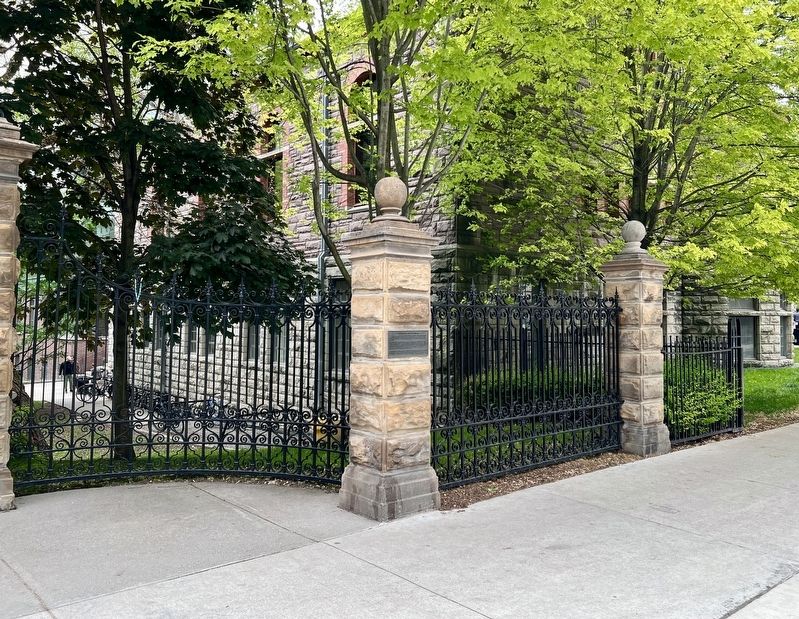
2. Queen Alexandra Gateway Marker
Also see . . . The history of Toronto's mysterious Queen Alexandra Gates (BlogTO).
In 1901, where the Queen Alexandra Gates were erected at Queen's Park and Bloor Street, there remained many undeveloped parcels of land.(Submitted on June 5, 2025, by Tim Boyd of Hamilton, Ontario.)
The small village of Yorkville was a short distance to the northeast of the intersection. Yorkville was amalgamated with the city in 1883, but in 1901, Torontonians still considered it a considerable distance from the downtown as public transportation was slow.
Thus, the Alexandra Gates were also viewed as being located in a slightly remote area, to the northwest of the city.
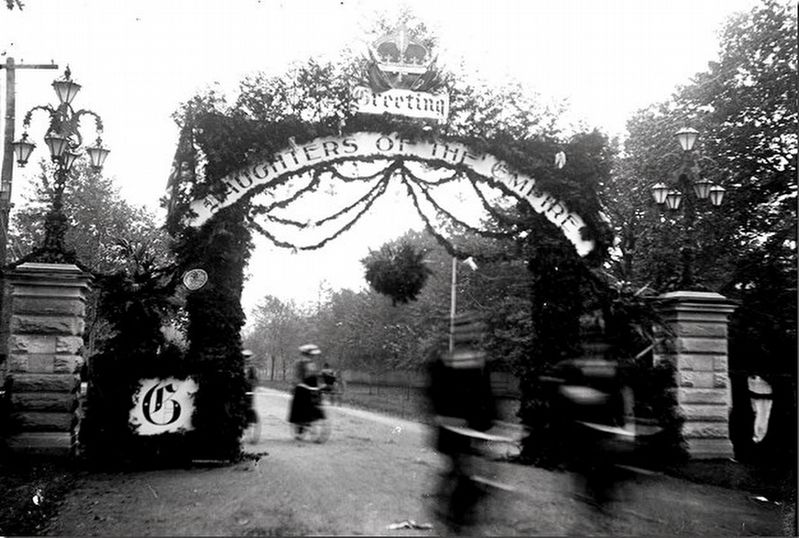
1901
3. Queen Alexandra Gateway in 1901
Decorated for their inauguration by the Duke and Duchess of Cornwall and York
Source: City of Toronto Archives (public domain)
Photographed by Tim Boyd, June 1, 2025
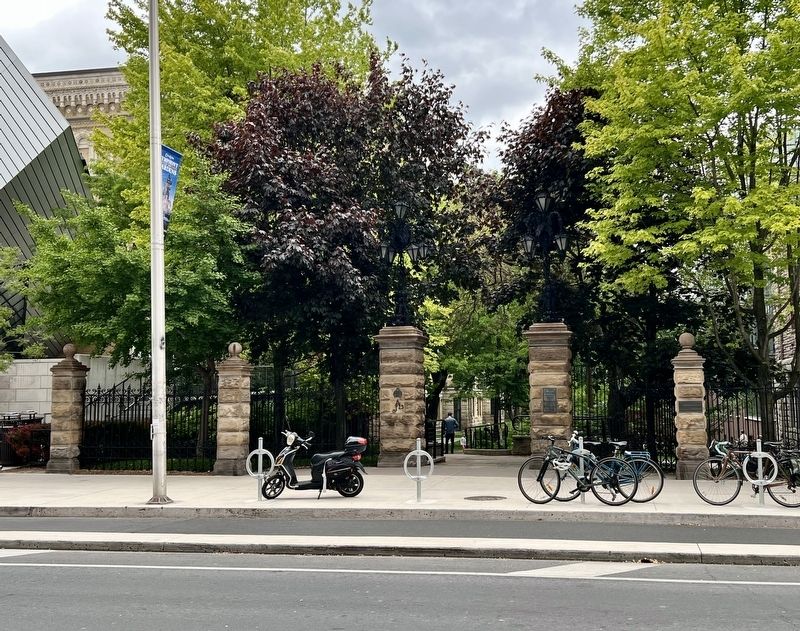
4. Queen Alexandra Gateway in 2025
Credits. This page was last revised on June 8, 2025. It was originally submitted on June 5, 2025, by Tim Boyd of Hamilton, Ontario. This page has been viewed 120 times since then and 16 times this year. Photos: 1, 2, 3, 4. submitted on June 5, 2025, by Tim Boyd of Hamilton, Ontario. • Andrew Ruppenstein was the editor who published this page.
