Troy in Miami County, Ohio — The American Midwest (Great Lakes)
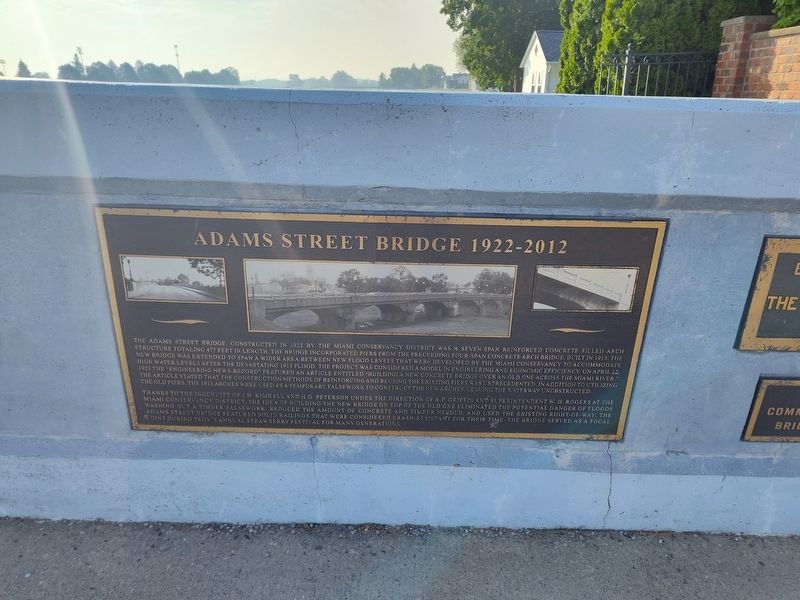
Adams Street Bridge 1922-2012
Photographed by Craig Doda, June 7, 2025
1. Adams Street Bridge 1922-2012 Marker
Thanks to the ingenuity of J.H. Kimball and H.G. Peterson under the direction of A.F. Griffin and superintendent W. D. Rogers at the Miami Conservancy District, the idea of building the new bridge
this page online
Topics. This historical marker is listed in these topic lists: Bridges & Viaducts • Disasters • Notable Events • Waterways & Vessels. A significant historical date for this entry is April 12, 1923.
Location. 40° 2.611′ N, 84° 12.468′ W. Marker is in Troy, Ohio, in Miami County. It is at the intersection of Adams Street and West Water Street, on the right when traveling north on Adams Street. Touch for map. Marker is at or near this postal address: 126 Adams St, Troy OH 45373, United States of America. Touch for directions.

Regionally, this marker is in Ohio’s Dayton Metro, in the Miami Valley, and in the Till Plains. It is also in the American Midwest and in the Corn Belt. Globally, it is in North America, the Western Hemisphere, the Western
Photographed by Craig Doda, June 7, 2025
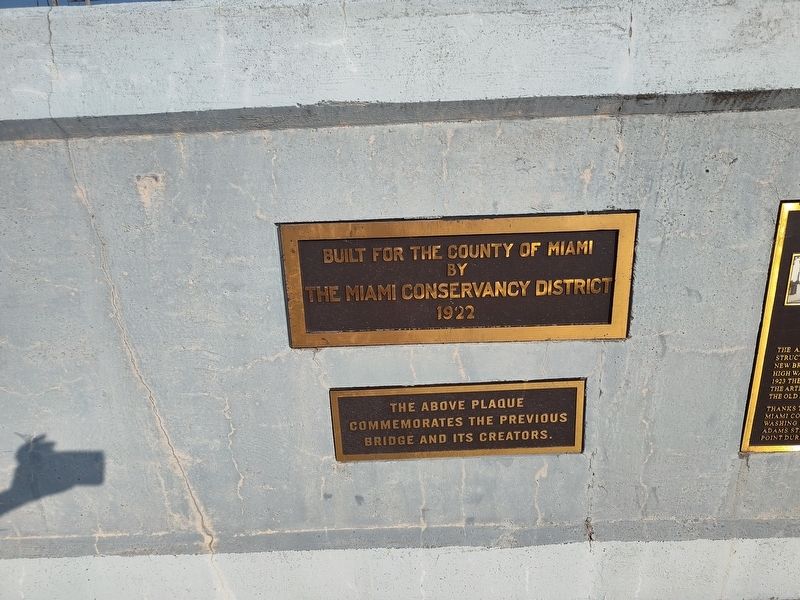
2. Adams Street Bridge 1922-2012 Marker
Other nearby markers. At least 8 other markers are within walking distance of this marker: Historical First Mile of the Great Miami River Recreation Trail (a few steps from this marker); Brukner Park (about 500 feet away, measured in a direct line); You Are On The Buckeye Trail (about 600 feet away); William Norton Edwards (about 600 feet away); Statue Of Agriculture (approx. 0.2 miles away); Troy Airfield Directional Marker (approx. 0.2 miles away); Statue Of Industry (approx. 0.2 miles away); Statue Of Lady Justice (approx. 0.2 miles away). Touch for a list and map of all markers in Troy.
Photographed by Craig Doda, June 7, 2025
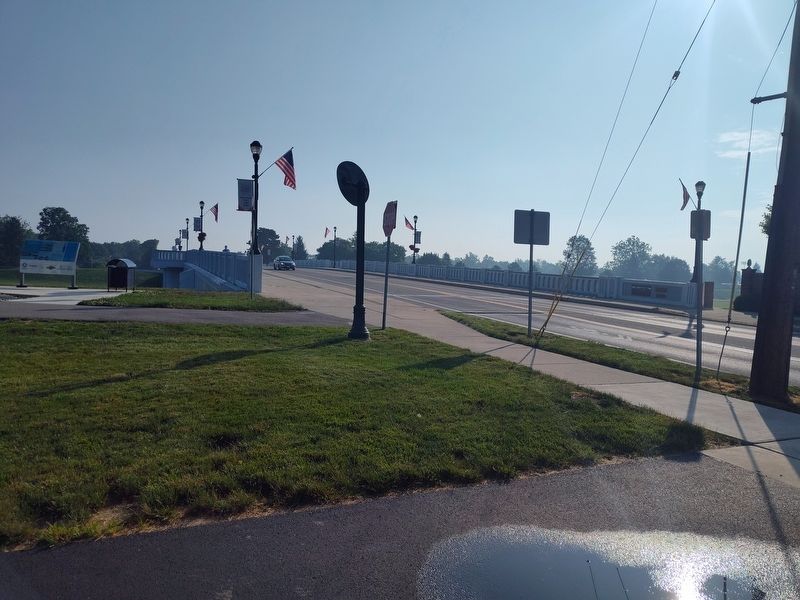
3. Adams Street Bridge 1922-2012 Marker
Photographed by Craig Doda, September 6, 2025
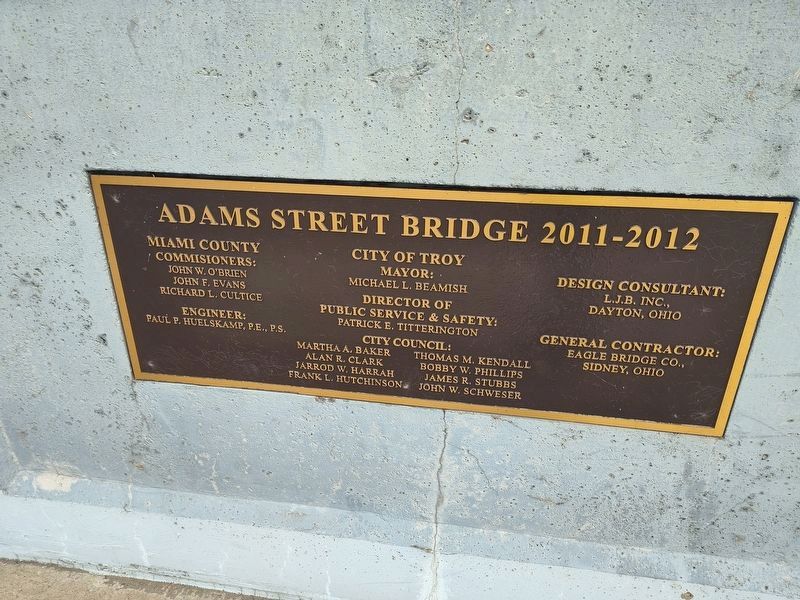
4. Adams Street Bridge 1922-2012 Marker
Credits. This page was last revised on September 12, 2025. It was originally submitted on June 20, 2025, by Craig Doda of Napoleon, Ohio. This page has been viewed 138 times since then and 35 times this year. Photos: 1, 2, 3. submitted on June 20, 2025, by Craig Doda of Napoleon, Ohio. 4. submitted on September 9, 2025, by Craig Doda of Napoleon, Ohio. • Bill Pfingsten was the editor who published this page.
