
Golansville in Caroline County, Virginia — The American South (Mid-Atlantic)
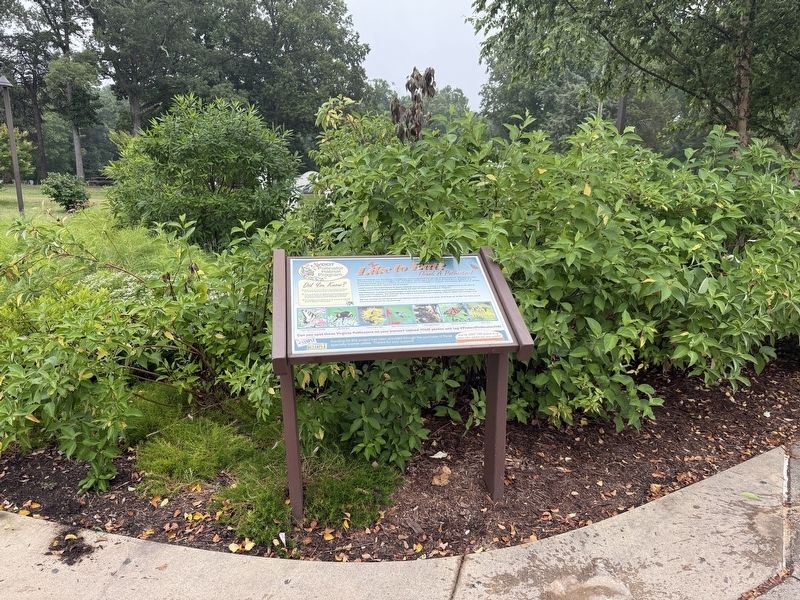
Like to Eat?
Thank A Pollinator!
| — | Virginia Department of Transportation Pollinator Habitat Program | — |

Did You Know?
• One out of every three mouthfuls of food we eat is delivered to us by pollinators.
• Three-fourths of global crop plants grown for food, spices, beverages, condiments and medicines is pollinated by animals.
• Pollination services to U.S. crops is valued at $10 Billion every year.
Natural habitats are becoming increasingly rare because of the spread of development. We have become accustomed to and comfortable with "managed" landscapes that consist of mowed turf grasses and flowering plants that are pretty to us but may not be so valuable for animals and insects. Because of all this, pollinators and other species are in trouble.
VDOT knows the importance of these habitats and species and has a unique opportunity to be able to create connected habitat corridors along the over 57,000 road miles in Virginia.
The Pollinator Habitat Program began in 2014 and our goal is to create naturalized habitats for these important creatures. The habitats also reduce emissions from mowing, help retain stormwater and sequester carbon and nutrients.
We can all help by creating natural habitats where we live and work. And think of all the free time you'll have because you're not mowing!
Erected by Virginia
this page online
Topics. This historical marker is listed in these topic lists: Animals • Environment • Horticulture & Forestry • Roads & Vehicles. A significant historical year for this entry is 2014.
Location. 37° 58.849′ N, 77° 29.516′ W. Marker is in Golansville, Virginia, in Caroline County. It can be reached from Interstate 95 south of Ladysmith Road (Virginia Route 639), on the right when traveling north. Touch for map. Marker is at or near this postal address: 20405 I-95, Ruther Glen VA 22546, United States of America. Touch for directions.

Regionally, this marker is in the Piedmont and in Central Virginia. It is also in the American South, specifically in the Upper South, and on the Eastern Seaboard. Globally, it is in the North Atlantic Region, North America, the Western Hemisphere, the Western World, and the Anglosphere. Historically, it finds itself in what was once the territory of the Mississippian Culture, one of the original Thirteen Colonies, one of the Confederate States of America, and the Antebellum South.
Other nearby markers. At least 8 other markers are within 4 miles

By Devry Becker Jones (CC0), June 15, 2025
3. Nearby nature marker - Why is Native Habitat So Important?
Credits. This page was last revised on June 25, 2025. It was originally submitted on June 25, 2025, by Devry Becker Jones of Washington, District of Columbia. This page has been viewed 106 times since then and 14 times this year. Photos: 1, 2, 3. submitted on June 25, 2025, by Devry Becker Jones of Washington, District of Columbia.
