Dearborn Township near Wolsey in Beadle County, South Dakota — The American Midwest (Upper Plains)
Prairie Plants: More Than Meets the Eye
⎯⎯⎯
Preserving America's Wildlife Heritage
Photographed by Mark Parker, June 28, 2025
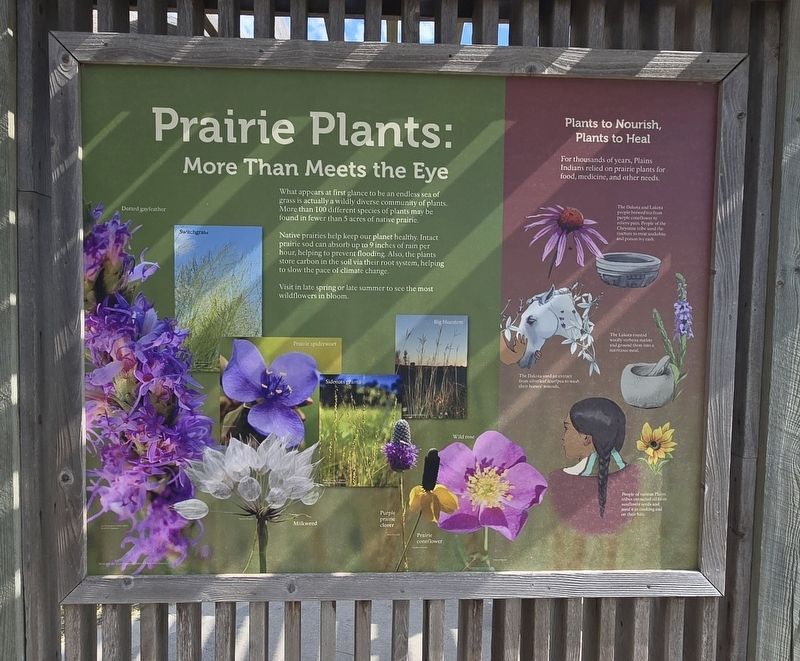
1. Prairie Plants: More Than Meets the Eye side of marker
Prairie Plants: More Than Meets the Eye
What appears at first glance to be an endless sea of grass is actually a wildly diverse community of plants. More than 100 different species of plants may be found in fewer than 5 acres of native prairie.
Native prairies help keep our planet healthy. Intact prairie sod can absorb up to 9 inches of rain per hour, helping to prevent flooding. Also, the plants store carbon in the soil via their root system, helping to slow the pace of climate change.
Visit in late spring or late summer to see the most wildflowers in bloom.
Sidebar
Plants to Nourish, Plants to Heal
For thousands of years, Plains Indians relied on prairie plants for food, medicine, and other needs.
The Dakota and Lakota people brewed tea from purple coneflower to relieve pain. People of the Cheyenne tribe use the tincture to treat snake bite and poison ivy rash.
The Lakota roasted woolly verbena nutlets and ground them into a nutritious meal.
The Dakota used an extract from silverleaf scurfpea to wash their horses' wounds.
People of various Plains tribes extracted oil from sunflower seeds and used it in cooking and on their hair.
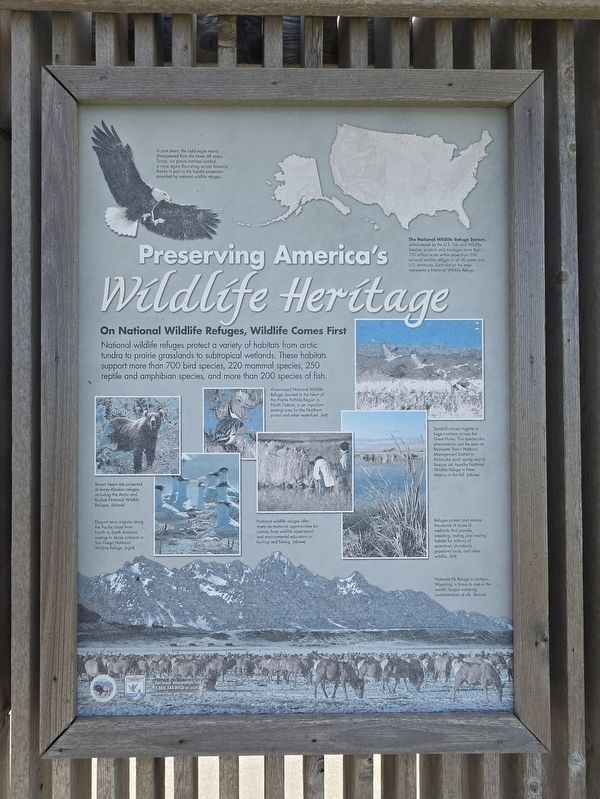
Preserving America's Wildlife Heritage
On National Wildlife Refuges, Wildlife Comes First
National
this page online
Captions
In past years, the bald eagle nearly disappeared from the lower 48 states. Today, our proud national symbol is once again flourishing across america, thanks in part to the habitat protection provided by national wildlife refuges.
The National Wildlife Refuge System, administered by the U.S. Fish and Wildlife Service, protects and managers more than 150 million acres within more than 550 national wildlife refuges in all 50 states and U. S. territories. Each dot on the map represents a National Wildlife Refuge.
Brown bears are protected at many Alaskan refugees, including the Arctic and Kodiak National Wildlife refugees.
Elegant terns migrate along the Pacific coast from North to South America, nesting in dense colonies in San Diego National Wildlife Refuge.
Arrowwood National Wildlife Refuge, located in the heart of the Prairie Pothole Region in North Dakota, is an important nesting area for the Northern pintail and other waterfowl.
National Wildlife refuges offer many recreational opportunities for visitors, from wildlife observation and environmental education to hunting and fishing.
Sandhill cranes migrate in huge numbers across the Great Plains. This spectacular phenomenon can be seen at Rainwater Basin Wetland Management District in Nebraska each spring and at Bosque del Apache National Wildlife Refuge in New Mexico in the fall.
Refuges protect and restore thousands of acres of wetlands that provide breeding, resting, and nesting habitat for millions of waterfowl, shorebirds, grassland birds, and other wildlife.
National Elk Refuge in Jackson, Wyoming, is home to one of the world's largest wintering concentrations of elk.
Erected by Department
Photographed by Mark Parker, June 28, 2025
2. Preserving America's Wildlife Heritage side of marker
Topics. This historical marker is listed in these topic lists: Animals • Environment • Indigenous Peoples and Communities.
Location. 44° 22.26′ N, 98° 23.842′ W. Marker is near Wolsey, South Dakota, in Beadle County. It is in Dearborn Township. It is at the intersection of U.S. 14 and 391st Avenue, on the right when traveling west on U.S. 14. The marker is at a turnoff near the trailhead for Maga Ta-Hohpi Trail. Touch for map. Marker is at or near this postal address: 39100 US Hwy 14, Wolsey SD 57384, United States of America. Touch for directions.

Regionally, this marker is in South Dakota’s Yankton Sioux Tribe, in East River, and specifically in the James River Valley. It is also in the American Midwest, in the Lewis & Clark Corridor, in the Corn Belt, on the prairies, and on the Northern Plains. Globally, it is in North America, the Western Hemisphere, the Western World, and the Anglosphere. Historically, it finds itself in what was once Rupert’s Land and also the Louisiana Purchase.
Other nearby markers. At

Photographed by Mark Parker, June 28, 2025
3. Front side of markers from US 14. Prairie Plants is in the center
The trailhead for Maga Ta-Hohpi is in the background

Photographed by Mark Parker, June 28, 2025
4. Reverse side looking towards US 14 Preserving America's Wildlife is in the middle
Photographed by Mark Parker, June 28, 2025
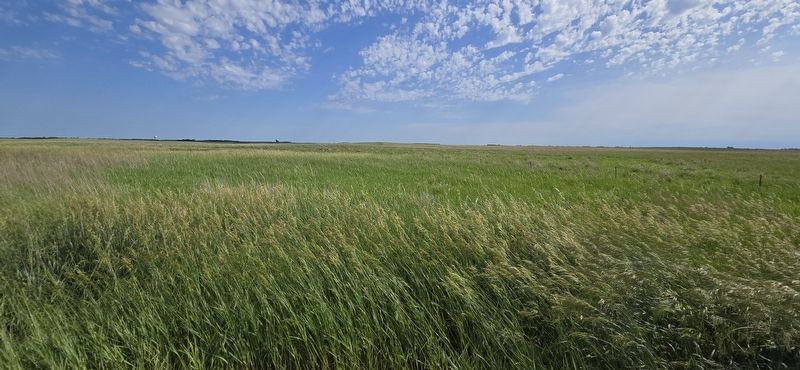
5. Field of Prairie plants near the marker at Maga Ta-Hohpi Trail
Credits. This page was last revised on July 29, 2025. It was originally submitted on July 22, 2025, by Mark Parker of Hickory, North Carolina. This page has been viewed 71 times since then and 13 times this year. Photos: 1, 2, 3, 4, 5. submitted on July 22, 2025, by Mark Parker of Hickory, North Carolina. • J. Makali Bruton was the editor who published this page.
