Near Chama (New Mexico) in Archuleta County, Colorado — The American Mountains (Southwest)
Cumbres Pass
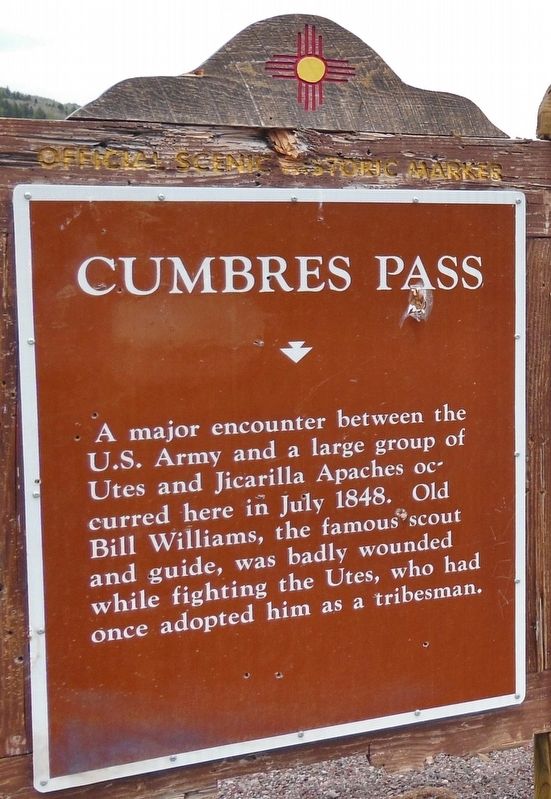
Photographed by Cosmos Mariner, June 12, 2013
1. Cumbres Pass Marker
Erected by New Mexico Historic Preservation Division.
Topics. This historical marker is listed in these topic lists: Indigenous Peoples and Communities • Wars, US Indian. A significant historical month for this entry is July 1848.
Location. 36° 59.632′ N, 106° 29.956′ W. Marker is near Chama (New Mexico), Colorado, in Archuleta County. It is on State Highway 17 3 miles north of County Road 445, on the right when traveling north. Marker is located in a pull-out on the east side of the highway at the New Mexico / Colorado state line. Touch for map. Marker is at or near this postal address: 3957 State Route 17, Chama NM 87520, United States of America. Touch for directions.

Regionally, this marker is on Colorado’s Continental Divide. It is also in the American Mountain West and at the Four Corners. Globally, it is in North America, the Rocky Mountains, the Western
this page online
Other nearby markers. At least 8 other markers are within 5 miles of this marker, measured as the crow flies: Nurturing Forest (approx. 0.6 miles away); Welcome to El Valle de San Luis (approx. 0.6 miles away); Who Owns This Land? (approx. 0.6 miles away); This is Our land (approx. 0.6 miles away); The Historic Operations at Cumbres Pass (approx. 3.3 miles away); a different marker also named Cumbres Pass (approx. 3.3 miles away); Welcome “Caminante” to… (approx. 4.6 miles away); Los Caminos Antiguos (approx. 4.6 miles away).
More about this marker. This is a large, painted metal "billboard-style" style marker mounted in a heavy wooden timber frame.
Also see . . .
1. Jicarilla War. The Jicarilla War began in 1849 and was fought between the Jicarilla Apaches and the United States Army in the New Mexico Territory. Ute warriors also played a significant role in the conflict as they were allied with the Jicarillas. The war started when the Apaches and Utes began raiding against
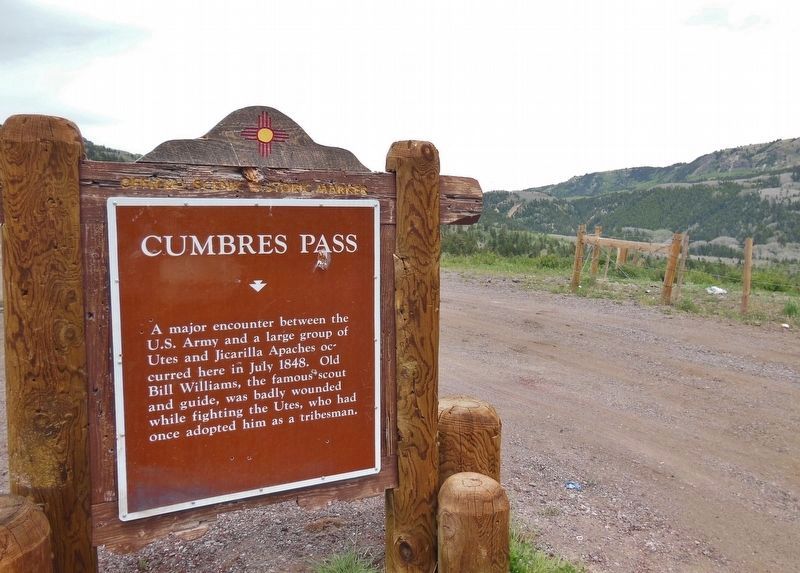
Photographed by Cosmos Mariner, June 12, 2013
2. Cumbres Pass Marker (wide view; State Highway 17 in background)
2. "Old" Bill Williams. Old Bill Williams was one of those rare individuals who can be characterized as a Mountain Man’s Mountain Man. Standing 6 foot 1 inches tall, he was lean and sinewy, possessing unusual strength. He had blue eyes and red hair, and usually wore a full beard. He so excelled in the skills of the trapper’s trade, that he became legendary amongst his own peers. In the spring of 1848 he was reported at the American Fur Company’s Fort Union at the confluence of the Yellowstone and Missouri Rivers. Later in 1848 he briefly formed a loose partnership with Josiah Webb to provide goods and supplies to travelers along the Santa Fe Trail. He then served as a scout and guide with Major W.W. Reynolds in a military assault against a large band of Apache raiders
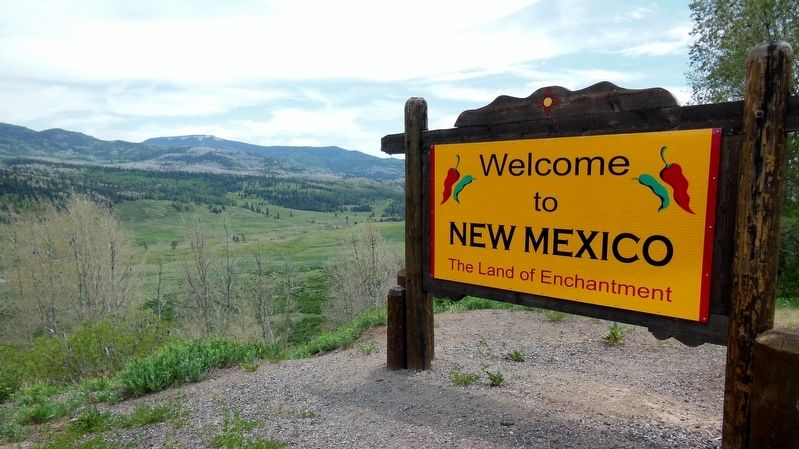
Photographed by Cosmos Mariner, June 12, 2013
3. Welcome to New Mexico (located on State Highway 17, near marker)
Credits. This page was last revised on August 6, 2025. It was originally submitted on October 26, 2018, by Cosmos Mariner of Cape Canaveral, Florida. This page has been viewed 998 times since then and 57 times this year. Last updated on July 30, 2025, by Bill Wingate of Albuquerque, New Mexico. Photos: 1, 2, 3. submitted on October 28, 2018, by Cosmos Mariner of Cape Canaveral, Florida. • Devry Becker Jones was the editor who published this page.
