Jemez Springs in Sandoval County, New Mexico — The American Mountains (Southwest)
Jémez State Monument
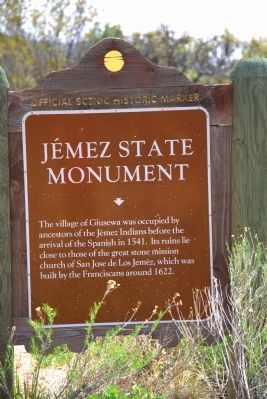
Photographed by J. J. Prats, April 25, 2014
1. Jémez State Monument Marker
Erected by New Mexico Historic Preservation Division.
Topics. This historical marker and monument is listed in these topic lists: Colonial Era • Indigenous Peoples and Communities • Religion & Religious Structures • Settlements & Settlers. A significant historical year for this entry is 1541.
Location. 35° 46.947′ N, 106° 41.241′ W. Marker is in Jemez Springs, New Mexico, in Sandoval County. It is on State Road 4 just north of Jemez Springs, on the left when traveling east. State Highway 4 is an east-west route, runs mostly north-south through Jemez Springs. The marker is just north of the entrance to the Jémez State Monument. Touch for map. Marker is in this post office area: Jemez Springs NM 87025, United States of America. Touch for directions.

Regionally, this marker and monument is in the San Juan Basin and in Greater Albuquerque. It is also in the American Southwest and at the Four Corners. Globally, it is in North America, the Western Hemisphere, the Western World, and the Anglosphere. Historically, it finds itself in what was once New Spain, the territory of the Ancestral Puebloans, and the Republic of Texas.
Other nearby markers. At least 2 other markers are within 10 miles of this marker, measured as the crow flies: Evelyn M. Vigil, Phan-Un-Pha-Kee (Young Doe) 1921–1995 (approx. 9.8 miles away); Pueblo of Jémez (approx. 9.8 miles away).
More about this marker. The site the marker refers to has had a name change. It is now the Jemez Historic Site.
Regarding Jémez State Monument. There is a $3 charge per person
this page online
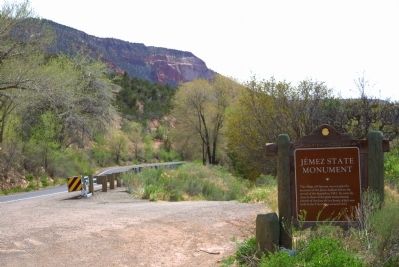
Photographed by J. J. Prats, April 25, 2014
2. Jémez State Monument Marker
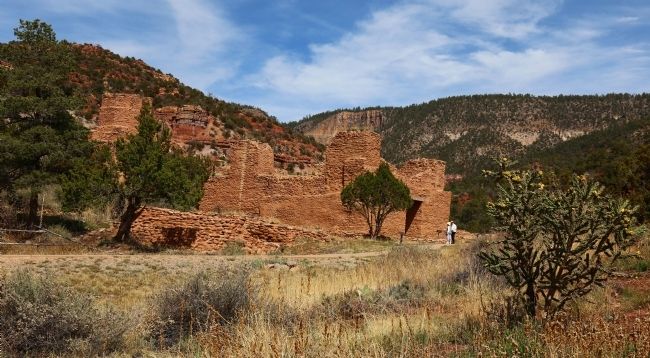
Photographed by J. J. Prats, April 25, 2014
3. Ruins of San José de los Jémez Church
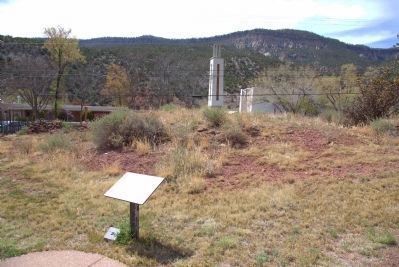
Photographed by J. J. Prats, April 25, 2014
4. Remains of the Village of Guisewa
The towers of the present-day Mary Mother of Priests Catholic Church are in the distance. The informational panel reads “Guisewa was a thriving community for at least 200 years prior to the arrival of the Spanish. It was one of the largest and most impressive pueblos in the Jemez area. The pueblo is known to have extended under the present highway and beyond to the site of Villa Coeli. All that is left of the pueblo are these mounds of rock and dirt that mark the spot of ancient homes.”
Photographed by Richard Denney, March 18, 2009
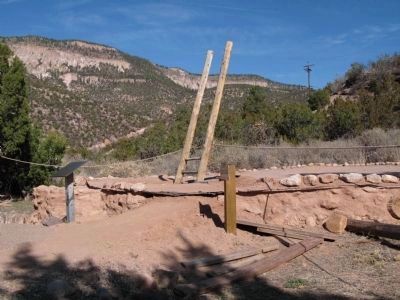
5. Kiva
One of the kivas associated with the Guisewa Pueblo
Photographed by Richard Denney
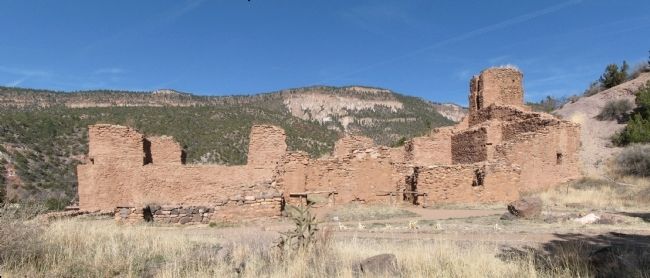
6. San José de los Jémez Mission
Panorama of side of mission ruins
Photographed by Richard Denney, March 18, 2009
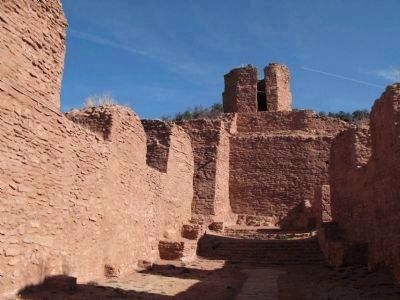
7. Mission Interior
View of mission church ruins interior, facing altar.
Photographed by Richard Denney, March 18, 2009
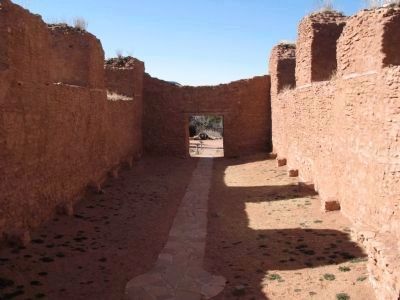
8. Mission Interior
View from inside mission church ruins, from altar facing entrance.
Credits. This page was last revised on August 15, 2025. It was originally submitted on April 26, 2014, by J. J. Prats of Powell, Ohio. This page has been viewed 856 times since then and 52 times this year. Last updated on July 30, 2025, by Bill Wingate of Albuquerque, New Mexico. Photos: 1, 2, 3, 4. submitted on April 26, 2014, by J. J. Prats of Powell, Ohio. 5, 6, 7, 8. submitted on May 12, 2014, by Richard Denney of Austin, Texas. • Devry Becker Jones was the editor who published this page.
