East Hill in Pensacola in Escambia County, Florida — The American South (South Atlantic)
Boy Scout Building
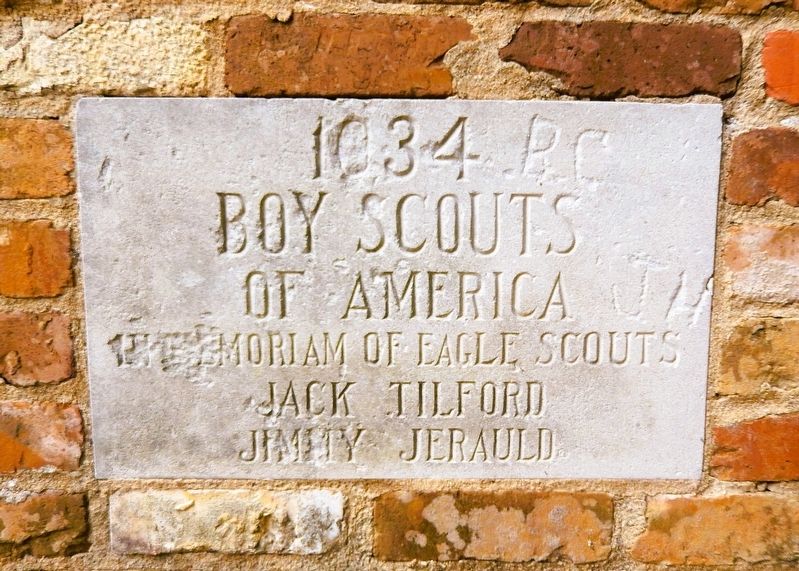
1934
Photographed by Cosmos Mariner, June 19, 2025
1. Boy Scout Building Marker
In memoriam of Eagle Scouts
Jack Tilford
Jimmy Jerauld
Topics and series. This historical marker is listed in these topic lists: Anthropology & Archaeology • Cemeteries & Burial Sites • Charity & Public Work • Fraternal or Sororal Organizations. In addition, it is included in the Civilian Conservation Corps (CCC), and the National Register of Historic Places (NRHP) series lists. A significant historical year for this entry is 1934.
Location. 30° 25.287′ N, 87° 11.713′ W. Marker is in Pensacola, Florida, in Escambia County. It is in East Hill. It can be reached from East Belmont Street just east of North 16th Avenue, on the left when traveling east. The marker is located near the northwest corner of the old Boy Scout Building in Miraflores Park. Touch for map. Marker is at or near this postal address: 1601 East La Rua Street, Pensacola FL 32501, United States of America. Touch for directions.

Regionally, this marker is on the Florida Panhandle. It is also in the American South, specifically in the Deep South, and on the Gulf Coast. Globally, it is in the North Atlantic Region, North
this page online
Other nearby markers. At least 8 other markers are within walking distance of this marker: Here Rests the Remains of Unnamed Citizens (a few steps from this marker); More Than Just a Park (a few steps from this marker); Havana Square Cemetery at Miraflores Park (a few steps from this marker); Ricardo Palma (within shouting distance of this marker); Frascati (approx. 0.2 miles away); Emanuel Point Shipwrecks / Los Naufragios de Emanuel Point (approx. 0.3 miles away); The Yonge House (approx. 0.3 miles away); Historic John the Baptist Church (approx. 0.7 miles away). Touch for a list and map of all markers in Pensacola.
Regarding Boy Scout Building. National Register of Historic Places № 100005239. Added to NRHP May 29, 2020.
Related markers. Click here for a list of markers that are related to this marker. Miraflores Park
Also see . . .
1. City of Pensacola Parks Building added to National Register of Historic Places.
Photographed by Cosmos Mariner, June 19, 2025
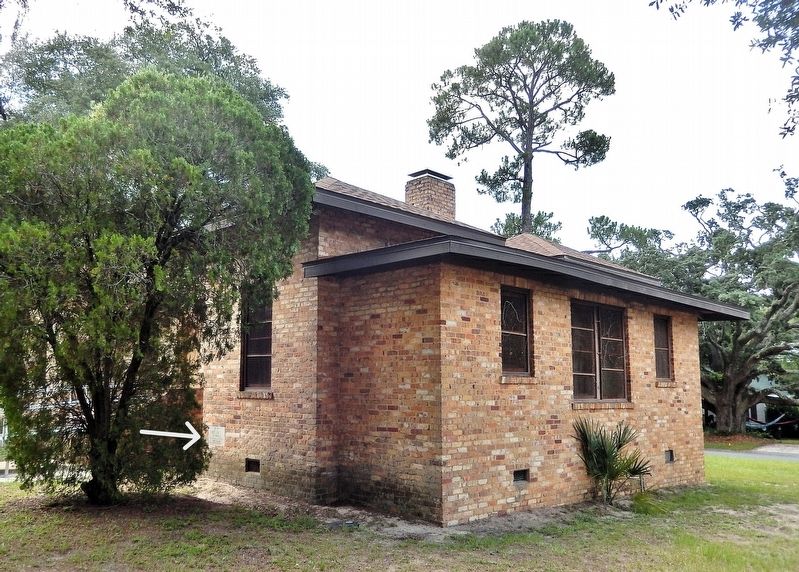
2. Boy Scout Building Marker
The marker is located near the northwest corner of the building.
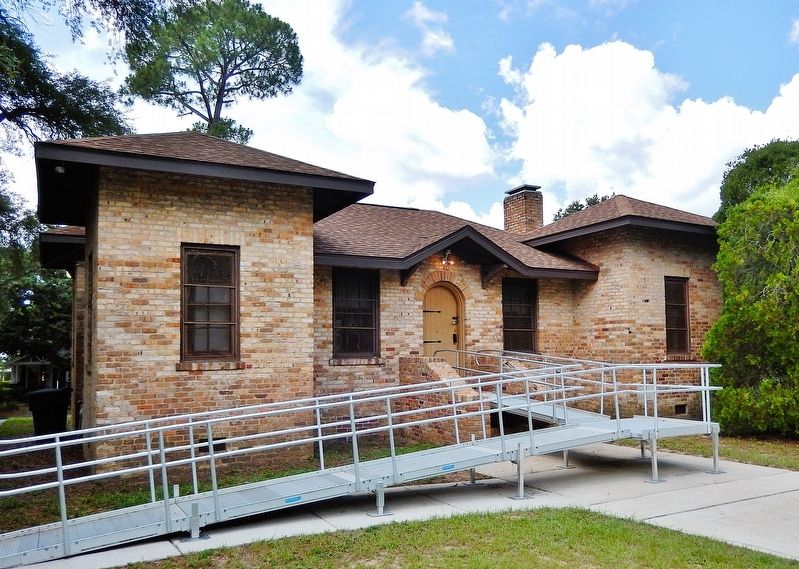
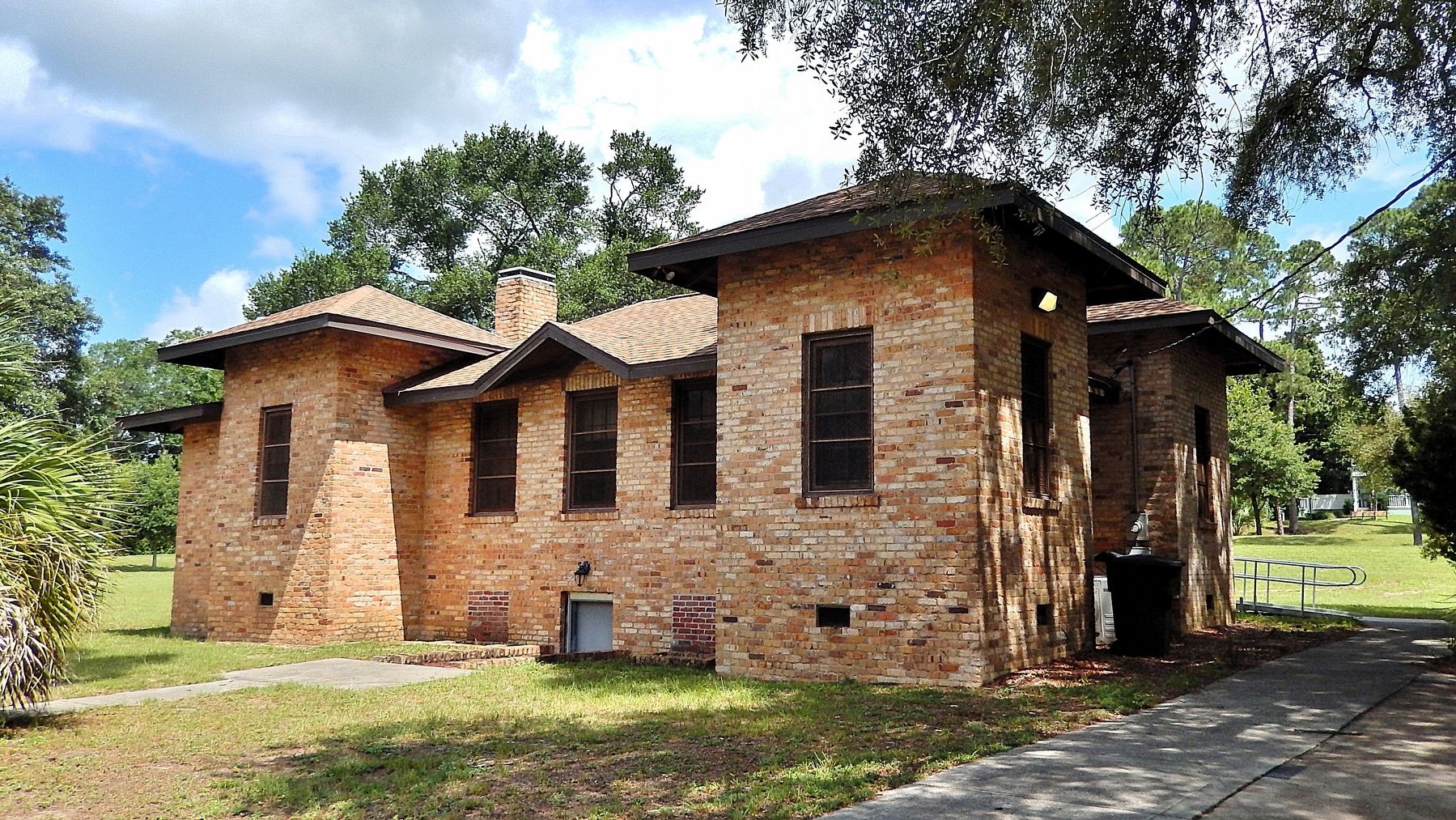
Excerpt: The Boy Scout building was constructed in 1934 by the Civilian Conservation Corps, intended for use by the local Boy Scouts of America. Historians reference that this cottage-style brick building was used as a former meeting location for troop rallies and merit badge events for several decades.(Submitted on August 4, 2025, by Cosmos Mariner of Cape Canaveral, Florida.)
In March 1952, at the request of the Kiwanis Club, the Boy Scout building had been renamed The Elebash Center, Inc. for Boy Scouts and Girl Scouts. By 1965, the abandoned building had fallen into disrepair and was later restored in the 1970s by the Bream Fishermen Association, with the intent to use it as a community gathering place. Prior to the building's restoration, the Kiwanis Club requested that the City of Pensacola take over the building. The Bream Fishermen Association has used and maintained the building, still owned by the City of Pensacola, for over four decades. Today, other community groups also use the building as a recreational gathering place.
2. Miraflores Burial Ground Study (cityofpensacola.com).
Excerpt: In June(Submitted on August 4, 2025, by Cosmos Mariner of Cape Canaveral, Florida.)2021, human remains of two individuals were discovered by a local Boy Scout troop in the crawl space underneath the Boy Scout Building at Miraflores Park. Local authorities were contacted and a field investigation revealed that the remains were older than 75 years, meaning they were not from a modern, forensic case. A skeletal analysis conducted by University of West Florida biological anthropologists indicated that one individual is female and the other is likely male. Ongoing research has identified multiple historic documents including newspaper articles, meeting minutes, legal records, and a map indicating that Havana Square was used as an African American or Creole burial ground during the 19th century. In historic Pensacola, Creole refers to an individual that is of European, namely Spanish or French, and African descent.Photographed by Cosmos Mariner, June 19, 20253. Boy Scout Building (northeast elevation)
Photographed by Cosmos Mariner, June 19, 2025
4. Boy Scout Building (southeast elevation)
Credits. This page was last revised on August 4, 2025. It was originally submitted on August 4, 2025, by Cosmos Mariner of Cape Canaveral, Florida. This page has been viewed 328 times since then and 35 times this year. Photos: 1, 2, 3, 4. submitted on August 4, 2025, by Cosmos Mariner of Cape Canaveral, Florida.
