Near Okmulgee in Okmulgee County, Oklahoma — The American South (West South Central)
Nuyaka Mission
Photographed by Duane and Tracy Marsteller, June 21, 2025
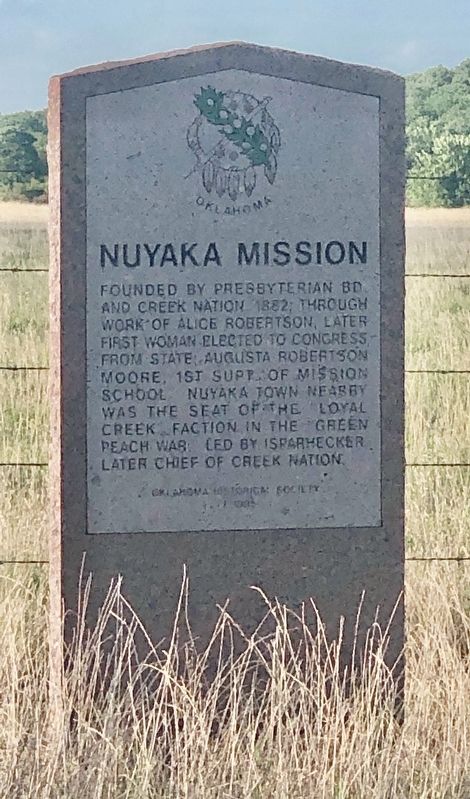
1. Nuyaka Mission Marker
Founded by Presbyterian Bd. and Creek Nation 1882, through work of Alice Robertson, later first woman elected to Congress from state. Augusta Robertson Moore, 1st supt. of mission school. Nuyaka town nearby was the seat of the Loyal Creek faction in the Green Peach War led by Isparhecker later chief of Creek Nation.
Erected by Oklahoma Historical Society.
Topics and series. This historical marker is listed in these topic lists: Education • Indigenous Peoples and Communities • Women. In addition, it is included in the National Register of Historic Places (NRHP), and the Oklahoma Historical Society series lists. A significant historical year for this entry is 1882.
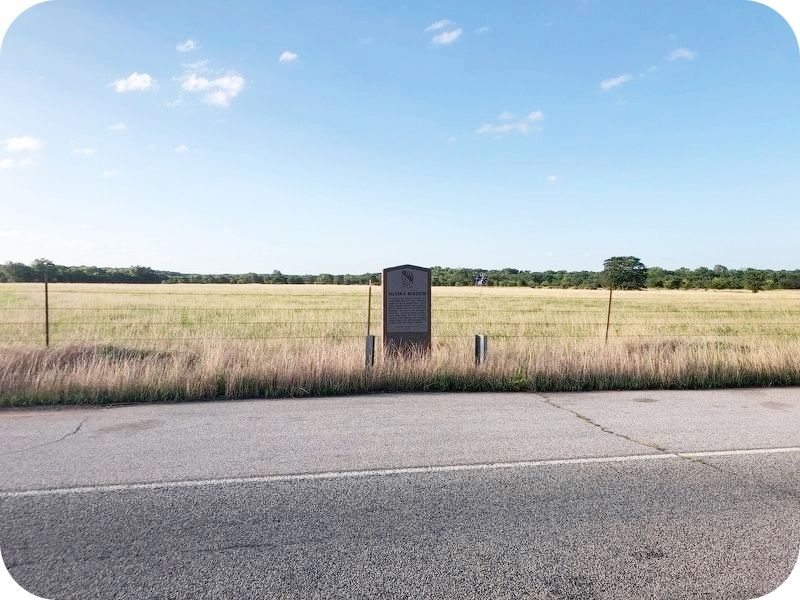
Location. 35° 37.485′ N, 96° 8.98′ W. Marker is near Okmulgee, Oklahoma, in Okmulgee County. It is on Oklahoma Route 56 half a mile west of Nuyaka Road, on the right when traveling west. Touch for map. Marker is at or near this postal address: 2400 OK-56, Okmulgee OK 74447, United States of America. Touch for directions.

Regionally, this marker is in the Muscogee Nation, in Northeast Oklahoma—Green Country, and in Greater Tulsa. It is also in the American South, specifically on the prairies, and on the Southern Plains. Globally, it is in North America, the Western Hemisphere, the Western World, and the Anglosphere. Historically, it finds itself in what was once the territory of the Mississippian Culture and also the Louisiana Purchase.
Other nearby markers. At least 8 other markers are within 11 miles of this marker, measured as the crow flies: State Armory (approx. 9.3 miles away); Okmulgee County Veterans Memorial (approx. 9.8 miles away); Samuel Checote (approx. 10 miles away); Creek Capitol (approx. 10 miles away); Trail of Tears (approx. 10 miles away); Creek Council House Capitol Of The Muscogee Nation (approx. 10 miles away); First Bank of Okmulgee (approx. 10 miles away); 2nd Lt. Kenneth Strang Memorial (approx. 10½ miles away). Touch for a list and map of all markers in Okmulgee.
Also see . . .
1. Nuyaka Mission (PDF). National Register of Historic Places nomination for the site of the former Indian boarding school, which was listed in 1972. (Prepared by Kent Ruth, Oklahoma Historical Society; via Oklahoma State Historic Preservation Office)
this page online
2. Nuyaka Mission. Wikipedia entry on the former Indian school, which operated until 1922. (Submitted on August 18, 2025, by Duane and Tracy Marsteller of Murfreesboro, Tennessee.)
Additional commentary.
1. The Green Peach War
The Green Peach War (1882-83) was the result of bitter political divisions within the Muscogee (Creek) Nation following the U.S. Civil War. The conflict was so-named because it occurred when fruit in peach orchards were still green.
On one side was the government of Chief Samuel Checote, which supported efforts to assimilate the tribe to European-American culture. Opposing them were the "Loyals", who wanted to maintain their traditional way of life. Their leader was Isparhecher (also spelled Isparhecker), a local tribal chief and judge.
The Loyals, based in Nuyaka, rejected the Checote government's authority under an 1867 tribal constitution. They also opposed the reallocation of Indian land to former slaves and white settlers. Over time the group became more assertive, refusing to send representatives to the national government and refusing to obey laws passed by it. The group also took steps to form a separatist government.
The conflict erupted in violence in February 1883, when Checote sent roughly 700 men to Nuyaka to quell the rebellion. During a skirmish in a peach orchard, the militia easily defeated Isparhecher's 350-man force and chased it out of Creek territory.
Defeated yet
Photographed by Duane and Tracy Marsteller, June 21, 2025
2. Nuyaka Mission Marker
Thus ended the Green Peach War, but the divisions that underpinned it still remained.
After Checote stepped down as Principal Chief, the contest to succeed him came down to Isparhecher and Checote supporter Joseph Perryman. The Sept. 3, 1883 election between them was extremely close with no clear winner immediately apparent.
Isparhecher, believing he had won, proclaimed himself Principal Chief in December, 1883. But U.S. Interior Secretary Henry M. Teller ruled that Perryman won the vote count and therefore was the rightful chief.
Despite his actions during the conflict, Isparhecher later was appointed by the Perryman government as its delegate in Washington, D.C. Ironically, Isparhecher became Creek principal chief in 1895 under the very constitution he had previously opposed.
The traditionalist movement he once led also faded but continued to simmer beneath the surface, boiling over again in the Crazy Snake Rebellion of 1909.
— Submitted August 18, 2025, by Duane and Tracy Marsteller of Murfreesboro, Tennessee.
J.F. Standiford; Oklahoma Historical Society via The Gateway to Oklahoma History (fair use), October 1891
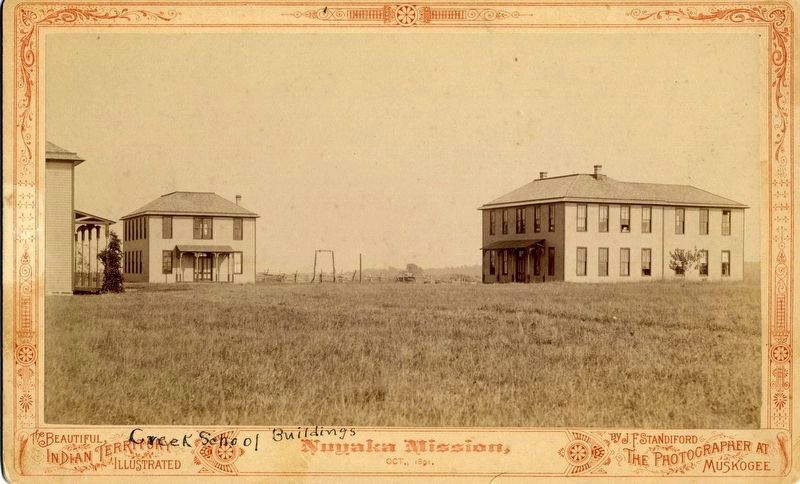
3. Nuyaka Mission Buildings
J.F. Standiford; Oklahoma Historical Society via The Gateway to Oklahoma History (fair use), October 1891
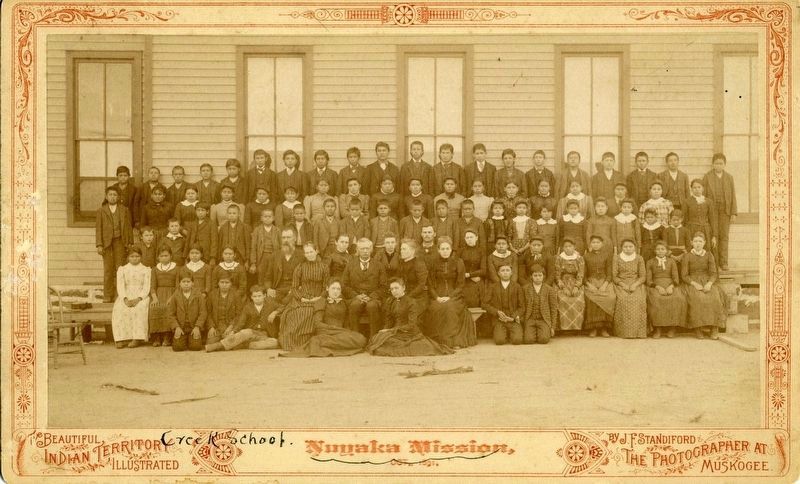
4. Nuyaka Mission Students
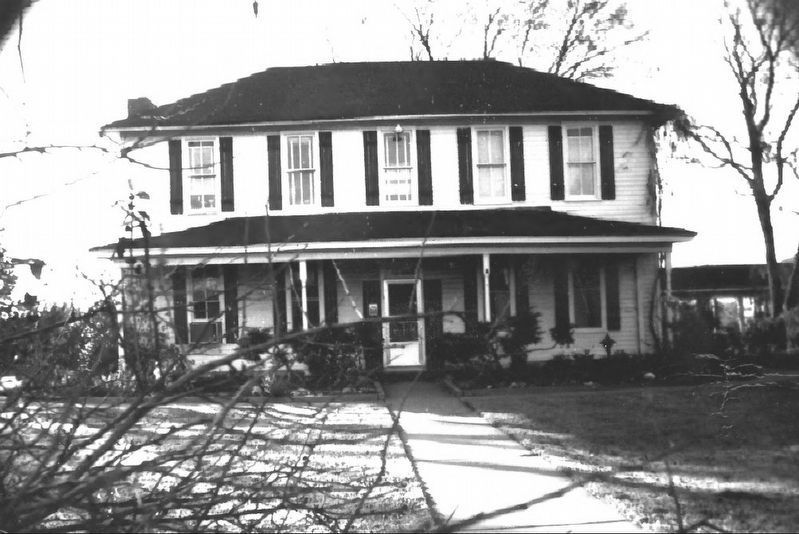
Kent Ruth; National Register of Historic Places nomination (Public Domain), April 13, 1972
5. Nuyaka Mission Superintendent's House
The superintendent's house is the only remaining building of the four erected for the Indian boarding school.
Credits. This page was last revised on August 28, 2025. It was originally submitted on August 18, 2025, by Duane and Tracy Marsteller of Murfreesboro, Tennessee. This page has been viewed 258 times since then and 93 times this year. Photos: 1, 2, 3, 4, 5. submitted on August 18, 2025, by Duane and Tracy Marsteller of Murfreesboro, Tennessee.
