Queenston in Niagara-on-the-Lake in Niagara Region, Ontario — Central Canada (North America)
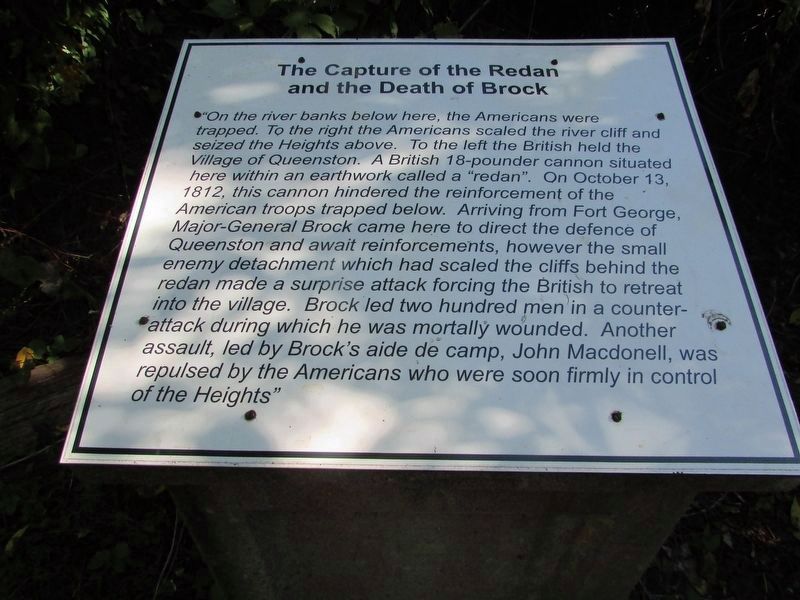
The Capture of the Redan and the Death of Brock
Battle of Queenston Heights Walking Tour
⎯⎯⎯
Sentier auto-guidé de la bataille de Queenston
Photographed by Bill Coughlin, September 19, 2019
1. The Capture of the Redan and the Death of Brock Marker
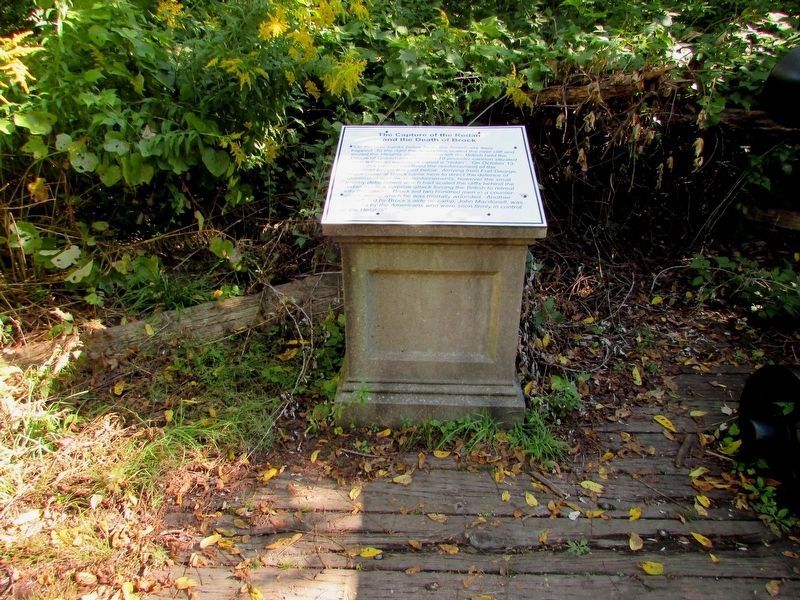
This new marker, with the same text, replaces the missing bronze plaque.
Erected by Parks Canada. (Marker Number 3.)
Topics. This historical marker is listed in these topic lists: Colonial Era • War of 1812. A significant historical date for this entry is October 13, 1812.
Location. 43° 9.718′ N, 79° 3.026′ W. Marker is in Niagara-on-the-Lake, Ontario,
this page online

Regionally, this marker is on the Golden Horseshoe and in Niagara Canada. It is also in Central Canada. Globally, it is in North America, on the Great Lakes, in the Western Hemisphere, in the Western World, and in the Anglosphere. Historically, it finds itself in what was once a British colony, the Viceroyalty of New France, the Haudenosaunee (Iroquois) Confederacy, and Rupert’s Land.
Other nearby markers. At least 8 other markers are within walking distance of this marker: Site of Redan Battery (a few steps from this marker); Chloe Cooley (within shouting distance of this marker); The Niagara Escarpment
Photographed by David Graff, April 28, 2012
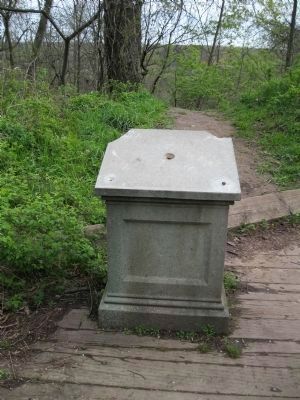
2. The Capture of the Redan and the Death of Brock Marker
Marker stand - bronze marker is missing.
Another marker is no longer nearby. The Counter-Offensive Takes Shape / La contre-offensive prend forme (was about 150 meters away, measured in a direct line but has been confirmed missing).
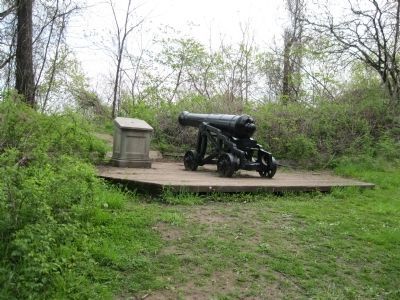
More about this marker. This plain white panel marker (with English text) replaces the original English-and-French bronze plaque. The marker and a cannon may be visible from the parking lot.
Related markers. Click here for a list of markers that are related to this marker. To better understand the relationship, study each marker in the order shown.
Photographed by Bill Coughlin, September 19, 2019
3. Replacement Marker
Photographed by David Graff, April 28, 2012
4. The Redan
Location of marker beside a cannon
Photographed by Dale K. Benington, June 10, 2012
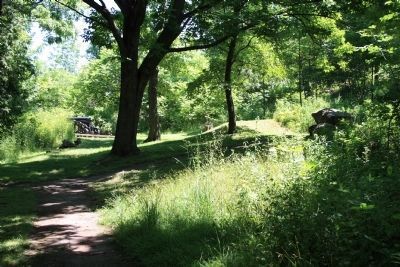
5. The Capture of the Redan and the Death of Brock Marker
A distant view looking east from the walking trail of stop #3 on the walking tour, where the cannon is located on the left, and of boulder where the redan battery was located on the right.
Photographed by Dale K. Benington, June 10, 2012
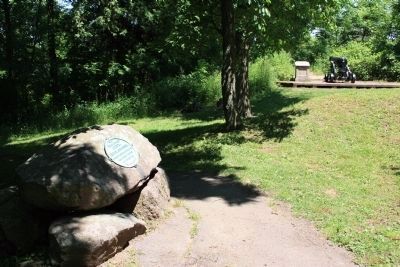
6. The Capture of the Redan and the Death of Brock Marker
View looking north from the site of the redan battery marker, of the historic marker at stop #3 of the battle ground walking tour, in the background.
Photographed by Dale K. Benington, June 10, 2012
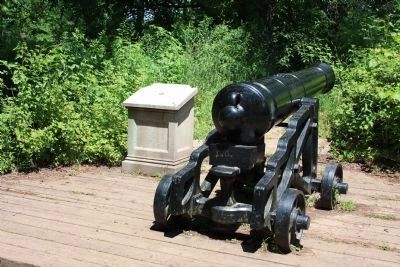
7. The Capture of the Redan and the Death of Brock Marker
View of the historic marker site at walking tour stop #3, and the nearby cannon.
Credits. This page was last revised on March 18, 2026. It was originally submitted on May 3, 2012, by David Graff of Halifax, Nova Scotia. This page has been viewed 1,098 times since then and 58 times this year. Last updated on August 19, 2025, by Kevin Westell of St. Catharines, Ontario. Photos: 1. submitted on September 20, 2019, by Bill Coughlin of Woodland Park, New Jersey. 2. submitted on May 3, 2012, by David Graff of Halifax, Nova Scotia. 3. submitted on September 20, 2019, by Bill Coughlin of Woodland Park, New Jersey. 4. submitted on May 3, 2012, by David Graff of Halifax, Nova Scotia. 5, 6, 7. submitted on June 28, 2012, by Dale K. Benington of Toledo, Ohio. • Devry Becker Jones was the editor who published this page.
