
Niagara-on-the-Lake in Niagara Region, Ontario — Central Canada (North America)
The Upper Canadian Act Against Slavery (1793)
Photographed by Dale K. Benington, June 11, 2012
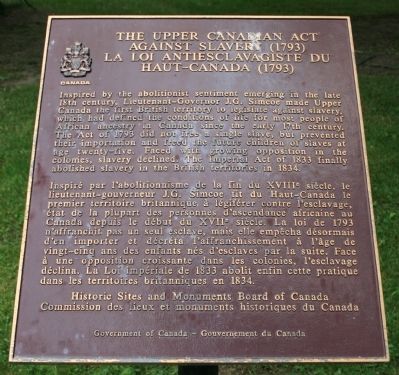
1. The Upper Canadian Act Against Slavery (1793) Marker

Inspired by the abolitionist sentiment emerging in the late 18th century, Lieutenant-Governor J.G. Simcoe made Upper Canada the first British territory to legislate against slavery, which had defined the conditions of life for most people of African ancestry in Canada since the early 17th century. The Act of 1793 did not free a single slave, but prevented their importation and freed the future children of slaves at age twenty-five. Faced with growing opposition in the colonies, slavery declined. The Imperial Act of 1833 finally abolished slavery in the British territories in 1834.
Erected by Historic
this page online
Topics and series. This historical marker is listed in these topic lists: Abolition & Underground RR • African Americans. In addition, it is included in the Canada, Historic Sites and Monuments Board series list. A significant historical year for this entry is 1793.
Location. 43° 15.127′ N, 79° 5.059′ W. Marker is in Niagara-on-the-Lake, Ontario, in Niagara Region. It is on Mississagua Street just north of John Street West, on the right when traveling north. This historical marker is located in the burial ground on the east side of Mississagua Street. Touch for map. Marker is at or near this postal address: 494 Mississagua Street, Niagara-on-the-Lake ON L0S 1J0, Canada. Touch for directions.

Regionally, this marker is on Ontario’s Golden Horseshoe and in Niagara Canada. It is also in Central Canada. Globally, it is in North America, the Western Hemisphere, the Western World, and the Anglosphere. Historically, it finds itself in what was once a British colony, the Viceroyalty of New France, the Haudenosaunee (Iroquois) Confederacy, and Rupert’s Land.
Other nearby markers. At
Photographed by Dale K. Benington, June 11, 2012
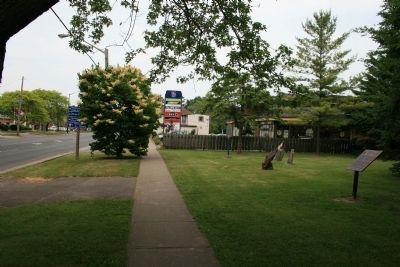
2. The Upper Canadian Act Against Slavery (1793) Marker
View of the historical marker and grave yard looking northeast along Mississauga Street.
Another marker is no longer nearby. Negro Burial Ground (was a few steps from this marker but has been confirmed missing).
Also see . . .
1. Act Against Slavery. This is a link to information provided by Wikipedia, the free encyclopedia. (Submitted on June 18, 2013, by Dale K. Benington of Toledo, Ohio.)
2. Upper Canadian Act Against Slavery. This is a link to information provided by Wikisource. (Submitted on June 18, 2013, by Dale K. Benington of Toledo, Ohio.)
Photographed by Dale K. Benington, June 11, 2012
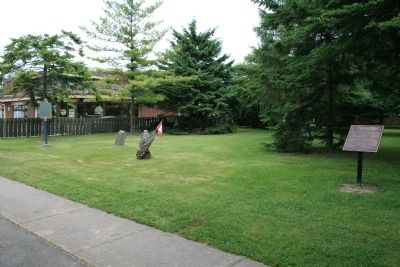
3. The Upper Canadian Act Against Slavery (1793) Marker
View of the historical marker (lower right of picture) and the grave yard.
Photographed by Dale K. Benington, June 11, 2012
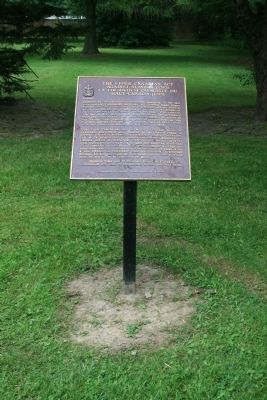
4. The Upper Canadian Act Against Slavery (1793) Marker
Credits. This page was last revised on October 24, 2025. It was originally submitted on June 18, 2013, by Dale K. Benington of Toledo, Ohio. This page has been viewed 982 times since then and 24 times this year. Last updated on August 30, 2025, by Kevin Westell of St. Catharines, Ontario. Photos: 1, 2, 3, 4. submitted on June 18, 2013, by Dale K. Benington of Toledo, Ohio. • Devry Becker Jones was the editor who published this page.
