Hampton, Virginia — The American South (Mid-Atlantic)
Cemetery
Final resting place for many who passed through Hampton's doorways
| — | Explore Hampton 2010 - From the Sea to the Stars | — |
Photographed by Evan Dwyer, August 9, 2025
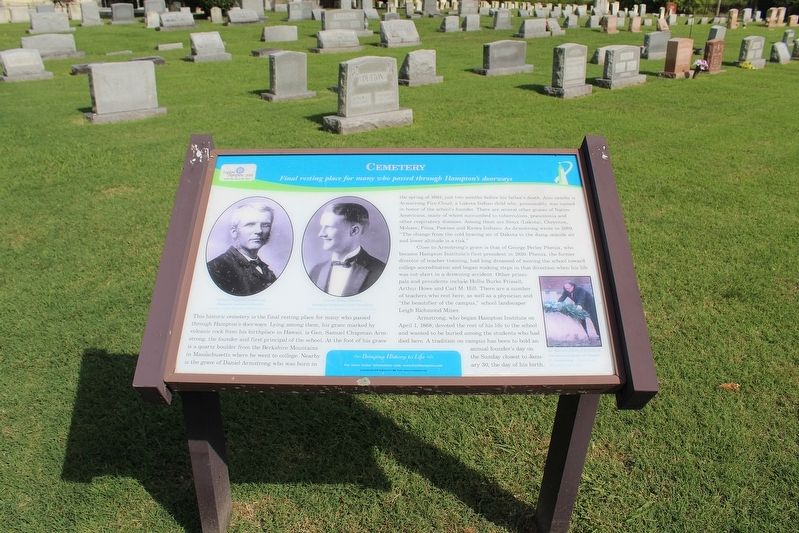
1. Cemetery Marker
Close to Armstrong's grave is that of George Perley Phenix, who became Hampton Institute's first president in 1930. Phenix, the former director of teacher training, had long
this page online
Armstrong, who began Hampton Institute on April 1, 1868, devoted the rest of his life to the school and wanted to be buried among the students who had died here. A tradition on campus has been to hold an annual founder's day on the Sunday closest to January 30, the day of his birth.
Erected by City of Hampton.
Topics. This historical marker is listed in these topic lists: African Americans • Cemeteries & Burial Sites • Education • Indigenous Peoples and Communities. A significant historical date for this entry is April 1, 1868.
Location. 37° 1.071′ N, 76° 20.14′ W. Marker is in Hampton, Virginia. It is on Orchard Road north of Shore Road, on the right when traveling north. Marker is on the grounds of Hampton University. Visitors must check
Photographed by Evan Dwyer, August 9, 2025
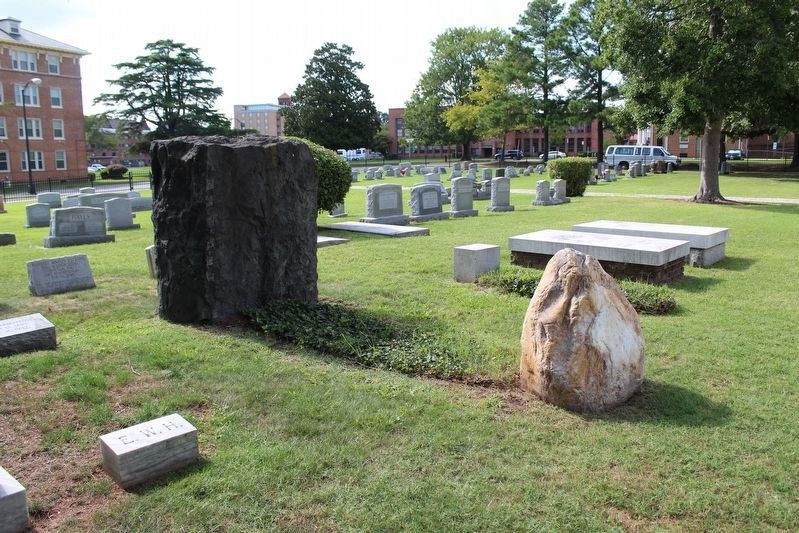
2. Grave of Samuel Armstrong
The large dark stone is the volcanic rock from Hawaii mentioned on the marker. The pale stone is the one from Massachusetts. The son of missionaries, Armstrong served as an officer in the 125th New York Infantry on the US side during the American Civil War, and volunteered to lead the 9th US Colored Infantry in November 1863. His career in education began during this period, with the establishment of a school at Camp Stanton, a training camp for USCTs near Benedict, Maryland. He later commanded the 8th US Colored Infantry, achieving the rank of Colonel for meritorious service in the battles of Deep Bottom/Fussell's Mill north of the James River in 1864. He was brevetted to the rank of Brigadier General in March 1866, and is one of the very few Union Generals buried in southern soil (one of two in Hampton, the other being in the Phoebus addition to the National Cemetery).

Regionally, this marker is on Virginia’s Peninsula and in Coastal Virginia. It is also in the American South, specifically in the Upper South, in the Tidewater, and on the Eastern Seaboard. Globally, it is in the North Atlantic Region, North America, the Western Hemisphere, the Western World, and the Anglosphere. Historically, it finds itself in what was once the territory of the Mississippian Culture, one of the original Thirteen Colonies, one of the Confederate States of America, and the Antebellum South.
Other nearby markers. At least 8 other markers are within walking distance of this marker: USS Monitor (about 400 feet away, measured in a direct line); Union Soldiers Monument (about 600 feet away); A National Cemetery System (approx. 0.2 miles away); Hampton National Cemetery (approx. 0.2 miles away); The Ultimate Sacrifice (approx. 0.2 miles away); The Academy (approx. 0.2 miles away); Wigwam (approx. ¼ mile away);
Photographed by Evan Dwyer, August 9, 2025
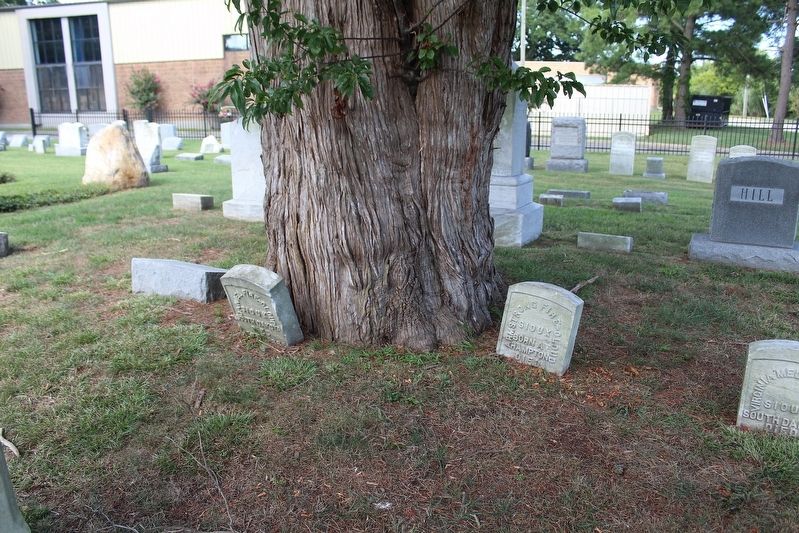
3. Armstrong Fire-Cloud's Grave
To the right of the tree. Samuel C. Armstrong's grave is visible at far left with his Massachusetts boulder and ivy ground cover easily distinguishable from the other stones.
Photographed by Evan Dwyer, August 9, 2025
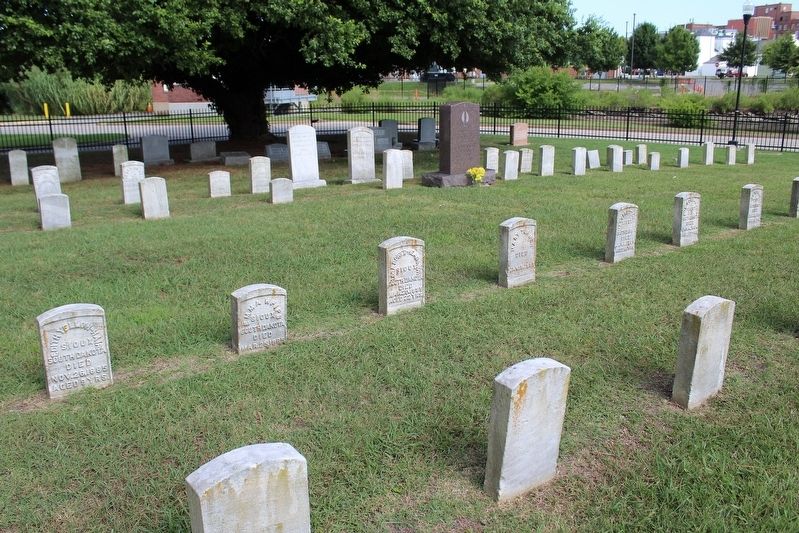
4. Native American Gravestones
Some of the numerous Native graves mentioned in the marker.
Credits. This page was last revised on September 7, 2025. It was originally submitted on September 3, 2025, by Evan Dwyer of Richmond, Virginia. This page has been viewed 147 times since then and 40 times this year. Photos: 1, 2, 3, 4. submitted on September 3, 2025, by Evan Dwyer of Richmond, Virginia. • Bernard Fisher was the editor who published this page.
