Oneonta in Blount County, Alabama — The American South (East South Central)
Champion Mines
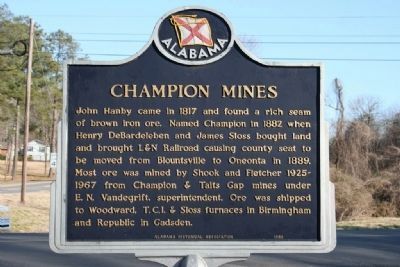
Photographed by Tim Carr, February 27, 2010
1. Champion Mines Marker
Erected 1989 by Alabama Historical Association.
Topics and series. This historical marker is listed in these topic lists: Industry & Commerce • Natural Features • Notable Places. In addition, it is included in the Alabama Historical Association series list. A significant historical year for this entry is 1817.
Location. 33° 56.337′ N, 86° 27.529′ W. Marker is in Oneonta, Alabama, in Blount County. It is at the intersection of 6th Street South (U.S. 231) and Champion Road, on the right on 6th Street South. Touch for map. Marker is in this post office area: Oneonta AL 35121, United States of America. Touch for directions.

Regionally, this marker is in North Alabama
this page online
Other nearby markers. At least 8 other markers are within 10 miles of this marker, measured as the crow flies: Welcome to Oneonta (approx. one mile away); Historic Oneonta L & N Railroad Depot (approx. one mile away); Blount County (approx. 1.1 miles away); The Gamble School (approx. 1.8 miles away); Antioch Cemetery (approx. 3.4 miles away); Holly Springs School (approx. 7.8 miles away); Bailey School (approx. 8 miles away); Battle Royal (approx. 9.1 miles away). Touch for a list and map of all markers in Oneonta.
Also see . . .
1. Sloss Furnaces National Historic Landmark's Website. (Submitted on March 8, 2010, by Timothy Carr of Birmingham, Alabama.)
2. Ruffner Red Ore Mine. Entry on
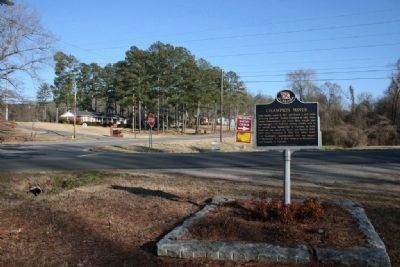
Photographed by Tim Carr, February 27, 2010
2. Champion Mines Marker
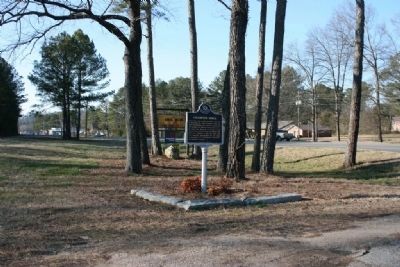
Photographed by Tim Carr, February 27, 2010
3. Champion Mines Marker
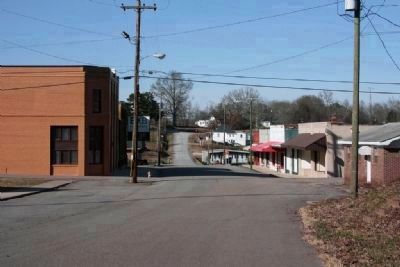
Photographed by Tim Carr, February 27, 2010
4. Downtown Altoona, Alabama
Founded in 1903, Altoona started as a mining town located mid-ways on the L&N railroad between Oneonta and Gadsden, Alabama.
Photographed by Tim Carr, March 20, 2008
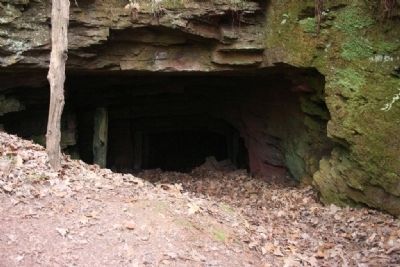
5. Portal to Ruffner Mountain Drift Mine #3. Birmingham, Alabama.
Like the Champion and Taits Gap mines, other mines such as this drift mine in nearby Birnmingham, sought to profit from the area's rich mineral deposits. While the Ruffner Mountain Mines were underground, or drift, mines, the Taits Gap ore mines were open pit surface mines.
Photographed by Tim Carr, April 2, 2008
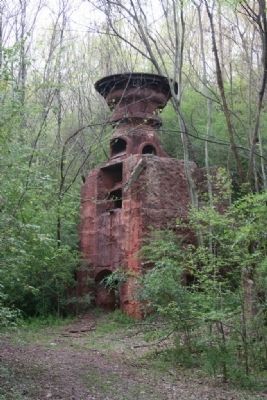
6. Ruffner Mountain Mine #2 Ore Crusher. Birmingham, Alabama.
Once the iron ore was brought up out of the mine, the ore was then loaded into a ore crusher similar to this one. The ore crusher was used to crush the larger ore rocks into a smaller manageable size for transportation. As the ore was been crushed the smaller ore would be dispensed into a waiting hopper train car below the crusher.
Photographed by Tim Carr, February 27, 2010
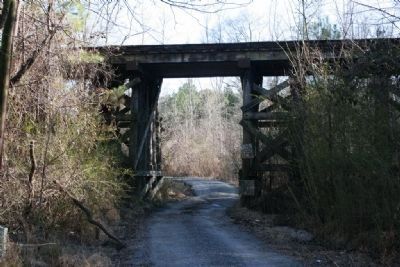
7. Old Abandon Railroad Trestle Near Altoona, Alabama
Over the years trains loaded with iron ore passed over this trestle on the way from the mines to the furnaces.
Photographed by Tim Carr, February 12, 2010
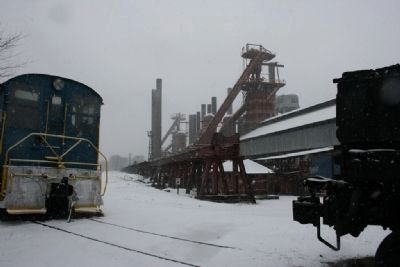
8. Sloss Furnaces Historic Landmark
Here at Sloss, the raw iron ore is brought in from the mines by train. The ore is then loaded into the furnace along with limestone and coke to be smelted into iron. After being heated at high temperatures the bottom of the furnace is taped and the molten iron flows out into channels of molds. The molds form ingots called pig iron. The pig iron is then sold and shipped to other factories to be remelted into steel products. Sloss Furnaces is the only remaining blast furnaces still standing in Birmingham, Alabama.
Credits. This page was last revised on June 16, 2016. It was originally submitted on March 8, 2010, by Timothy Carr of Birmingham, Alabama. This page has been viewed 5,845 times since then and 167 times this year. Photos: 1, 2, 3, 4, 5, 6, 7, 8. submitted on March 8, 2010, by Timothy Carr of Birmingham, Alabama. • Syd Whittle was the editor who published this page.
