
Sharonville in Hamilton County, Ohio — The American Midwest (Great Lakes)
Welcome To Trammel Fossil Park!
Photographed by Craig Doda, June 14, 2025
1. Welcome To Trammel Fossil Park! Marker
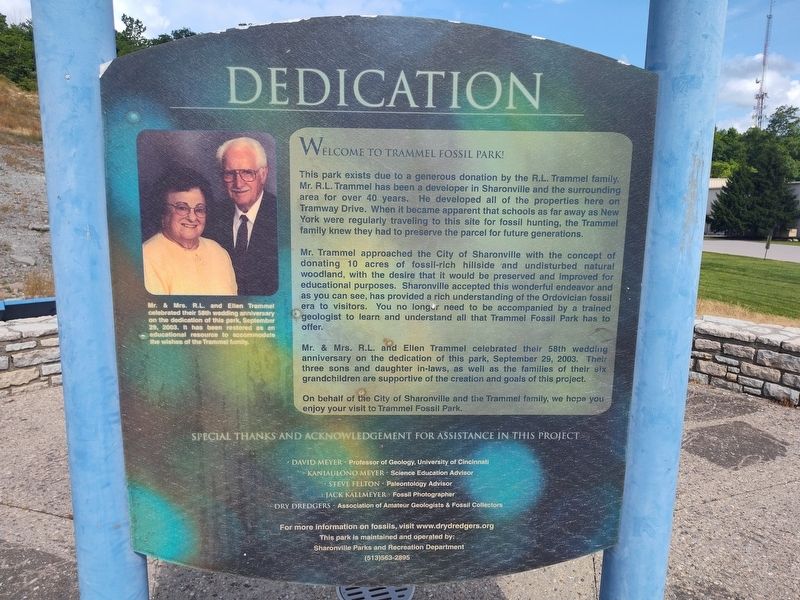
Mr. & Mrs. R.L. and Ellen Trammel celebrated their 58th wedding anniversary on the dedication of this park, September 29, 2003. It has been restored as an educational resource to accommodate the wishes of the Trammel family.
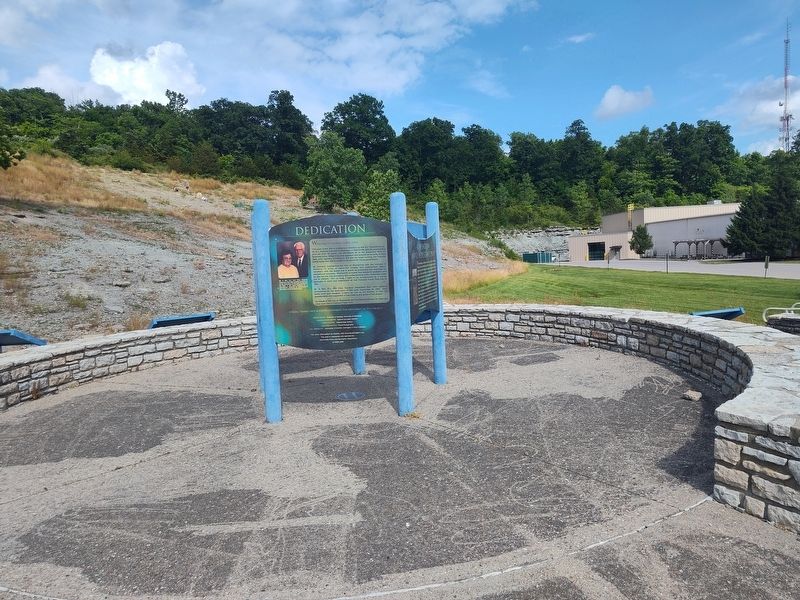
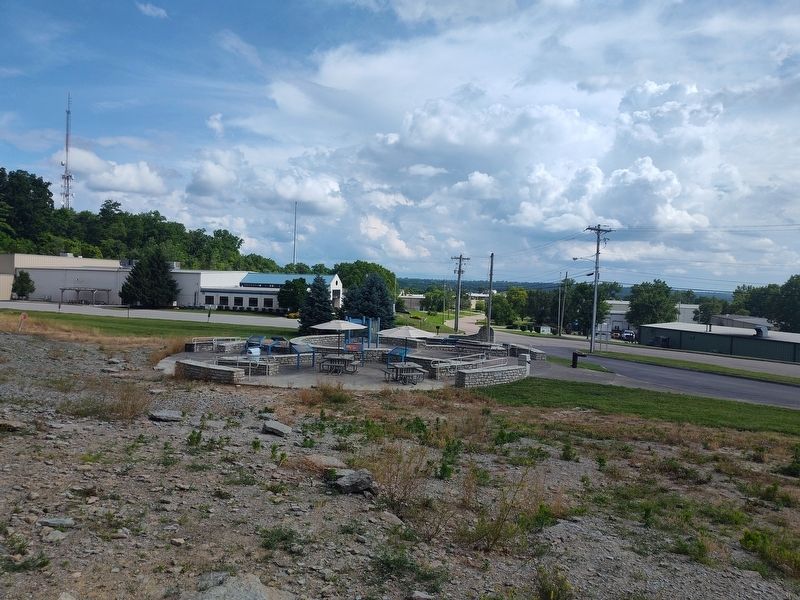
This park exists due to a generous donation by the R.L. Trammel family. Mr. R.L. Trammel has been a developer in Sharonville and the surrounding area for over 40 years. He developed all of the properties here on Tramway Drive. When it became apparent that schools as far away as New York were regularly traveling to this site for fossil hunting, the Trammel family knew they had to preserve the parcel for future generations.
Mr. Trammel approached the City of Sharonville with the concept of donating 10 acres of fossil-rich hillside and undisturbed natural woodland, with the desire that it would be preserved and improved for educational purposes. Sharonville accepted this wonderful endeavor and as you can see, has provided a rich understanding of the Ordovician fossil era to visitors. You no longer need to be accompanied by a trained geologist to learn and understand all that Trammel Fossil
this page online
Mr. & Mrs. R.L. and Ellen Trammel celebrated their 58th wedding anniversary on the dedication of this park, September 29, 2003. Their three sons and daughter in-laws, as well as the families of their six grandchildren are supportive of the creation and goals of this project.
On behalf of the City of Sharonville and the Trammel family, we hope you enjoy your visit to Trammel Fossil Park.
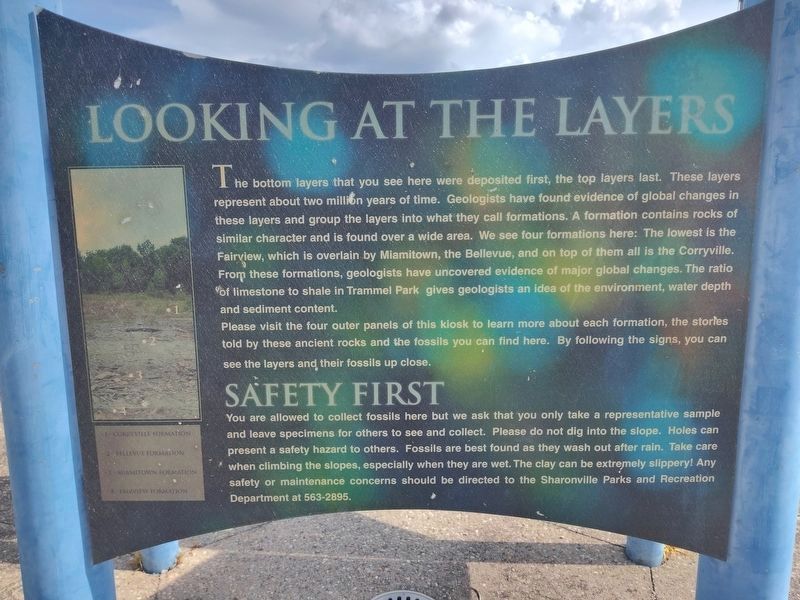
Looking At The Layers
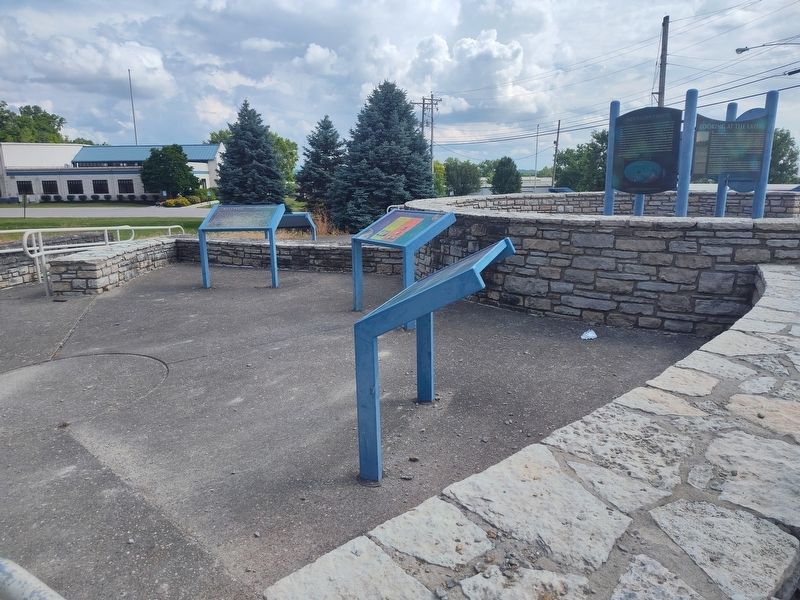
The bottom layers that you see here were deposited first, the top layers last. These layers represent about two million years of time. Geologists have found evidence of global changes in these layers and group the layers into what they call formations. A formation contains rocks of similar character and is found over a wide area. We see four formations here: The lowest is the Fairview, which is overlain by Miamitown, the Bellevue, and on top of them all is the Corryville. From these formations, geologists have uncovered evidence of major global changes. The ratio of limestone to shale in Trammel Park gives geologists an idea of the environment, water depth and sediment content.
Please visit the four
Photographed by Craig Doda, June 14, 2025
2. Welcome To Trammel Fossil Park! Marker
Safety First
You are allowed to collect fossils here but we ask that you only take a representative sample and leave specimens for others to see and collect. Please do not dig into the slope. Holes can present a safety hazard to others. Fossils are best found as they wash out after rain. Take care when climbing the slopes, especially when they are wet. The clay can be extremely slippery! Any safety or maintenance concerns should be directed to the Sharonville Parks and Recreation Department at 563-2895.
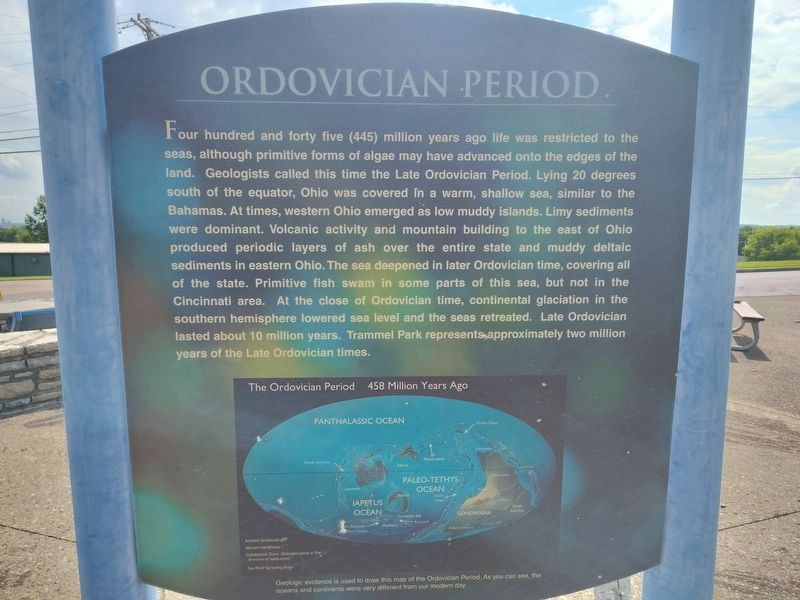
Ordovician Period
Four hundred and forty five (445) million years ago life was restricted to the seas, although primitive forms of algae may have advanced onto the edges of the land. Geologists called this time the Late Ordovician Period. Lying 20 degrees south of the equator, Ohio was covered in a warm, shallow sea, similar to the Bahamas. At times, western Ohio emerged as low muddy islands. Limy sediments were dominant.
Photographed by Craig Doda, June 14, 2025
3. Welcome To Trammel Fossil Park! Marker
The Time Line Of Geologic History
Our Earth is 4.6 billion years old. About 3.8 248 million years billion years ago, life began as single cells in the seas that covered the planet. But it wasn't until about 543 million years ago that life "exploded" into a multitude of forms that eventually evolved into all the plants and animals that we know today. Our Cincinnati rocks contain some of the oldest of these forms, invertebrate animals lacking backbone. There were no amphibians, reptiles, dinosaurs, mammals and certainly no humans at the time these rocks were formed!
A Window Into A Distant Past
Paleontologists
Photographed by Craig Doda, June 14, 2025
4. Welcome To Trammel Fossil Park! Marker
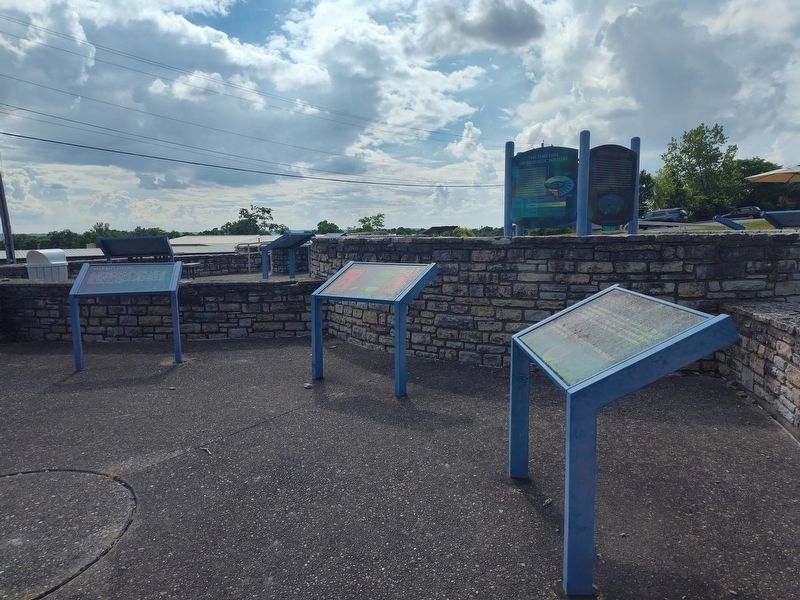
Corryville
The Corryville Formation is named after the Corryville neighborhood of Cincinnati, near the University of Cincinnati. Fine particles settling out of the seas formed the shale layers that you see in the Corryville These fine particles resulted from erosion and runoff from the uplifted
Photographed by Craig Doda, June 14, 2025
5. Welcome To Trammel Fossil Park! Marker
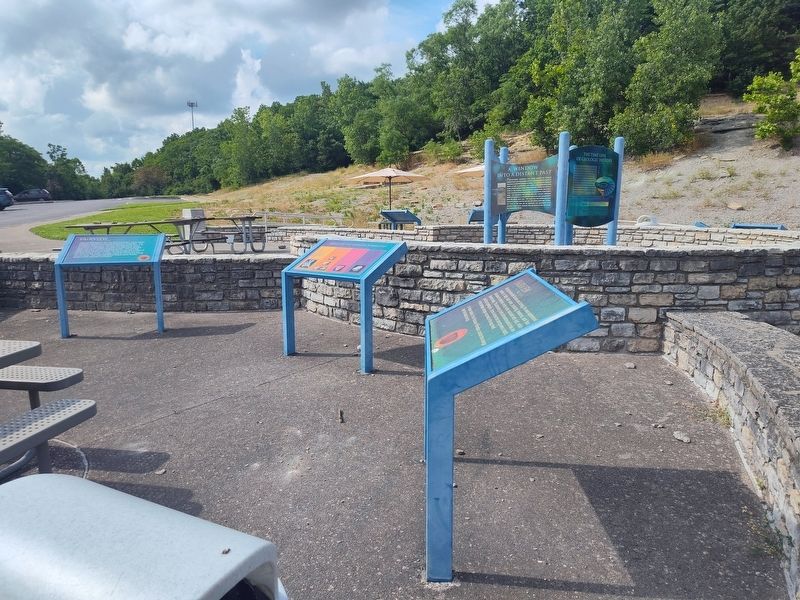
Fossils Of The Corryville Formation
Bryozoans
Bryozoans have skeletons that resemble twigs or plates. Their skeleton had a porous structure that protected thousands of tiny bryozoan zooids. Each zooid used tentacles to collect food particles from the water.
Most Common Species: Parvohallopra
Brachiopods
Often confused with clams, brachiopods have two shells that are not similar to each other.
Most Common Species: Rafinesquina Alternata • Rafinesquina Nasuta • Zygospira
Crinoids
Crinoids, or sea lilies, are animals related to sea urchins and sea stars. The photograph below is a section of the skeleton that enclosed the mouth and stomach. The animal would have had a stem, attaching to the sea floor, and long, feathery arms to filter food from the water. You will mostly find lifesaver-like stem pieces.
Most Common Species: Glyptocrinus
Trilobites
Trilobites are an extinct
Photographed by Craig Doda, June 14, 2025
6. Welcome To Trammel Fossil Park! Marker
Most Common Species: Cyclonema
Corryville
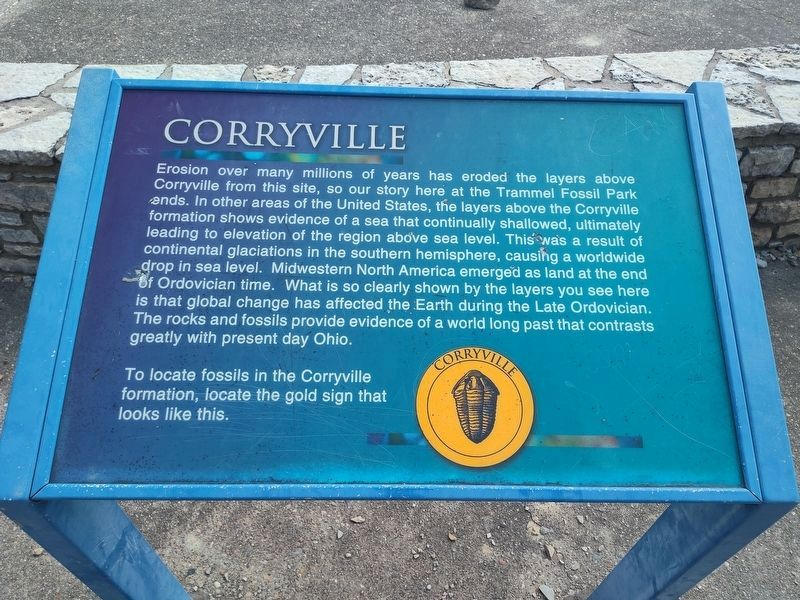
Erosion over many millions of years has eroded the layers above Corryville from this site, so our story here at the Trammel Fossil Park ends. In other areas of the United States, the layers above the Corryville formation shows evidence of a sea that continually shallowed, ultimately leading to elevation of the region above sea level. This was a result of continental glaciations in the southern hemisphere, causing a worldwide drop in sea level. Midwestern North America emerged as land at the end Of Ordovician time. What is so clearly shown by the layers you see here is that global change has affected the Earth during the Late Ordovician. The rocks and fossils provide evidence of a world long past that contrasts greatly with present day Ohio.
Bellevue
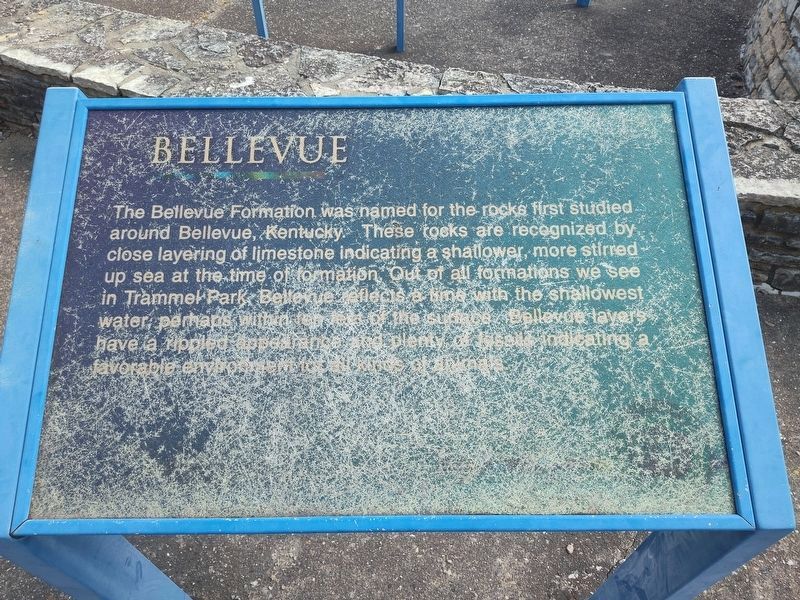
The Bellevue Formation was named for the rocks first studied around Bellevue, Kentucky. These rocks are recognized by close layering of limestone indicating a shallower, more stirred up sea at the time of formation. Out of all formations we see in Trammel Park, Bellevue reflects
Photographed by Craig Doda, June 14, 2025
7. Welcome To Trammel Fossil Park! Marker
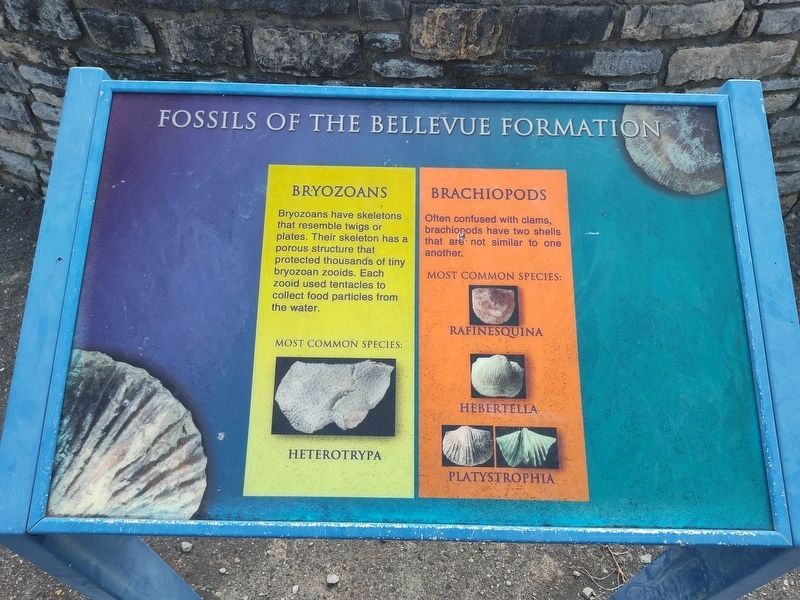
Fossils Of The Bellevue Formation
Bryozoans
Bryozoans have skeletons that resemble twigs or plates. Their skeleton has a porous structure that protected thousands of tiny bryozoan zooids. Each zooid used tentacles to collect food particles from the water.
Most Common Species: Heterotrypa
Brachiopods
Often confused with clams, brachiopods have two shells that are not similar to one another.
Most Common Species: Rafinesquina • Hebertella • Platystrophia
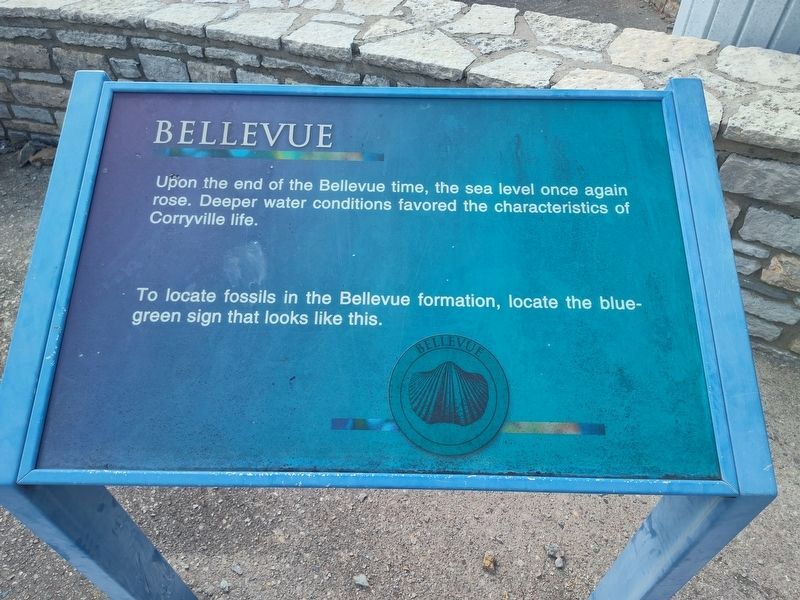
Bellevue
Upon the end of the Bellevue time, the sea level once again rose. Deeper water conditions favored the characteristics of Corryville life.
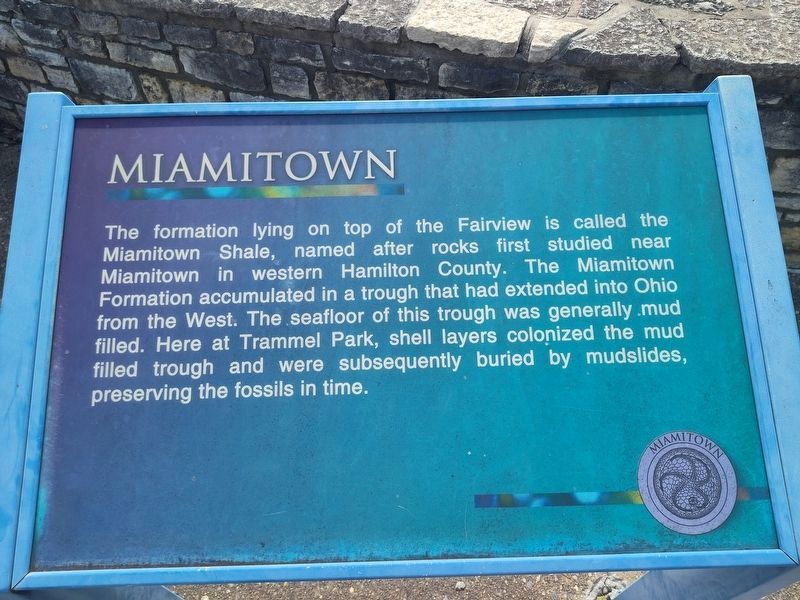
Miamitown
The formation lying on top of the Fairview is called the Miamitown Shale, named after rocks first studied near Miamitown in western Hamilton County. The Miamitown Formation accumulated in a trough that had extended into Ohio from the West. The seafloor of this trough was generally mud filled. Here at Trammel Park, shell layers
Photographed by Craig Doda, June 14, 2025
8. Welcome To Trammel Fossil Park! Marker
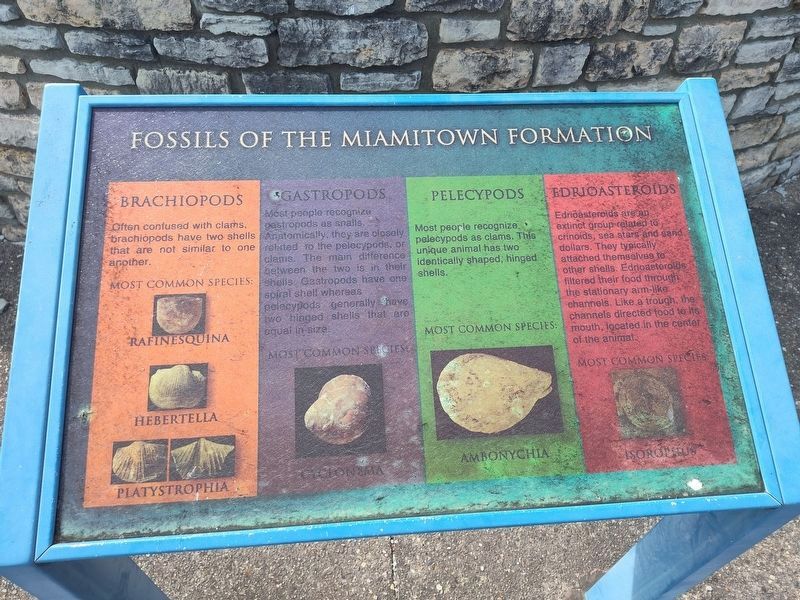
Fossils Of The Miamitown Formation
Brachiopods
Often confused with clams, brachiopods have two shells that are not similar to one another.
Most Common Species:Rafinesquina • Hebertella • Platystrophia
Gastropods
Most people recognize gastropods as snails.
Anatomically, they are closely related to the pelecypods, or clams. The main difference between the two is in their shells: Gastropods have one spiral shell whereas pelecypods generally have two hinged shells that are equal in size.
Most Common Species: Cyclonema
Pelecypods
Most people recognize pelecypods as clams. This unique animal has two identically shaped, hinged shells.
Most Common Species: Ambonychia
Edrioasteroids
Edriðasteroids are an extinct group-related to crinoids, sea stars and sand dollars. They typically attached themselves to other shells. Edrioasteroids filtered their food through the stationary arm-like channels. Like a trough, the channels directed food to its mouth, located in the center of the animal.
Most Common Species: Isoroplius
Miamitown
Once

Photographed by Craig Doda, June 14, 2025
9. Welcome To Trammel Fossil Park! Marker
Fairview
You are standing on the Fairview Formation, named after hillsides exposed at Fairview Heights in Cincinnati. The limestone layers of the Fairview typically range from 7 to 15 inches in thickness. The tops and bottoms of these layers are in soft shales and thus provide easily worked slabs that were used for building stones. You will see ripple marks caused by water moving across the surface of the sea, forever frozen in time. In some places you can see holes in the rocks, probably made by worms burrowing into the mud. The next signboard shows some fossils typical of the Fairview Formation.
Fossils Of The Fairview Formation
Bryozoans
Bryozoans have skeletons resembling twigs or plates. Their skeletons have a porous structure that protected thousands of tiny bryozoan zooids. Each zooid uses tentacles to collect food particles from the water.
Most Common Species:
Constellaria
Brachiopods
Often

Photographed by Craig Doda, June 14, 2025
10. Welcome To Trammel Fossil Park! Marker
Most Common Species:
Rafinesquina • Hebertella • Platystrophia
Crinoids
Crinoids, or sea lilies, are animals related to sea urchins and sea stars. The photograph below is a section of the skeleton that enclosed the mouth and stomach. The animal would have had a stem, attaching to the sea floor, and long, feathery arms to filter food from the water. You will mostly find the lifesaver-like stem pieces. Most Common Species:
Glyptocrinus
Gastropods
Most people recognize gastropods as snails. Anatomically, they are closely related to the pelecypods, or clams. The main difference between the two is in their shells. Gastropods have one spiral shell whereas pelecypods generally have two hinged shells that are equal in size.
Most Common Species:
Cyclonema
Fairview
During the time the Fairview was forming, the seas experienced periods of fairly clear water, producing limestone, and then alternated to relatively murky water saturated with mud, which became shale. The alternating beds of limestone and shale are puzzling to geologists. Some believe

Photographed by Craig Doda, June 14, 2025
11. Welcome To Trammel Fossil Park! Marker
Topics. This historical marker is listed in these topic lists: Anthropology & Archaeology • Paleontology • Parks & Recreational Areas. A significant historical date for this entry is September 29, 2003.
Location. 39° 17.781′ N, 84° 24.318′ W. Marker is in Sharonville, Ohio, in Hamilton County. It is at the intersection of Tramway Drive and Mustafa Drive, on the right when traveling north on Tramway Drive. Touch for map. Marker is at or near this postal address: 12000 Tramway Drive, Cincinnati OH 45241, United States of America. Touch for directions.

Regionally, this marker is in Greater Cincinnati. It is also in the American Midwest and in the Ohio River Valley. Globally, it is in North America, the Western Hemisphere, the Western World, and the Anglosphere. Historically, it finds itself in what was once the Haudenosaunee (Iroquois) Confederacy, the territory of the Mississippian Culture, and the Northwest Territory.
Other nearby markers. At least 8 other markers are within 4 miles of this marker, measured as the crow flies: 12 Mile House (approx.

Photographed by Craig Doda, June 14, 2025
12. Welcome To Trammel Fossil Park! Marker
Photographed by Craig Doda, June 14, 2025
13. Welcome To Trammel Fossil Park! Marker
Photographed by Craig Doda, June 14, 2025
14. Welcome To Trammel Fossil Park! Marker
Photographed by Craig Doda, June 14, 2025
15. Welcome To Trammel Fossil Park! Marker
Photographed by Craig Doda, June 14, 2025
16. Welcome To Trammel Fossil Park! Marker
Photographed by Craig Doda, June 14, 2025
17. Welcome To Trammel Fossil Park! Marker
Photographed by Craig Doda, June 14, 2025
18. Welcome To Trammel Fossil Park! Marker

Photographed by Craig Doda, June 14, 2025
19. Welcome To Trammel Fossil Park! Marker

Photographed by Craig Doda, June 14, 2025
20. Welcome To Trammel Fossil Park! Marker

Photographed by Craig Doda, June 14, 2025
21. Welcome To Trammel Fossil Park! Marker

Photographed by Craig Doda, June 14, 2025
22. Welcome To Trammel Fossil Park! Marker
Credits. This page was last revised on October 4, 2025. It was originally submitted on September 5, 2025, by Craig Doda of Napoleon, Ohio. This page has been viewed 194 times since then and 84 times this year. Photos: 1, 2, 3, 4, 5, 6. submitted on September 5, 2025, by Craig Doda of Napoleon, Ohio. 7, 8, 9. submitted on September 15, 2025, by Craig Doda of Napoleon, Ohio. 10, 11, 12. submitted on September 21, 2025, by Craig Doda of Napoleon, Ohio. 13, 14, 15. submitted on September 22, 2025, by Craig Doda of Napoleon, Ohio. 16, 17, 18. submitted on September 26, 2025, by Craig Doda of Napoleon, Ohio. 19, 20, 21. submitted on October 1, 2025, by Craig Doda of Napoleon, Ohio. 22. submitted on October 3, 2025, by Craig Doda of Napoleon, Ohio. • Andrew Ruppenstein was the editor who published this page.
