Auburn in Cayuga County, New York — The American Northeast (Mid-Atlantic)
South Street Area Historic District
Photographed by Susan A. Dalaba, September 1, 2025
1. South Street Area Historic District Marker
Inscription.
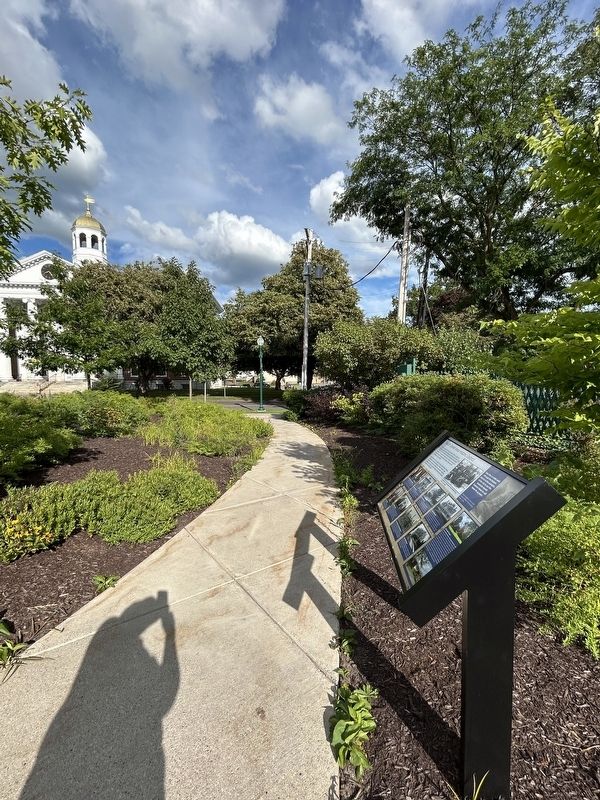
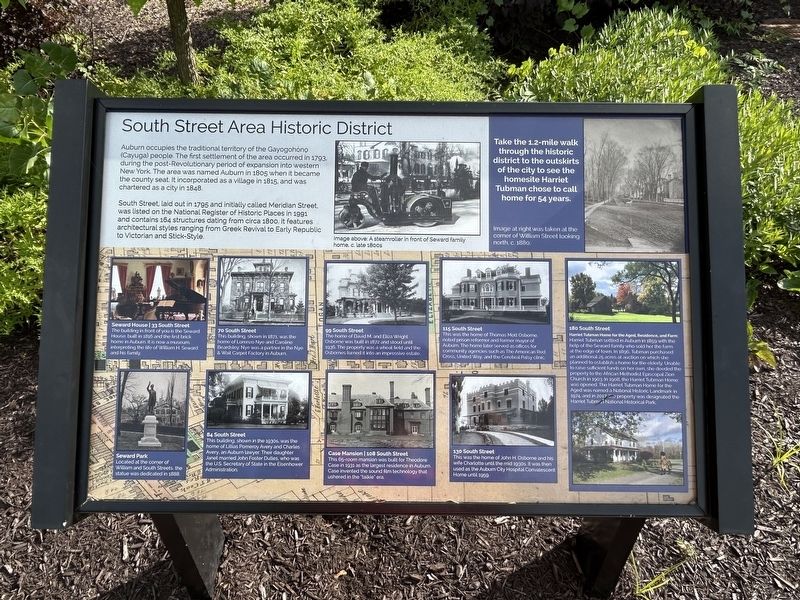
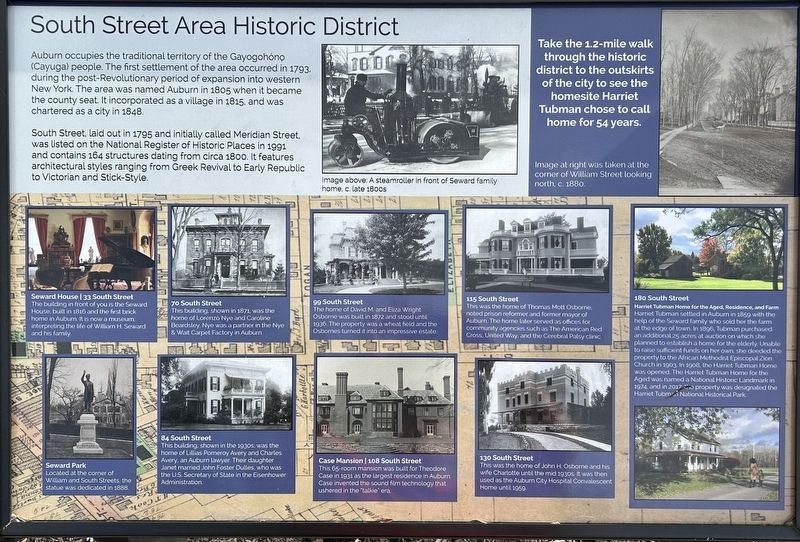
South Street Area Historic District. . , Auburn occupies the traditional territory of the Gayogohono (Cayuga) people. The first settlement of the area occurred in 1793, during the post-Revolutionary period of expansion into western New York. The area was named Auburn in 1805 when it became the county seat. It incorporated as a village in 1815, and was chartered as a city in 1848. , South Street, laid out in 1795 and initially called Madison Street, was listed on the National Register of Historic Places in 1991 and contains 164 structures dating from circa 1800. It features architectural styles ranging from Greek Revival to Early Republic to Victorian and Stick-Style. ,
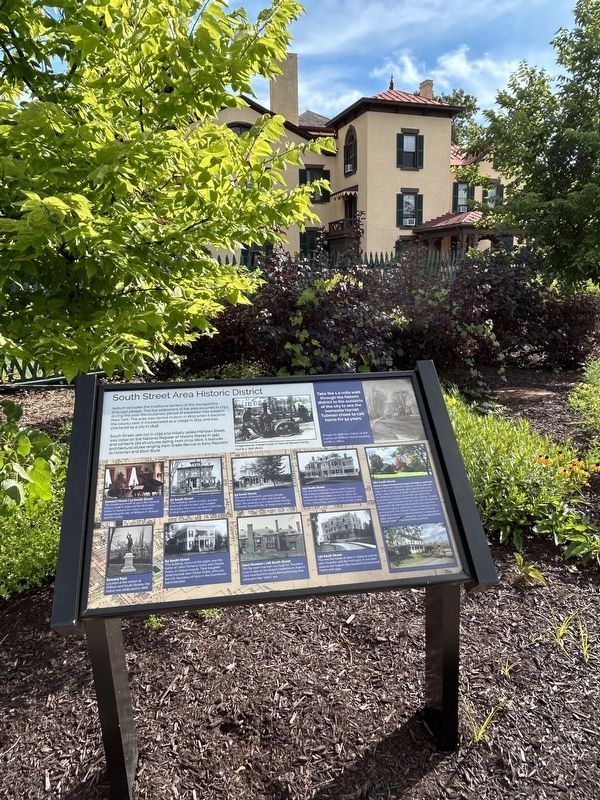
Seward House , 33 South Street. The building in front of you is the Seward House, built in 1816 and the first brick home in Auburn. It is now a museum interpreting the life of William H. Seward and his family. ,
Seward Park. Located at the corner of William and South Streets, the statue was dedicated in 1888. ,
70 South Street. This building, shown in 1871, was the home of Lorenzo Nye and Caroline Beardsley. Nye was a partner in the Nye and Wait Carpet Factory in Auburn. ,
84 South Street. This building, shown in the 1930s, was home of Lillias Pomeroy A dry and Charles Avery, an Auburn lawyer. Their daughter Janet married John Foster Dulles, who was the U.S. Secretary of State in the Eisenhower Administration. ,
99 South Street. The home of David M. and Eliza Wright Osborne was built in 1872 and stood until 1936. The property was a wheatfield and the Osbornes turned it into an impressive estate. ,
Case Mansion , 108 South Street. The 65-room mansion was built for Theodore Case in 1931 as the largest residence in Auburn. Case invented the sound film technology that ushered in talkie era. ,
115 South Street. This was the home of Thomas Mott Osborne, noted prison reformer and former mayor of Auburn. The home later served as offices for community agencies such as The American Red Cross, United Way, and the Cerebral Palsy Clinic. ,
130 South Street. This was the home of John H. Osborne and his wife Charlotte until the mid. 1930s. It was then used as the Auburn City Hospital Convalescent Home until 1959. ,
180 South Street , Harriet Tubman for the Aged, Residence and Farm. Harriet Tubman settled in Auburn in 1859 with the help of the Seward family who sold her the farm at the edge of town in 1896. Tubman purchased an additional 25 acres at auction on which she planned to establish a home for the elderly. Unable to raise sufficient funds on her own, she deeded the property to the African Methodist Episcopal Zion Church in 1903. In 1908, the Harriet Tubman Home was opened. The Harriet Tubman Home for the Aged was named a National Historic Landmark in 1974, and in 2017 the property was designated the Harriet Tubman National Historical Park. , Take the 1.2 mile walk through the historic district to the outskirts of the city to see the homesite Harriet Tubman chose to call home for 54 years.
Auburn occupies the traditional territory of the Gayogohono (Cayuga) people. The first settlement of the area occurred in 1793, during the post-Revolutionary period of expansion into western New York. The area was named Auburn in 1805 when it became the county seat. It incorporated as a village in 1815, and was chartered as a city in 1848.
South Street, laid out in 1795 and initially called Madison Street, was listed on the National Register of Historic Places in 1991 and contains 164 structures dating from circa 1800. It features architectural styles ranging from Greek Revival to Early Republic to Victorian and Stick-Style.
Seward House 33 South Street
The building in front of you is the Seward House, built in 1816 and the first brick home in Auburn. It is now a museum interpreting the life of William H. Seward and his family.
Seward Park
Located at the corner of William and South Streets, the statue was dedicated in 1888.
70 South Street
This building, shown in 1871, was the home of Lorenzo Nye and Caroline Beardsley. Nye was a partner in the Nye & Wait Carpet Factory in Auburn.
84 South Street
This building, shown in the 1930s, was home of Lillias Pomeroy A dry and Charles Avery, an Auburn lawyer. Their
Click or scan to see this page online
daughter Janet married John Foster Dulles, who was the U.S. Secretary of State in the Eisenhower Administration.
99 South Street
The home of David M. and Eliza Wright Osborne was built in 1872 and stood until 1936. The property was a wheatfield and the Osbornes turned it into an impressive estate.
Case Mansion 108 South Street
The 65-room mansion was built for Theodore Case in 1931 as the largest residence in Auburn. Case invented the sound film technology that ushered in talkie era.
115 South Street
This was the home of Thomas Mott Osborne, noted prison reformer and former mayor of Auburn. The home later served as offices for community agencies such as The American Red Cross, United Way, and the Cerebral Palsy Clinic.
130 South Street
This was the home of John H. Osborne and his wife Charlotte until the mid. 1930s. It was then used as the Auburn City Hospital Convalescent Home until 1959.
180 South Street
Harriet Tubman for the Aged, Residence and Farm
Harriet Tubman settled in Auburn in 1859 with the help of the Seward family who sold her the farm at the edge of town in 1896. Tubman purchased an additional 25 acres at auction on which she planned to establish a home for the elderly. Unable to raise sufficient funds on her own,
Photographed by Susan A. Dalaba, September 1, 2025
2. South Street Area Historic District Marker
she deeded the property to the African Methodist Episcopal Zion Church in 1903. In 1908, the Harriet Tubman Home was opened. The Harriet Tubman Home for the Aged was named a National Historic Landmark in 1974, and in 2017 the property was designated the Harriet Tubman National Historical Park.
Take the 1.2 mile walk through the historic district to the outskirts of the city to see the homesite Harriet Tubman chose to call home for 54 years.
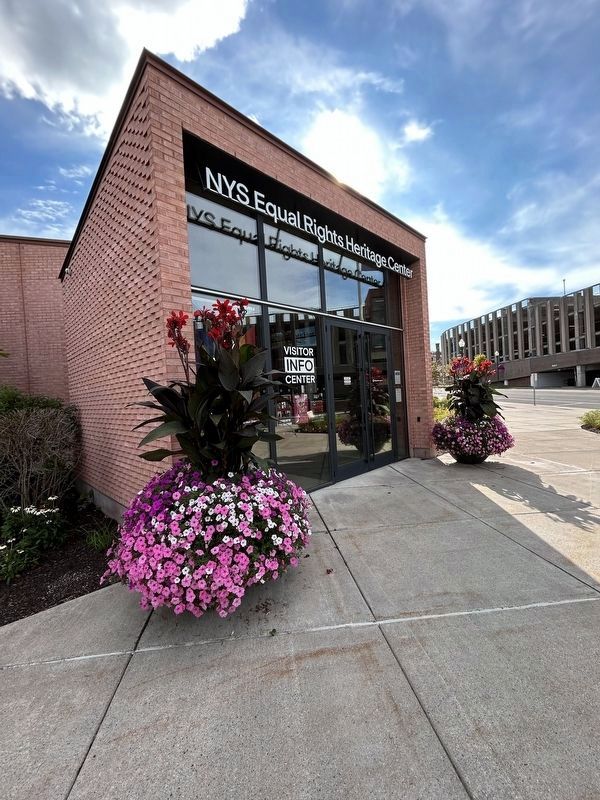
Location. 42° 55.794′ N, 76° 33.981′ W. Marker is in Auburn, New York, in Cayuga County. It is at the intersection of South Street and Lincoln Street, on the right when traveling south on South Street. Located next to the NYS Equal Rights Heritage Center. Touch for map. Marker is at or near this postal address: 25 South Street, Auburn NY 13021, United States of America. Touch for directions.
Regionally, this marker is in Upstate New York, specifically in Central New York, and in the Syracuse Metropolitan Area. It is also in the American Northeast and in the Mid-Atlantic. Globally, it is in the North Atlantic Region, North America, the Western Hemisphere, the Western World, and the Anglosphere. Historically, it finds itself in what was once the Haudenosaunee (Iroquois) Confederacy, New Netherland, and one of the original Thirteen Colonies.
Photographed by Susan A. Dalaba, September 1, 2025
4. NYS Equal Rights Heritage Center
Photographed by Susan A. Dalaba, September 1, 2025
5. South Street Area Historic District Marker

Credits. This page was last revised on September 11, 2025. It was originally submitted on September 5, 2025, by Susan A. Dalaba of Cortland, New York. This page has been viewed 279 times since then and 28 times this year. Photos:1, 2, 3, 4, 5. submitted on September 5, 2025, by Susan A. Dalaba of Cortland, New York. • Michael Herrick was the editor who published this page.