
Near Pleasant View in Montezuma County, Colorado — The American Mountains (Southwest)
The Great Kiva
Lowry Pueblo National Historic Landmark
| — | Canyons of the Ancients National Monument | — |
Photographed by Cosmos Mariner, July 17, 2025
1. The Great Kiva Marker
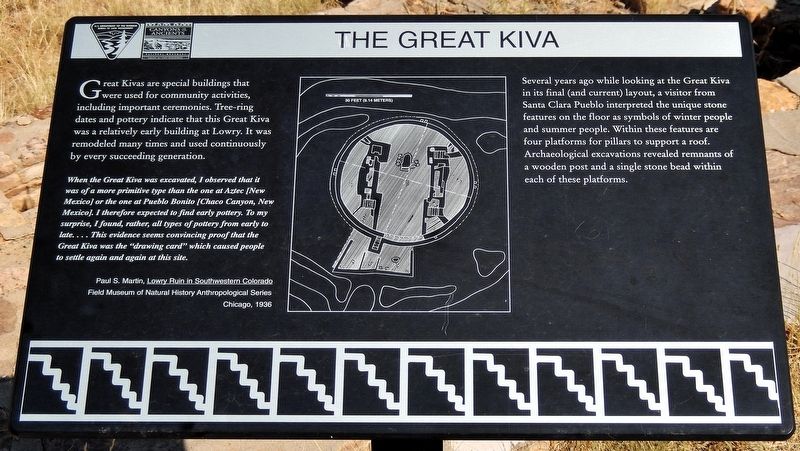
Great Kivas are special buildings that were used for community activities, including important ceremonies. Tree-ring dates and pottery indicate that this Great Kiva was a relatively early building at Lowry. It was remodeled many times and used continuously by every succeeding generation.
When the Great Kiva was excavated, I observed that it was of a more primitive type than the one at Aztec [New Mexico] or the one at Pueblo Bonito [Chaco Canyon, New Mexico]. I therefore expected to find early pottery. To my surprise, I found rather, all types of pottery from early to late… This evidence seems convincing proof that the Great Kiva was the “drawing card” which caused people to settle again and again at this site.
Paul S. Martin, Lowry Ruin in Southwestern Colorado
Field Museum of Natural History Anthropological Series
Chicago, 1936
Several years ago while looking at the Great Kiva in its final (and current) layout, a visitor from Santa Clara Pueblo interpreted the unique stone features on the floor as symbols of winter people and summer people. Within these features are four platforms for pillars to support a roof. Archaeological
this page online
Erected by U. S. Department of the Interior, Bureau of Land Management.
Topics. This historical marker is listed in these topic lists: Anthropology & Archaeology • Architecture • Indigenous Peoples and Communities.
Location. 37° 35.066′ N, 108° 55.166′ W. Marker is near Pleasant View, Colorado, in Montezuma County. It can be reached from County Road 7.25 0.3 miles south of County Road CC. The marker and the Great Kiva are located on the Lowry Pueblo National Historic Landmark interpretive trail. Touch for map. Marker is in this post office area: Pleasant View CO 81331, United States of America. Touch for directions.

Regionally, this marker is in the American Mountain West, in Colorado Plateau, and at the Four Corners. Globally, it is in North America, the Rocky Mountains, the Western Hemisphere, the Western World, and the Anglosphere. Historically, it finds itself in what was once Mexico’s Alta California.
Other nearby markers. At least 8 other markers are
Photographed by Cosmos Mariner, July 17, 2025
2. The Great Kiva Marker
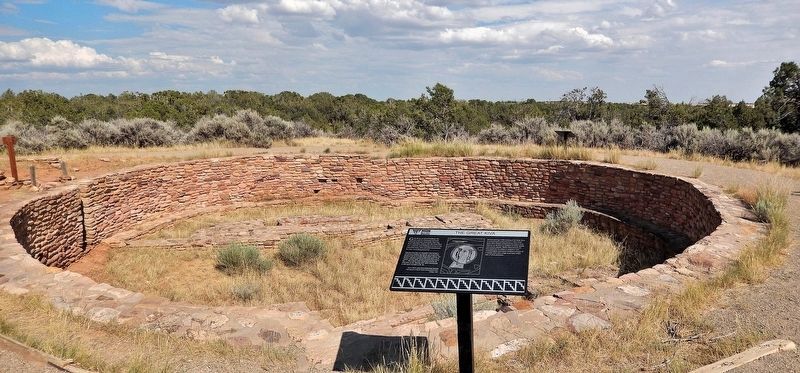
Looking east across the Great Kiva.
Related markers. Click here for a list of markers that are related to this marker. Lowry Pueblo National Historic Landmark
Also see . . . Lowry Pueblo National Historic Landmark (www.cyark.org).
Excerpt: The Great Kiva, located away from the main living area at the landmark is a remarkable example of community architecture. With a diameter of more than 50 feet across the structure would have been capable of seating around 100 people. Kivas were used for ceremonial and political purposes and were traditionally reserved for men.(Submitted on September 8, 2025, by Cosmos Mariner of Cape Canaveral, Florida.)
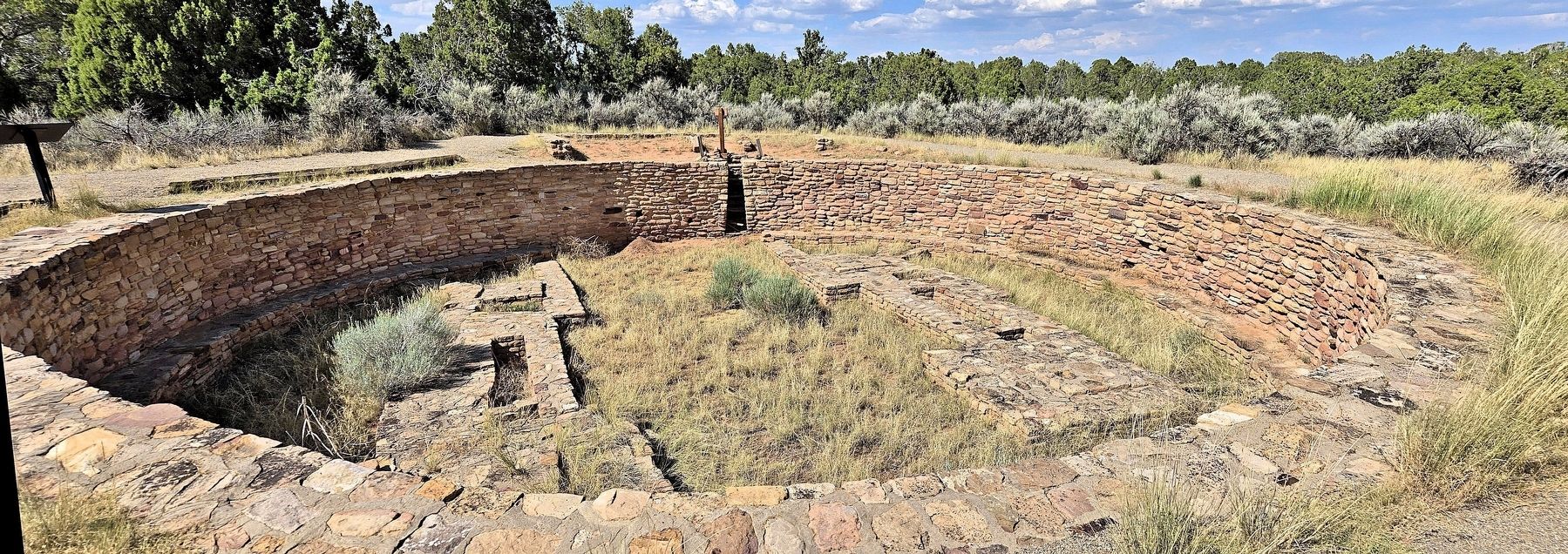
An ancestralPuebloan in the 1100’s looking around the Kiva would have seen white bold geometric designs running around the inside. Unfortunately, the kiva wall paintings have thoroughly deteriorated since the site was re-excavated in the 1970's.Photographed by Cosmos Mariner, July 17, 20253. The Great KivaLooking north across the Great Kiva. The long stone features on the floor of the Kiva (along the east and west sides) may represent winter people and summer people — when viewed from overhead. This historical marker is visible at the far upper left.
Credits. This page was last revised on December 30, 2025. It was originally submitted on September 6, 2025, by Cosmos Mariner of Cape Canaveral, Florida. This page has been viewed 128 times since then and 45 times this year. Photos: 1, 2, 3. submitted on September 8, 2025, by Cosmos Mariner of Cape Canaveral, Florida.
