Fanshawe in London in Middlesex County, Ontario — Central Canada (North America)
Impact of European Settlement
Photographed by Tim Boyd, September 14, 2025
1. Impact of European Settlement Marker
Building a New Life
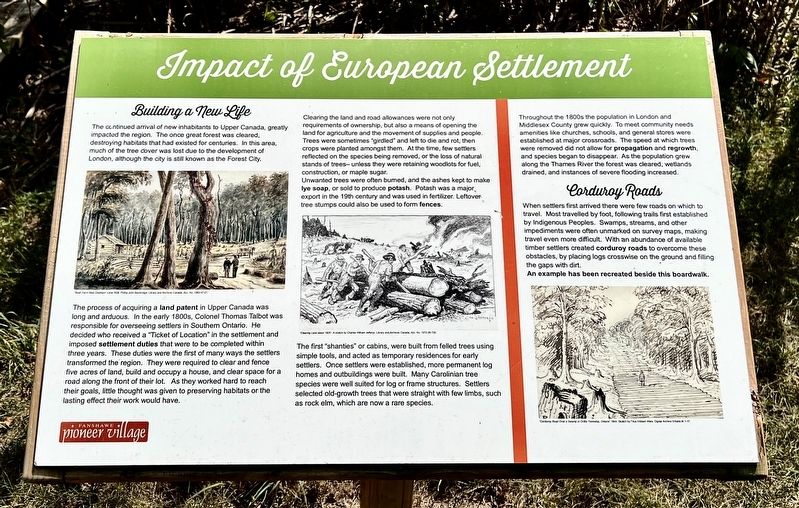
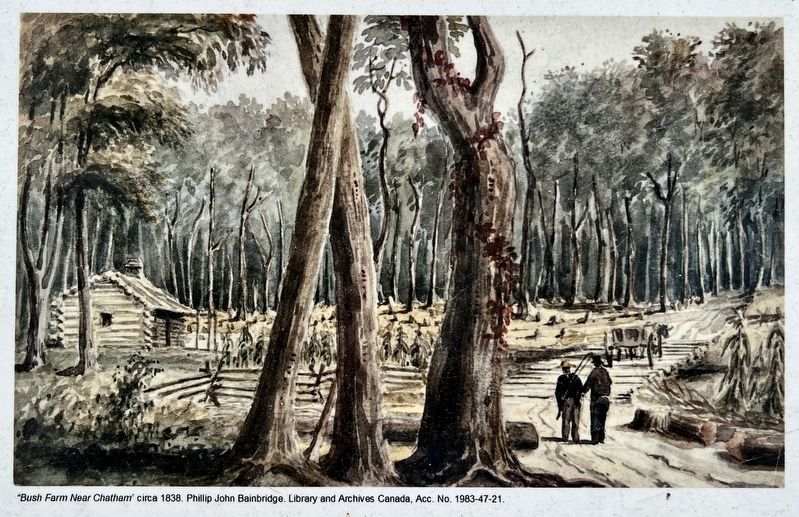
The continued arrival of new inhabitants to Upper Canada, greatly impacted the region. The once great forest was cleared, destroying habitats that had existed for centuries. In this area, much of the tree cover was lost due to the development of London, although the city is still known as the Forest City.
The process of acquiring a land patent in Upper Canada was long and arduous. In the early 1800s, Colonel Thomas Talbot was responsible for overseeing settlers in Southern Ontario. Не decided who received a "Ticket of Location" in the settlement and imposed settlement duties that were to be completed within three years. These duties were the first of many ways the settlers transformed the region. They were required to clear and fence five acres of land, build and occupy a house, and clear space for a road along the front of their lot. As they worked hard to reach their goals, little thought was given to preserving habitats or the lasting effect their work would have.
Clearing the land and road allowances were not only requirements of ownership, but also a means of opening the land
this page online
Unwanted trees were often burned, and the ashes kept to make lye soap, or sold to produce potash. Potash was a major export in the 19th century and was used in fertilizer. Leftover tree stumps could also be used to form fences.
The first "shanties" or cabins, were built from felled trees using simple tools, and acted as temporary residences for early settlers. Once settlers were established, more permanent log homes and outbuildings were built. Many Carolinian tree species were well suited for log or frame structures. Settlers selected old-growth trees that were straight with few limbs, such as rock elm, which are now a rare species.
Throughout the 1800s the population in London and Middlesex County grew quickly. To meet community needs amenities like churches, schools, and general stores
Photographed by Tim Boyd, September 14, 2025
2. Impact of European Settlement marker illustration and caption detail (left)
Corduroy Roads
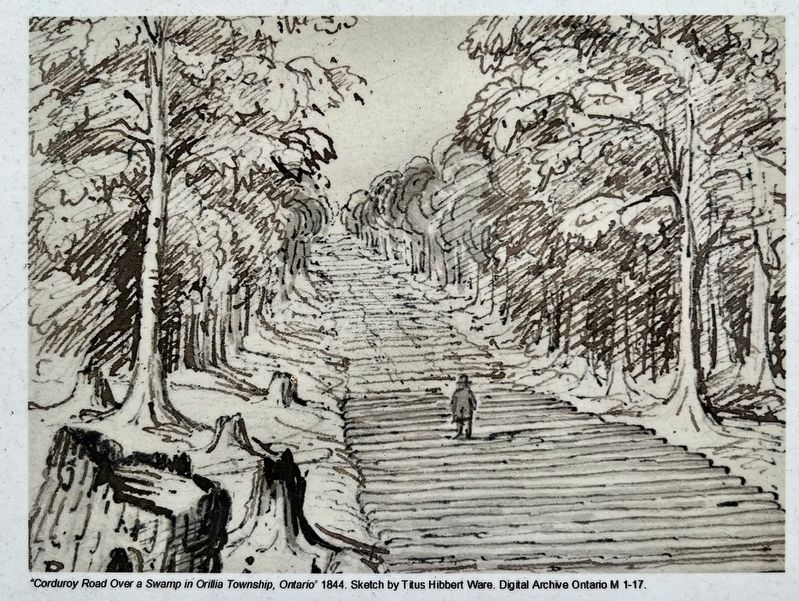
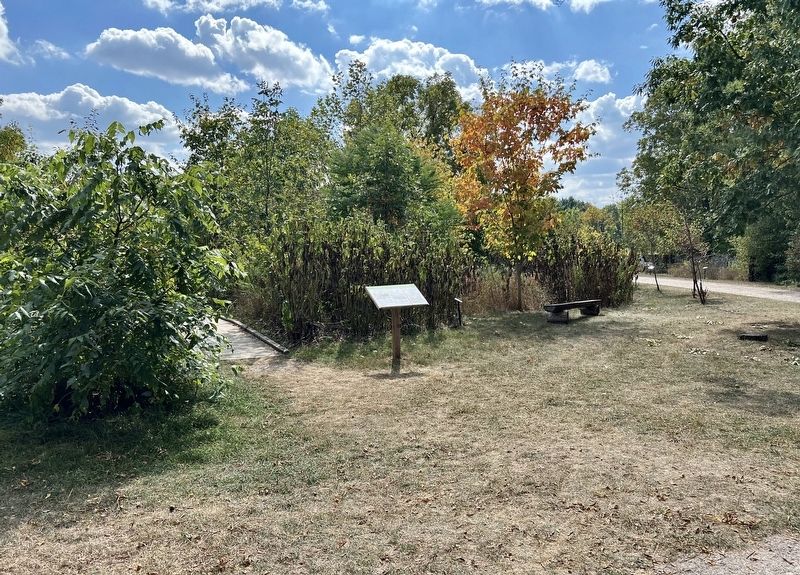
When settlers first arrived there were few roads on which to travel. Most travelled by foot, following trails first established by Indigenous Peoples. Swamps, streams, and other impediments were often unmarked on survey maps, making travel even more difficult. With an abundance of available timber settlers created corduroy roads to overcome these obstacles, by placing logs crosswise on the ground and filling the gaps with dirt. An example has been recreated beside this boardwalk.
Erected by Fanshawe Pioneer Village.
Topics. This historical marker is listed in these topic lists: Environment • Roads & Vehicles • Settlements & Settlers.
Location. 43° 3.32′ N, 81° 10.834′ W. Marker is in London, Ontario, in Middlesex County. It is in Fanshawe. It can be reached from Fanshawe

Photographed by Tim Boyd, September 14, 2025
3. Impact of European Settlement marker illustration and caption detail (centre)

Regionally, this marker is in the Southwest Ontario Area and in Southwestern Ontario. It is also in Central Canada. Globally, it is in North America, the Western Hemisphere, the Western World, and the Anglosphere. Historically, it finds itself in what was once a British colony, the Viceroyalty of New France, the Haudenosaunee (Iroquois) Confederacy, and Rupert’s Land.
Other nearby markers. At least 8 other markers are within walking distance of this marker: Elgie Log House (a few steps from this marker); Emigration: (a few steps from this marker); The Resources of the Woodland (a few steps from this marker); African Methodist Episcopal Church
Photographed by Tim Boyd, September 14, 2025
4. Impact of European Settlement marker illustration and caption detail (right)
Photographed by Tim Boyd, September 14, 2025
5. Impact of European Settlement Marker
Credits. This page was last revised on September 18, 2025. It was originally submitted on September 16, 2025, by Tim Boyd of Hamilton, Ontario. This page has been viewed 50 times since then and 9 times this year. Photos: 1, 2, 3, 4, 5. submitted on September 16, 2025, by Tim Boyd of Hamilton, Ontario. • Andrew Ruppenstein was the editor who published this page.
