Regierungsvierte in Berlin in Mitte, Germany — Northeast German Plain (The European Plain)
Wilhelmstraße 62
Photographed by Andrew Ruppenstein, September 3, 2025
1. Wilhelmstraße 62 Marker

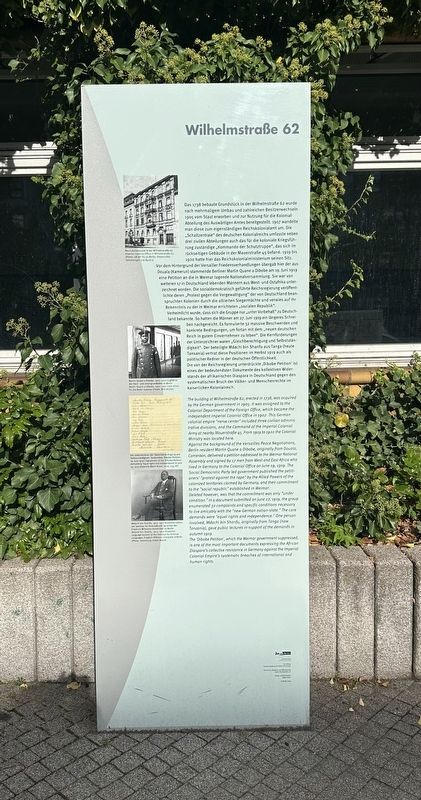
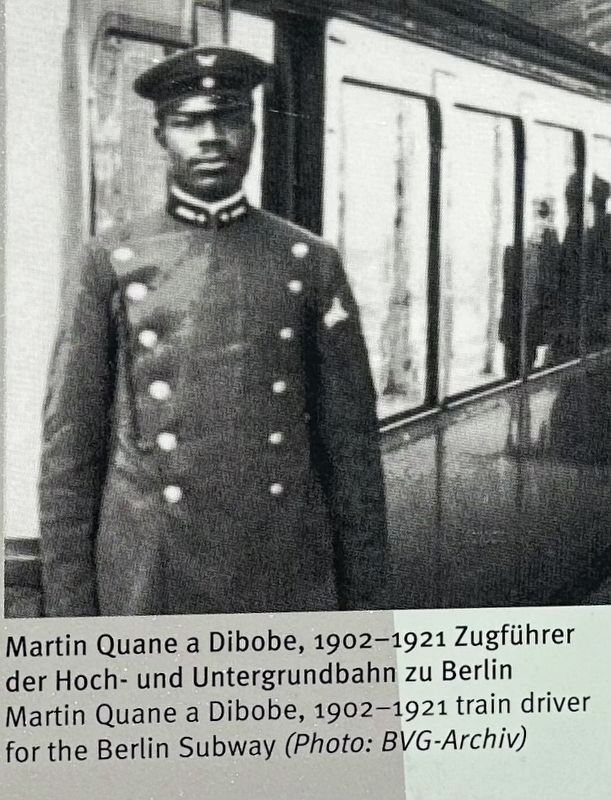
Vor dem Hintergrund der Versailler Friedensverhandlungen übergab hier der aus Douala (Kamerun) stammende Berliner Martin Quane a Dibobe am 19. Juni 1919 eine Petition an die in Weimar tagende Nationalversammlung. Sie war von weiteren 17 in Deutschland lebenden Männern aus West- und Ostafrika unterzeichnet worden. Die sozialdemokratisch geführte Reichsregierung veröffentlichte deren „Protest gegen die Vergewaltigung“ der von Deutschland beanspruchten Kolonien durch die alliierten Siegermächte und verwies auf ihr Bekenntnis zu der in Weimar errichteten „sozialen Republik“.
Verheimlicht wurde, dass sich die Gruppe nur „unter Vorbehalt“ zu Deutschland bekannte. So hatten die Männer am 27. Juni 1919 ein längeres Schreiben nachgereicht. Es formulierte 32 massive Beschwerden und konkrete Bedingungen, um fortan mit dem „neuen deutschen Reich in gutem Einvernehmen zu leben“. Die Kernforderungen der Unterzeichner waren „Gleichberechtigung und Selbstständigkeit“. Der beteiligte Mdachi bin Sharifu aus Tanga (heute Tansania) vertrat diese Positionen im Herbst 1919 auch als politischer Redner in der deutschen Öffentlichkeit. Die von der Reichsregierung unterdrückte, ‚Dibobe-Petition’ ist eines der bedeutendsten
this page online
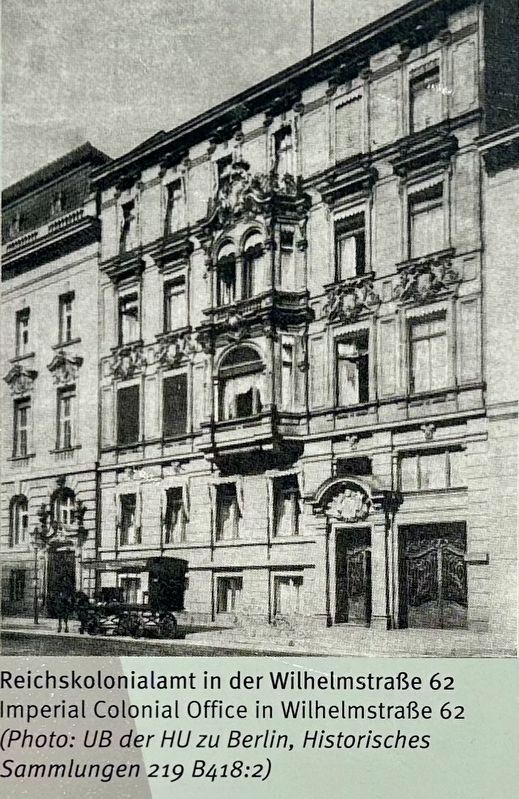
Against the background of the Versailles Peace Negotiations, Berlin resident Martin Quane a Dibobe, originally from Douala, Cameroon, delivered a petition addressed to the Weimar National Assembly and signed by 17 men from West and East Africa who lived in Germany to the Colonial Office on June 19, 1919. The Social Democratic Party led government published the petitioners' "protest against the rape” by the Allied Powers of the colonized territories claimed by Germany, and their commitment to the "social
Photographed by Andrew Ruppenstein, September 3, 2025
2. Wilhelmstraße 62 Marker - wide view
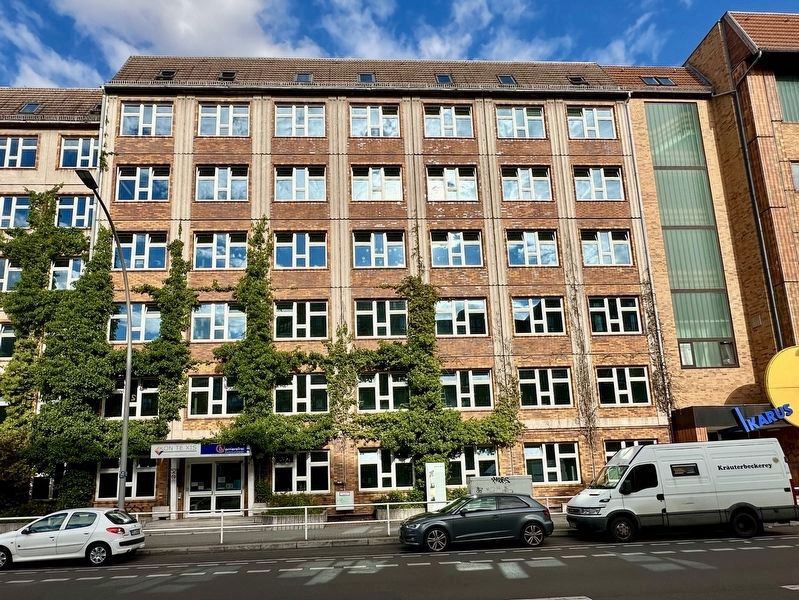
The marker is visible here directly behind the black car.
Deleted however, was that the commitment was only "under condition.” In a document submitted on June 27, 1919, the group enumerated 32 complaints and specific conditions necessary to live amicably with the "new German nation-state.” The core demands were "equal rights and independence.” One person involved, Mdachi bin Sharifu, originally from Tanga (now Tanzania), gave public lectures in support of the demands in autumn 1919.
The 'Dibobe Petition', which the Weimar government suppressed, is one of the most important documents expressing the African Diaspora's collective resistance in Germany against the Imperial Colonial Empire's systematic breaches of international and human rights.
Topics. This historical marker is listed in these topic lists: Civil Rights • Colonial Era • Government & Politics. A significant historical date for this entry is June 19, 1919.
Location. 52° 30.766′ N, 13° 22.974′ E. Marker is in Berlin, in Mitte. It is in Regierungsvierte. It is on Wilhelmstraße, on the left when traveling south. Touch for map. Marker is at or near this postal address: Wilhelmstraße 52,
3. Marker photo: Wilhelmstraße 62

Regionally, it is in Europe, the European Union, Atlantic Europe, Central Europe, the Schengen Area, Western Europe, and the Western World. Historically, it finds itself in what was once the Holy Roman Empire, the former East Germany, and at the Berlin Wall.
Other nearby markers. At least 8 other markers are within walking distance of this marker: Herbert Gollnow (a few steps from this marker); Ilse Stöbe (a few steps from this marker); Dr. Herbert Mumm von Schwarzenstein (a few steps from this marker); Dr. Otto Kiep (a few steps from this marker); Dr. Hans Litter (a few steps from this marker); Rudolf von Scheliha (within shouting distance of this marker); Hans Bernd von Haefen (within shouting distance of this marker); Ulrich von Hassell (within shouting distance of this marker). Touch for a list and map of all markers in Berlin.
Additional keywords. colonialism
4. Marker photo - Martin Quane a Dibobe
Credits. This page was last revised on September 19, 2025. It was originally submitted on September 19, 2025, by Andrew Ruppenstein of Lamorinda, California. This page has been viewed 84 times since then and 39 times this year. Photos: 1, 2, 3, 4. submitted on September 19, 2025, by Andrew Ruppenstein of Lamorinda, California.
