Penn Quarter in Northwest Washington in Washington, District of Columbia — The American Northeast (Mid-Atlantic)
Abraham Lincoln
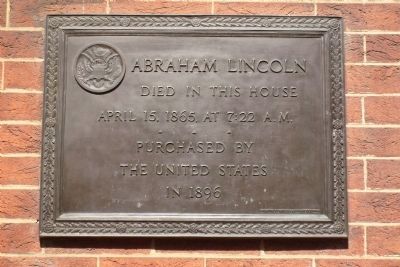
Photographed by William Fischer, Jr., June 12, 2008
1. Abraham Lincoln Marker
Erected 1928 by Citizens’ Committee.
Topics and series. This historical marker is listed in these topic lists: Government & Politics • Notable Buildings • Notable Events • War, US Civil. In addition, it is included in the Booth's Escape, and the Former U.S. Presidents: #16 Abraham Lincoln series lists. A significant historical month for this entry is April 1819.
Location. 38° 53.798′ N, 77° 1.573′ W. Marker is in Northwest Washington in Washington, District of Columbia. It is in the Penn Quarter. It is at the intersection of 10th Street Northwest and E Street Northwest, on the right when traveling south on 10th Street Northwest. The house is a component of and directly across the street from Ford's Theatre, National Historic Site. Touch for map. Marker is at or near this postal address: 516 10th Street Northwest, Washington DC 20004, United States of America. Touch for directions.

Regionally, this marker is in the Washington Metropolitan Area. It is also in the American Northeast, in the Upper South, in
this page online
Other nearby markers. At least 8 other markers are within walking distance of this marker: The Christian Index (within shouting distance of this marker); a different marker also named "Woodies" comes to F Street (about 300 feet away); Knights of Pythias (about 400 feet away); John Wilkes Booth's Escape (about 400 feet away); John J. Donovan, Jr. (about 500 feet away); The Woodward and Lothrop "Woodies" Colorization Project (about 600 feet away); St. Patrick's Parish (about 600 feet away); a different marker also named The Woodward and Lothrop "Woodies" Colorization Project (about 600 feet away). Touch for a list and map of all markers in Northwest Washington.
Other markers no longer nearby. "Woodies" comes to F Street (was about 300 feet away, measured in a direct line but has been replaced with another marker now near it); a different marker also named John Wilkes Booth’s Escape (was about 400 feet away but has been replaced with another marker now
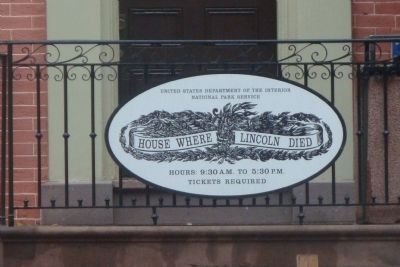
Photographed by Pat Filippone, August 3, 2011
2. House Where Lincoln Died Marker
Also see . . .
1. Abraham Lincoln Assassination. (Submitted on March 22, 2008, by Richard E. Miller of Oxon Hill, Maryland.)
2. Ford's Theatre. (Submitted on March 22, 2008, by Richard E. Miller of Oxon Hill, Maryland.)
3. Dr. Anderson Ruffin Abbott - African American physician. (Submitted on March 22, 2008, by Richard E. Miller of Oxon Hill, Maryland.)
4. Ford's Theater National Historic Site. National Park Service site. (Submitted on March 22, 2008, by Craig Swain of Leesburg, Virginia.)
5. Lincoln Assassination. A "YouTube" compilation about the Abraham Lincoln Assassination - with old photos. (Submitted on February 11, 2009, by Al Wolf of Veedersburg, Indiana.)
6. Inside the House Lincoln Died In:. A "YouTube" quick tour of the house's interior, including the bedroom in which Lincoln died. (Submitted on February 11, 2009, by Al Wolf of Veedersburg, Indiana.)
7. Booth's Escape Byway, Maryland Office of Tourism. (Submitted on August 19, 2019.)
Additional keywords. Mary Todd Lincoln; Edward M. Stanton; Dr. Charles Leale; Dr. Anderson Ruffin Abbott;
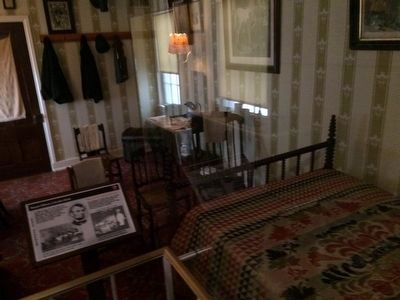
Photographed by J. Makali Bruton, October 4, 2015
3. The Petersen House - Room Where Lincoln Died
In this room, at 7:22 A.M. on April 15, 1865, an unconscious Abraham Lincoln breathed his last. Mr. Lincoln was therefore unable to witness the nation reunite after its greatest trial.
"Now he belongs to the ages."
According to John Hay, one of the President's personal secretaries, these profound words were uttered by Edward Stanton at the time of Lincoln's death.
Captions:
Of the many depictions of the death scene, this drawing is the most accurate.
Photo taken April 15, 1865
The original bed is on exhibit in the Chicago American History Museum.
"Now he belongs to the ages."
According to John Hay, one of the President's personal secretaries, these profound words were uttered by Edward Stanton at the time of Lincoln's death.
Captions:
Of the many depictions of the death scene, this drawing is the most accurate.
Photo taken April 15, 1865
The original bed is on exhibit in the Chicago American History Museum.
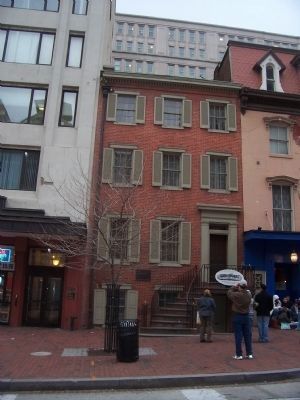
Photographed by Richard E. Miller, March 18, 2008
4. The Petersen House
William A. Petersen was a tailor whose shop was on Pennsylvania Avenue. He and his wife Anna owned this house, constructed in 1849. They let out rooms to transients, including performers at Ford's Theater. One of these, John Wilkes Booth, may once have boarded in the room where Lincoln died.
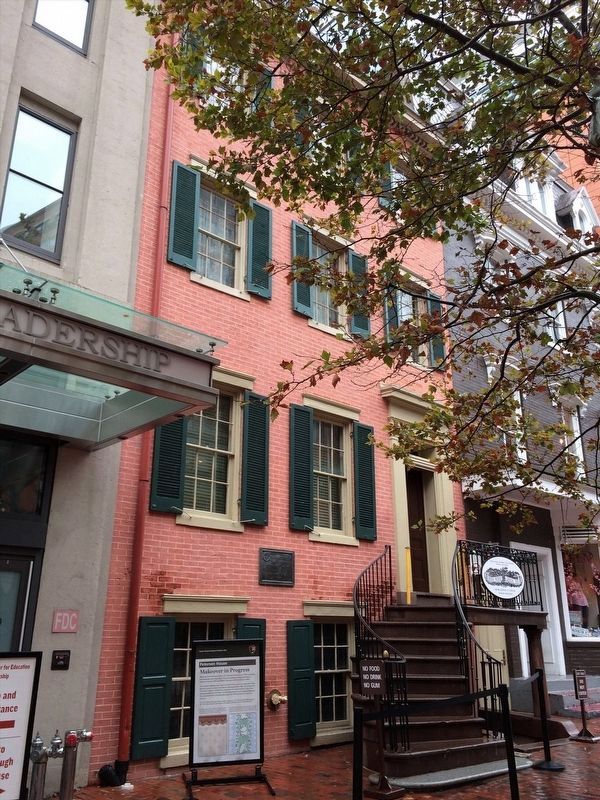
Photographed by Adam Margolis, September 8, 2018
5. Petersen House
This is the house where President Lincoln died, located directly across the street from Fords Theatre.
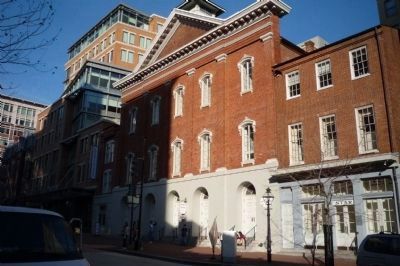
Photographed by Richard E. Miller, February 9, 2009
6. Ford's Theater
scene of Lincoln's murder, directly across 10th street from the Petersen House.
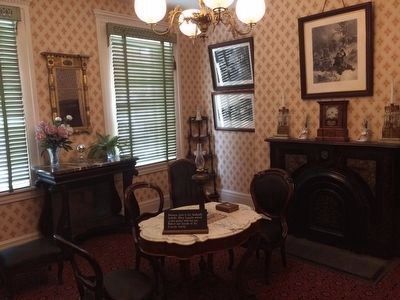
Photographed by J. Makali Bruton, October 4, 2015
7. Parlor of the Petersen house
The marker on the table reads, "Between visits to her husband's bedside, Mary Lincoln waited in this parlor with her son Robert and friends of the Lincoln family."
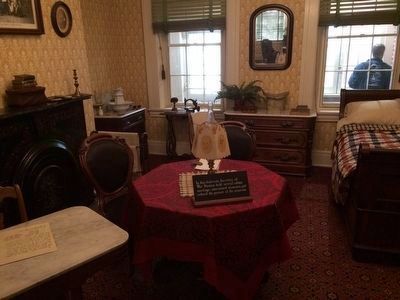
Photographed by J. Makali Bruton, October 4, 2015
8. The Petersen House additional bedroom
The marker on the table reads, "In this bedroom, Secretary of War Stanton held several cabinet meetings, interviewed witnesses and ordered the pursuit of the assassins."
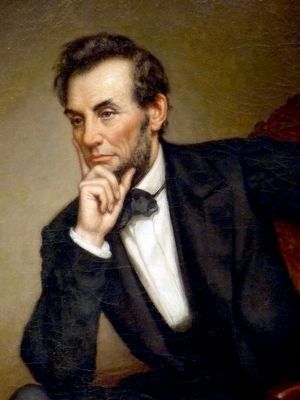
Photographed by Allen C. Browne, February 16, 2015
9. Abraham Lincoln
This 1887 portrait of Abraham Lincoln by George P. A. Healy hangs in the National Portrait Gallery in Washington DC.
“Today Abraham Lincoln is universally regarded as one of our greatest presidents. But from the start of his administration, Lincoln, guiding the nation in a time of civil war, was beset with criticism from all sides. Some charged him with moral cowardice for initially insisting that an end to slavery was not one of his wartime goals; others accused him of overstepping his constitutional powers; still others blamed him for military reverses in the field. But as Union forces moved toward victory, Lincoln's eloquent articulation of the nation's ideals and his eventual call for an end to slavery gradually invested him with grandeur. following his assassination in 1865, that grandeur beca.me virtually unassailable.
The original version of this portrait was a template for artist George P. A. Healy's large painting The Peacemakers, depicting Lincoln in consultation with three of his main military advisers at the end of the Civil War. But Healy recognized that this made a fine portrait in its own right and eventually made three replicas, including this one.” — National Portrait Gallery
“Today Abraham Lincoln is universally regarded as one of our greatest presidents. But from the start of his administration, Lincoln, guiding the nation in a time of civil war, was beset with criticism from all sides. Some charged him with moral cowardice for initially insisting that an end to slavery was not one of his wartime goals; others accused him of overstepping his constitutional powers; still others blamed him for military reverses in the field. But as Union forces moved toward victory, Lincoln's eloquent articulation of the nation's ideals and his eventual call for an end to slavery gradually invested him with grandeur. following his assassination in 1865, that grandeur beca.me virtually unassailable.
The original version of this portrait was a template for artist George P. A. Healy's large painting The Peacemakers, depicting Lincoln in consultation with three of his main military advisers at the end of the Civil War. But Healy recognized that this made a fine portrait in its own right and eventually made three replicas, including this one.” — National Portrait Gallery
Credits. This page was last revised on January 30, 2023. It was originally submitted on March 22, 2008, by Richard E. Miller of Oxon Hill, Maryland. This page has been viewed 3,559 times since then and 55 times this year. Last updated on March 10, 2010, by Richard E. Miller of Oxon Hill, Maryland. Photos: 1. submitted on October 8, 2008, by William Fischer, Jr. of Reynoldsburg, Ohio. 2. submitted on May 31, 2015, by Pat Filippone of Stockton, California. 3. submitted on October 8, 2015, by J. Makali Bruton of Washington, District of Columbia. 4. submitted on March 22, 2008, by Richard E. Miller of Oxon Hill, Maryland. 5. submitted on February 2, 2022, by Adam Margolis of Mission Viejo, California. 6. submitted on February 7, 2009, by Richard E. Miller of Oxon Hill, Maryland. 7, 8. submitted on October 8, 2015, by J. Makali Bruton of Washington, District of Columbia. 9. submitted on October 29, 2015, by Allen C. Browne of Silver Spring, Maryland. • Craig Swain was the editor who published this page.
