Taylor Run in Alexandria, Virginia — The American South (Mid-Atlantic)
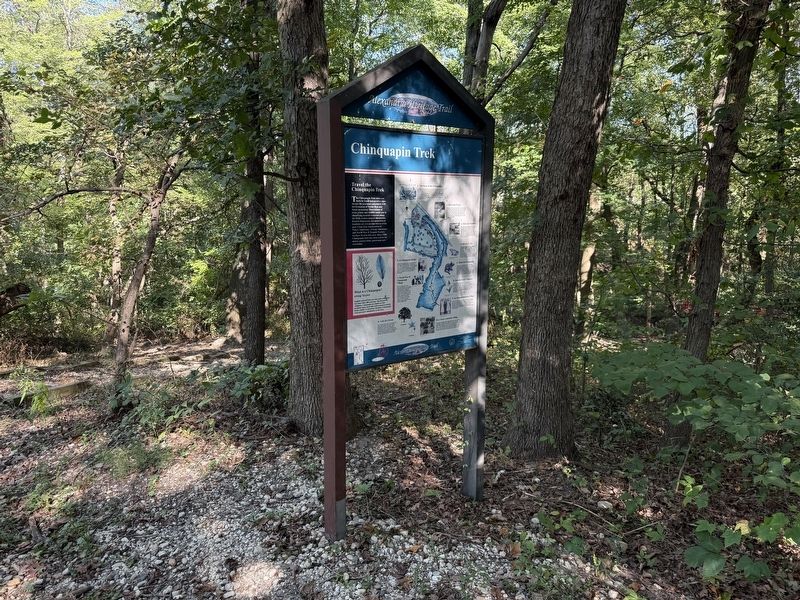
Chinquapin Trek
Alexandria Heritage Trail
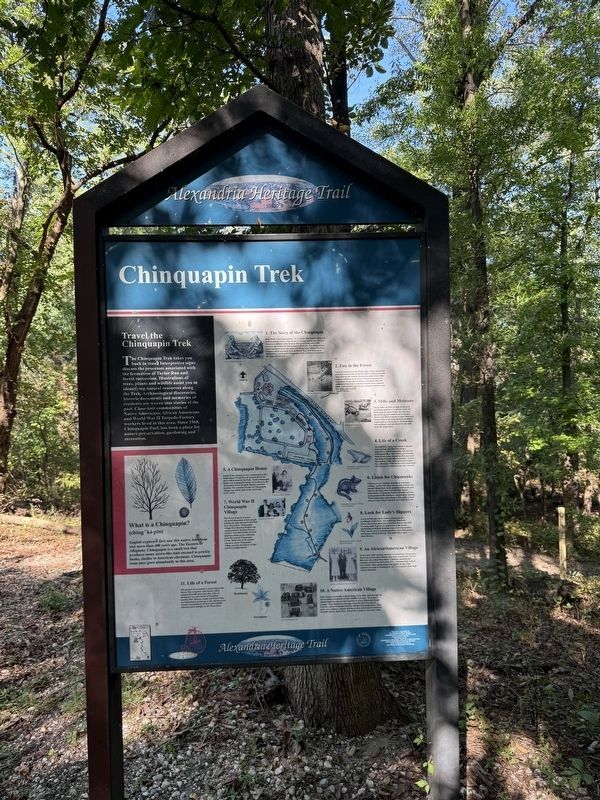
Travel the Chinquapin Trek
The Chinquapin trek takes you back in time. Interpretive signs discuss the process associated with the formation of Taylor Run and forest succession. Illustration of trees, plants and wildlife assist you in identifying natural resources along the Trek. Archaeological discoveries, historic documents and memories of residents are woven into stories of the past. Close-knit communities of Native Americans, African Americans and World War II Torpedo Factory workers lived in this area. Since 1968, Chinquapin Park has been a place for nature preservation, gardening and recreation.
What is a Chinquapin?
(chĭng´kȧ•pĭn)
English explorers first saw this native American tree more than 400 years ago. The Eastern or Allegheny Chinquapin is a small tree that produces many acorn like nuts encased in prickly husks, similar to American chestnuts. Chinquapin trees once grew abundantly in this area.
1. The Story of the Chinquapin
Nuts from "chechinquamins," as Captain John Smith observed, were boiled by Native Americans for bread and broth. African American children who lived in this area
this page online
2. Fun in the Forest
Natural resources in the Taylor Run valley and forest provided many basic needs for Native Americans who once lived in the vicinity. In the first half of the 20th century, children used many of these resources for recreation. Long-time residents remember that the swimming hole was a welcome respite from summer heat. Girls molded clay found along the stream bank into dolls and cookies.
3. Mills and Molasses
Taylor Run and the springs in the area have been sources of drinking water for thousands of years. Water has also had agricultural and commercial purposes. Water was used to power a sugar mill near Taylor Run; a pressing machine crushed sugar cane to extract juice. Refined sugar and molasses were produced by the mill from the sugar juice.
4. Life of a Creek
Alexandria's numerous creeks originate from springs and flow into larger
![The Alexandria Heritage Trail [Reverse] image. Click for full size.](Photos9/900/Photo900384.jpg?102202591200PM "The Alexandria Heritage Trail [Reverse]. Click for full size.")
Photographed by Devry Becker Jones (CC0), October 1, 2025
2. The Alexandria Heritage Trail [Reverse]
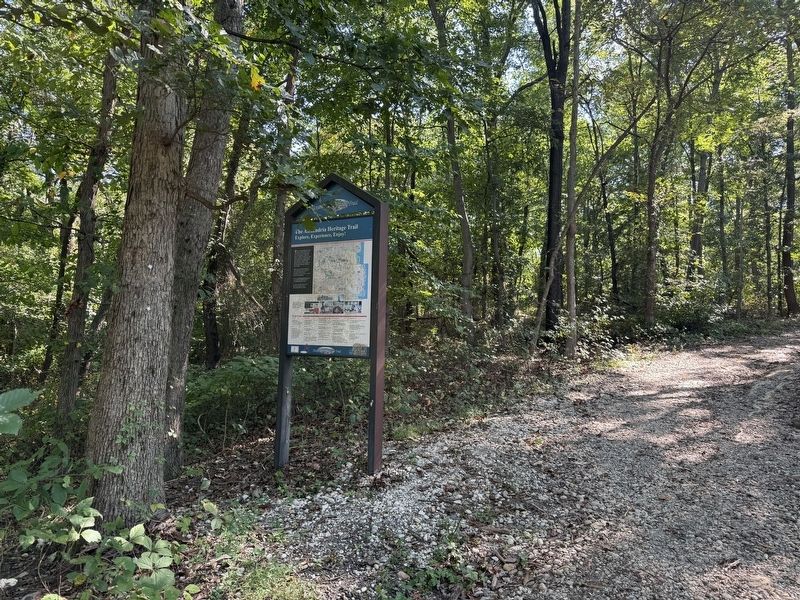
The Alexandria Heritage Trail
Explore, Experience, Enjoy!
The Alexandria Heritage Trail takes you from Old Town to the West End on a 23-mile loop tour of Alexandria's 9,000-year history. It links woodlands, stream valleys, museums, archaeological sites and historic neighborhoods. The Trail also connects to the Mount Vernon Trail, a segment of the Potomac Heritage National Scenic Trail.
Follow the Alexandria Heritage Trail and discover how much of the past is still present in Alexandria, one of America's most historic communities.
• See www.historicalexandria.org to obtain the guidebook to the Alexandria Heritabe Trail
• Visit recreation centers and libraries for copies of the Alexandria Bike Trail Map
Explore, Experience, Enjoy!
The Alexandria Heritage Trail takes you from Old Town to the West End on a 23-mile loop tour of Alexandria's 9,000-year history. It links woodlands, stream valleys, museums, archaeological sites and historic neighborhoods. The Trail also connects to the Mount Vernon Trail, a segment of the Potomac Heritage National Scenic Trail.
Follow the Alexandria Heritage Trail and discover how much of the past is still present in Alexandria, one of America's most historic communities.
• See www.historicalexandria.org to obtain the guidebook to the Alexandria Heritabe Trail
• Visit recreation centers and libraries for copies of the Alexandria Bike Trail Map
5. A Chinquapin House
Small, frame duplexes were constructed at the beginning of World War II around the circle drive still present in the Park. Each Chinquapin House was assigned by lottery to workers in the Alexandria Naval Torpedo Station and their families. The remains of some of Chinquapin Village can still be seen at the north side of the circle.
6. Listen for Chipmunks
Chipmunks are familiar animals in woodland settings. In the Fall, they can be seen scampering around filling their cheek pouches with seeds and nuts for the times they wake during winter hibernation. Chipmunks build elaborate burrows underground with chambers connected by tunnels. When chipmunks sense danger, they make a loud chirp to warn other and dart into their burrows.
7. World War II Chinquapin Village
The Naval Torpedo Factory attracted thousands of new
8. Look for Lady's Slippers
A rare orchid can still be found growing in the woodlands of the Park. Also called the Moccasin-flower, this native plant has a pouched flower attached to a long stalk. It grows in association with forests undergoing transition from one type of tree to another. They cannot survive in home gardens, since they need a soil fungus found in forests. It is unlawful to pick these flowers.
9. An African American Village
In the early 20th century, the area surrounding Chinquapin Park was a close-knit African American community. Part of this area was called Macedonia. Children attended the Seminary School, located where T.C. Williams High School now stands. After graduating from eighth grade, some students traveled to Washington, D.C. to complete their high school education.
10. A Native American Village
Early
11. Life of a Forest
The process of succession is occurring in this forest. The evergreen pine forest, which started about 80 years ago after a fire, is giving way to a new forest of broadleaf species. Oak, hickory, maple and beech trees are beginning to reemerge as the old pine trees become susceptible to disease and windfall, allowing more sunlight on the forest floor.
Topics. This historical marker is listed in these topic lists: African Americans • Colonial Era • Indigenous Peoples and Communities • Settlements & Settlers. A significant historical year for this entry is 1968.
Location. 38° 49.189′ N, 77° 4.829′ W. Marker is in Alexandria, Virginia. It is in Taylor Run. It can be reached from Chinquapin Drive south of King Street (Virginia Route 7), on the right when traveling north. Touch for map. Marker is at or near this postal address: 3100 King St, Alexandria VA 22302, United States of America. Touch for directions.

Regionally, this marker is in the Washington Metropolitan Area and in Northern Virginia. It is also in the American South, specifically in the Upper South, in the Mid-Atlantic, and on the Eastern Seaboard. Globally, it is in the North Atlantic Region, North America, the Western Hemisphere, the Western World, and the Anglosphere. Historically, it finds itself in what was once the territory of the Mississippian Culture, one of the original Thirteen Colonies, one of the Confederate States of America, and the Antebellum South.
Other nearby markers. At least 8 other markers are within walking distance of this marker: Life of a Creek (about 300 feet away, measured in a direct line); Listen for Chipmunks (about 400 feet away); Original Federal Boundary Stone, District of Columbia, Southwest 3 (about 400 feet away); Mills and Molassas (about 500 feet away); A Chinquapin House (approx. 0.2 miles away); A Native American Village (approx. 0.2 miles away); Fun in the Forest (approx. 0.2 miles away); Life of a Forest (approx. ¼ mile away). Touch for a list and map of all markers in Alexandria.
Related marker. Click here for another marker that is related to this marker. An identical marker stands in the parking area for the park.
Credits. This page was last revised on October 2, 2025. It was originally submitted on October 2, 2025, by Devry Becker Jones of Washington, District of Columbia. This page has been viewed 75 times since then and 41 times this year. Photos: 1, 2, 3, 4. submitted on October 2, 2025, by Devry Becker Jones of Washington, District of Columbia.
