Thomas Point Park near Annapolis Neck in Anne Arundel County, Maryland — The American Northeast (Mid-Atlantic)
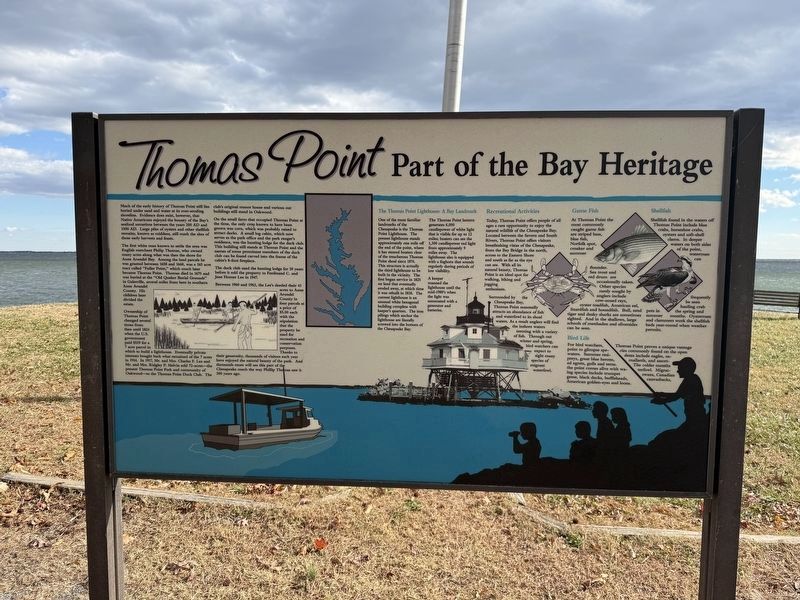
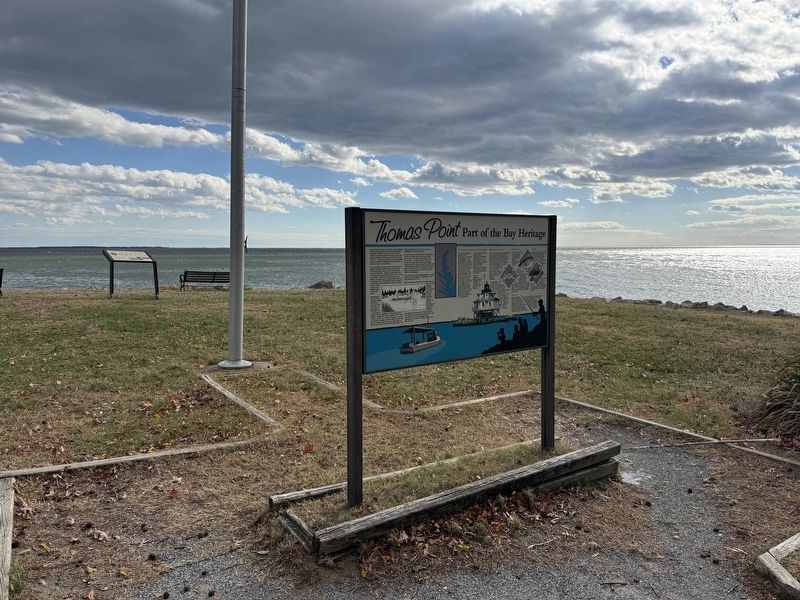
Thomas Point
Part of the Bay Heritage
⎯⎯⎯
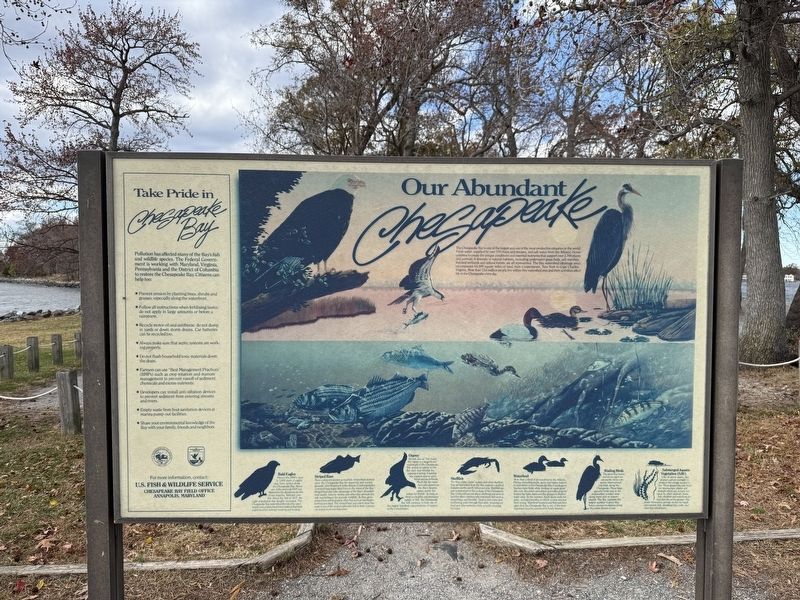
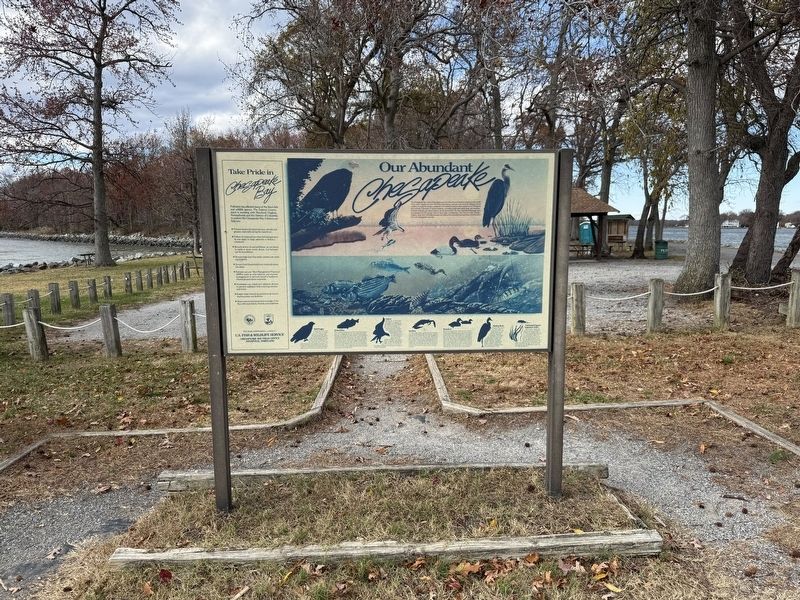
Our Abundant Chesapeake
Part of the Bay Heritage
The first white man known to settle the area was English merchant Philip Thomas, who owned many acres along what was then the shore for Anne Arundel Bay. Among the land parcels he was granted between 1658 and 1668, was a 165 acre tract called "Fuller Point," which much later became Thomas Point. Thomas died in 1675 and was buried at the "Old Quaker Burial Grounds" in Galesville, several miles from here in southern Anne Arundel County. His children later divided the estate.
Ownership of Thomas Point changed several times from then until 1824 when the U.S. government paid $529 for a 7 acre parcel in which to build to lighthouse. Eventually private interests brought back what remained of the 7 acres in 1914.
this page online
On the small farm that occupied Thomas Point at the time, the only crop known to have been grown was corn, which was probably raised to attract ducks. A small log cabin, which now serves as the park office and the park ranger's residence, was the hunting lodge for the duck club. This building still stands at Thomas Point and the names of some prominent member of the duck club can be found carved into the frame of the cabin's 8-foot fireplace.
The duck club used the hunting lodge for 30 years before it sold the property to Ferdinand C. and Jane Homer Lee in 1947.
Between 1960 and 1963, the Lee's deeded their 43 acres to Anne Arundel County in four parcels at a price of $5.00 each with the stipulation that the property be used for recreation and conservation purposes. Thanks to their generosity, thousands of visitors each year have enjoyed the natural beauty of the park. And thousands
Photographed by Devry Becker Jones (CC0), November 16, 2025
2. Our Abundant Chesapeake side of the marker
The Thomas Point Lighthouse: A Bay Landmark
One of the most familiar landmarks of the Chesapeake is the Thomas Point Lighthouse. The present lighthouse stands approximately one mil off the end of the point, where it has steered boaters clear of the treacherous Thomas Point shoal since 1874. This structure is actually the third lighthouse to be built in this vicinity. The first began service in 1825 on land that eventually eroded away, at which time it was rebuilt in 1838. The current lighthouse is an unusual white hexagonal building complete with keeper's quarters. The iron pilings which anchor the lighthouse are literally screwed into the bottom of the Chesapeake Bay.
The Thomas Point lantern generates 6,000 candlepower of white light that is visible for up to 12 miles; boaters can see the 1,300 candlepower red light from approximately 9 miles away. The lighthouse also is equipped with a foghorn that sounds regularly during periods of low visibility.
A keeper manned the lighthouse until the mid-1980's when the light was automated with
Photographed by Devry Becker Jones (CC0), November 16, 2025
3. Thomas Point / Our Abundant Chesapeake Marker
Recreational Activities
Today, Thomas Point offers people of all ages a rare opportunity to enjoy the natural wildlife of the Chesapeake Bay. Located between the Severn and South Rivers, Thomas Point offers visitors breathtaking vistas of the Chesapeake, from the Bay Bridge in the north, across to the Eastern Shore and south as far as the eye can see. With all its natural beauty, Thomas Point is an ideal spot for walking, biking and jogging enthusiasts.
Surrounded by the Chesapeake Bay, Thomas Point seasonally attracts an abundance of fish and waterfowl to its shoal waters. As a result anglers will find the inshore waters teeming with a variety of fish. Through out winter and spring, bird watchers can expect to sight many species of migrant waterfowl.
Game Fish
At Thomas Point the most commonly caught game fish are striped bass, blue fish, Norfolk spot, croaker and summer flounder. Sea trout and red drum are occasionally taken. Other species rarely sought by anglers include cow-nosed rays, oyster toadfish, American eel, lizardfish and houndfish. Bull, sand tiger and dusky sharks are sometimes sighted.
Photographed by Devry Becker Jones (CC0), November 16, 2025
4. Thomas Point / Our Abundant Chesapeake Marker
Shellfish
Shellfish found in the waters off Thomas Point include blue crabs, horseshoe crabs, oysters and soft-shell clams. In deeper waters on both sides of the point, watermen can frequently be seen hauling crab pots in the spring and summer months. Oystermen and clammers work the shellfish beds year-round when weather permits.
Bird Life
For bird watchers, Thomas Point proves a unique vantage point to glimpse species commonly found on the open waters. Summer residents include eagles, ospreys, great blue herons, mallards, and assorted egrets, gulls and terns. The colder months the point comes alive with waterfowl. Migrating species include trumpet swans, Canadian geese, black ducks, buffleheads, canvasbacks, American golden-eyes and loons.
Take Pride in Chesapeake Bay
Pollution has affected many of the Bay's fish and wildlife species. The Federal Government is working with Maryland, Virginia, Pennsylvania and the District of Columbia to restore the Chesapeake Bay. Citizens can help too:
• Prevent erosion by planting trees, shrubs, and grasses, especially along the waterfront.
• Follow all instructions when fertilizing lawns; do not apply in large amounts or before a rainstorm.
• Recycle motor oil and antifreeze; do not dump in yards or down storm drains. Car batteries can be recycled too.
• Always make sure that septic systems are working properly.
• Do not flush household toxic materials down the drain.
• Farmers can use "Best Management Practices" (BMPs) such as crop rotation and manure management to prevent runoff of sediment, chemicals and excess nutrients.
• Developers can install anti-siltation devices to prevent sediment from entering streams and rivers.
• Empty waste from boat sanitation devices at marina pump-out facilities.
• Share your environmental knowledge of the Bay with your family, friends and neighbors.
Bald Eagles
Prior to the 1900's, nearly 3,000 pairs of eagles may have nested along the Chesapeake Bay. heavy use of the pesticide DDT was blamed for the disastrous decline of our majestic National symbol. Since the ban of DDT, the eagle population has steadily increased. The Chesapeake Bay watershed provides the open marsh and undisturbed forest habitat that bald eagles need for nesting, roosting and feeding.
Striped Bass
More commonly known as rockfish, striped bass depend upon the Chesapeake Bay for spawning and nursery ground. Over 90 percent of the Atlantic Coast population of Striped bass also take advantage of the Bay's abundant food supply. Insects, worms, and other tiny animals provide nourishment for juvenile rockfish. As they grow, striped bass will feed upon other fish such as menhaden, herring and shad. The striped bass' succulent meat has made it one of the most sought after fish by both commercial and recreational fishermen.
Osprey
Known also as "fish hawk," the osprey is a magnificent trademark of the Chesapeake. The arrival of osprey to the Bay each year heralds the coming of spring. A familiar site, ospreys nest on piers, buoys and duck blinds. Much like the watermen who depend on the Bay's bounty, osprey patrol the waters for finfish. As long as there is a healthy and abundant supply of fish, the Chesapeake Bay will continue to host one of the largest breeding concentrations of ospreys in the United States.
Shellfish
The blue crabs, clams, oysters, and other shellfish that are harvested from the Bay support a seafood industry worth over $1 billion per year. Shellfish are just as important to the ecology of the Chesapeake Bay. Crabs will eat just about anything and serve as food for other commercially important fish such as striped bass and bluefish. Oysters and clams feed by filtering water through their gills, straining out food and other particles while actually cleaning the water.
Waterfowl
More than a third of all waterfowl in the Atlantic Flyway, including ducks, geese and swans, migrate to and winter on the Chesapeake Bay. Canada geese blacken farm fields while feeding on waste grain like corn. Beautiful canvasback and redhead ducks feed on the tasty clams and Bay grasses in shallow water areas. In the summer, black ducks seek out quiet, secluded marshes in which to nest and rear their young. Waterfowl hunters and bird watchers agree that the Chesapeake Bay is one of the most important areas for waterfowl in North America.
Wading Birds
The great blue heron and snowy egret are among the most commonly observed wading birds along the Chesapeake. These large graceful birds nest in the undisturbed wooded areas along rivers and on remote islands. The Bay supports the largest number of great blue heron colonies (rookeries) along the entire Atlantic Coast.
Submerged Aquatic Vegetation (SAV)
Like all green plants, Bay grasses capture sunlight to produce the energy needed to live. These grasses become food for microscopic plants and animals which are, in turn, fed upon by other animals. Some fish, shellfish and waterfowl also feed directly on the grasses. The plants themselves provide shelter for small and juvenile fish, shedding blue crabs, and other Bay inhabitants.
Topics and series. This historical marker is listed in these topic lists: Animals • Communications • Environment • Waterways & Vessels. In addition, it is included in the Lighthouses series list. A significant historical year for this entry is 1500.
Location. 38° 54.447′ N, 76° 27.627′ W. Marker is near Annapolis Neck, Maryland, in Anne Arundel County. It is in Thomas Point Park. It is on Thomas Point Road one mile south of Gordon Cove Drive, on the right when traveling south. Touch for map. Marker is at or near this postal address: 3890 Thomas Point Rd, Annapolis MD 21403, United States of America. Touch for directions.

Regionally, this marker is in Central Maryland. It is also in the American Mid-Atlantic, in the Chesapeake Bay Region, and on the Eastern Seaboard. Globally, it is in the North Atlantic Region, North America, the Western Hemisphere, the Western World, and the Anglosphere. Historically, it finds itself in what was once one of the original Thirteen Colonies and also the Antebellum South.
Other nearby markers. At least 8 other markers are within 2 miles of this marker, measured as the crow flies: Thomas Point Shoal Lighthouse (a few steps from this marker); Dino (approx. 0.3 miles away); Arundel-on-the-Bay (approx. 0.6 miles away); Dr. Mary Church Terrell (approx. 1½ miles away); Dr. Millard R. "Buddy" Dean (approx. 1.6 miles away); Twin Oaks (approx. 1.6 miles away); Highland Beach Maryland (approx. 1.6 miles away); a different marker also named Twin Oaks (approx. 1.6 miles away). Touch for a list and map of all markers in Annapolis Neck.
Another marker is no longer nearby. Thomas Point / Our Abundant Chesapeake (has been replaced with this marker).
Credits. This page was last revised on November 16, 2025. It was originally submitted on November 16, 2025, by Devry Becker Jones of Washington, District of Columbia. This page has been viewed 83 times since then and 46 times this year. Photos: 1, 2, 3, 4. submitted on November 16, 2025, by Devry Becker Jones of Washington, District of Columbia.
