Urbanna in Middlesex County, Virginia — The American South (Mid-Atlantic)
Wormeley-Lee-Montague House and Marble House
Urbanna, Virginia
| — | The Museum in the Streets | — |
Photographed by Devry Becker Jones (CC0), November 25, 2021
1. Wormeley-Lee-Montague House and Marble House Marker
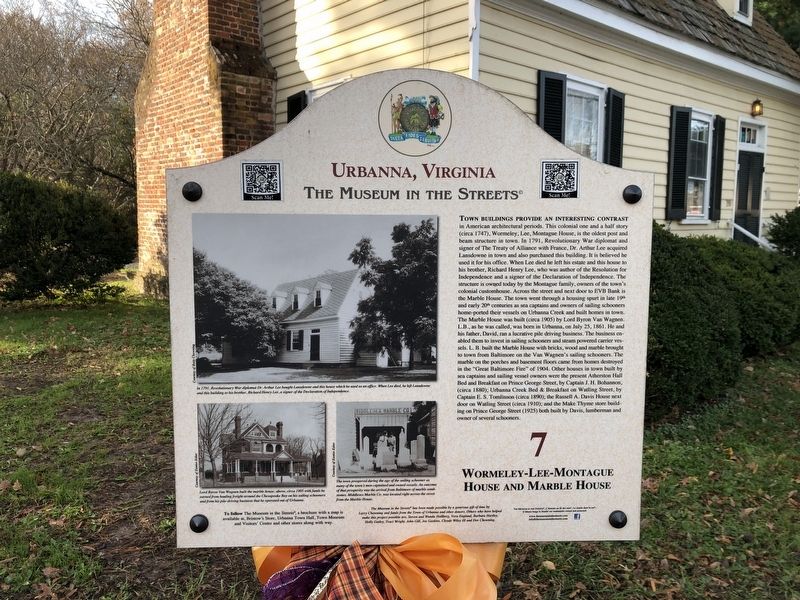
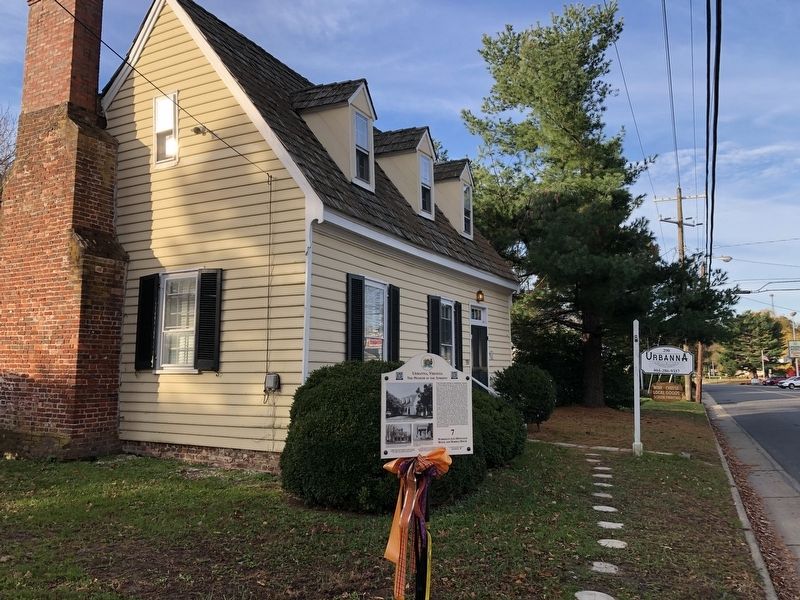
Town buildings provide an interesting contrast in American architectural periods. This colonial one and a half story (circa 1747), Wormeley, Lee, Montague House, is the oldest post and beam structure in town. In 1791, Revolutionary War diplomat and signer of The Treaty of Alliance with France, Dr. Arthur Lee acquired Lansdowne in town and also purchased this building. It is believed he used it for his office. When Lee died he left his estate and this house to his brother, Richard Henry Lee, who was author of the Resolution for Independence and a signer of the Declaration of Independence. The structure is owned today by the Montague family, owners of the town's colonial customhouse. Across the street and next door to EVB Bank is the Marble House. The town went through a housing spurt in late 19th and early 20th centuries as sea captains and owners of sailing schooners home-ported their vessels on Urbanna Creek and built homes in town. The Marble House was built (circa 1905) by Lord Byron Van Wagnen. L.B., as he was called, was born in Urbanna, on July 25, 1861. He and his father, David, ran a lucrative pile driving business.
this page online
Erected by The Museum in the Streets®. (Marker Number 7.)
Topics and series. This historical marker is listed in these topic lists: Architecture • Colonial Era • Industry & Commerce • Waterways & Vessels. In addition, it is included in the The Museum in the Streets: Urbanna, Virginia series list. A significant historical date for this entry is July 25, 1861.
Location. 37° 38.157′ N,
Photographed by Devry Becker Jones (CC0), November 25, 2021
2. Wormeley-Lee-Montague House and Marble House Marker

Regionally, this marker is on the Middle Peninsula. It is also in the American South, specifically in the Upper South, in the Tidewater, in the Chesapeake Bay Region, and on the Eastern Seaboard. Globally, it is in the North Atlantic Region, North America, the Western Hemisphere, the Western World, and the Anglosphere. Historically, it finds itself in what was once the territory of the Mississippian Culture, one of the original Thirteen Colonies, one of the Confederate States of America, and the Antebellum South.
Other nearby markers. At least 8 other markers are within walking distance of this marker: Landsdowne (about 400 feet away, measured in a direct line); Coca-Cola Bottling Plant (about 400 feet away); Prince George Street and Old Tavern (about 500 feet away); Urbanna Baseball
Photographed by Devry Becker Jones (CC0), November 25, 2021
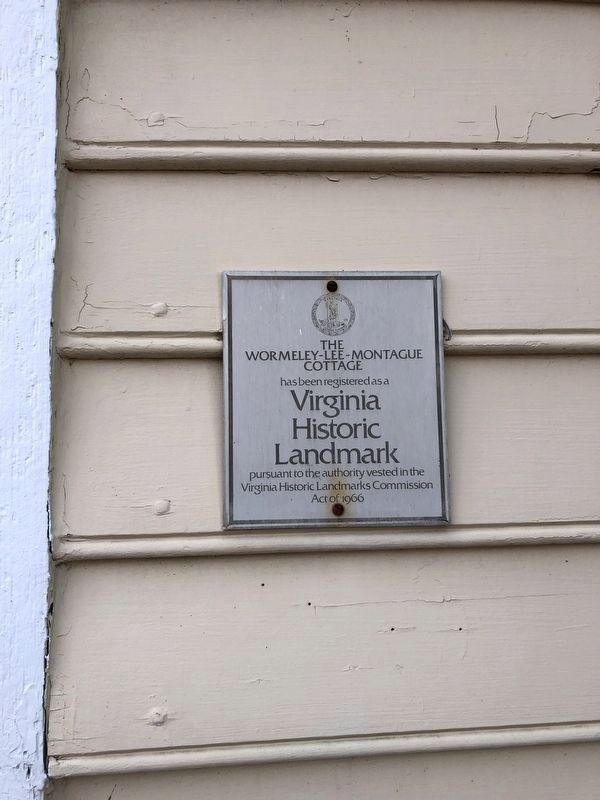
3. Virginia Historic Landmark plaque for the Wormeley-Lee-Montague Cottage
Credits. This page was last revised on November 20, 2025. It was originally submitted on November 25, 2021, by Devry Becker Jones of Washington, District of Columbia. This page has been viewed 930 times since then and 76 times this year. Last updated on November 19, 2025, by Evan Dwyer of Richmond, Virginia. Photos: 1, 2, 3. submitted on November 25, 2021, by Devry Becker Jones of Washington, District of Columbia.
