Izbat Al Bayyarah in Markaz Kom Ombo, Aswan Governorate, Egypt — مصر (Northeast Africa)
The Surgical Instruments Scene
Photographed by James Hulse, October 12, 2024
1. The Surgical Instruments Scene Marker
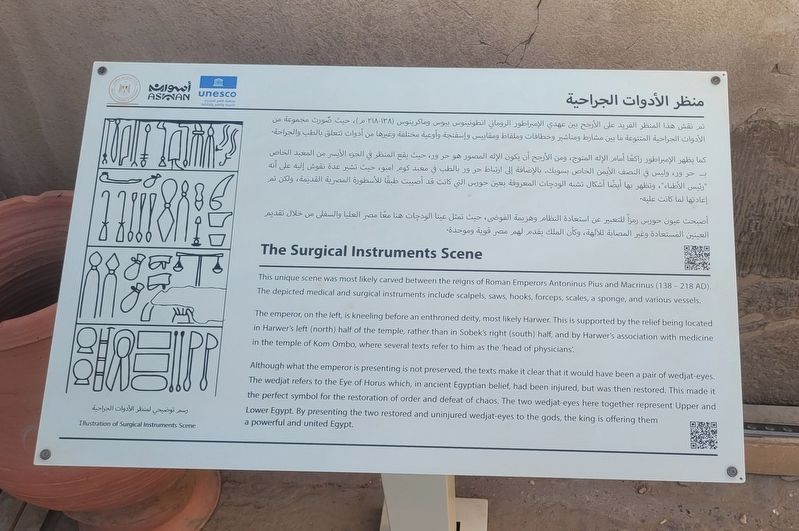
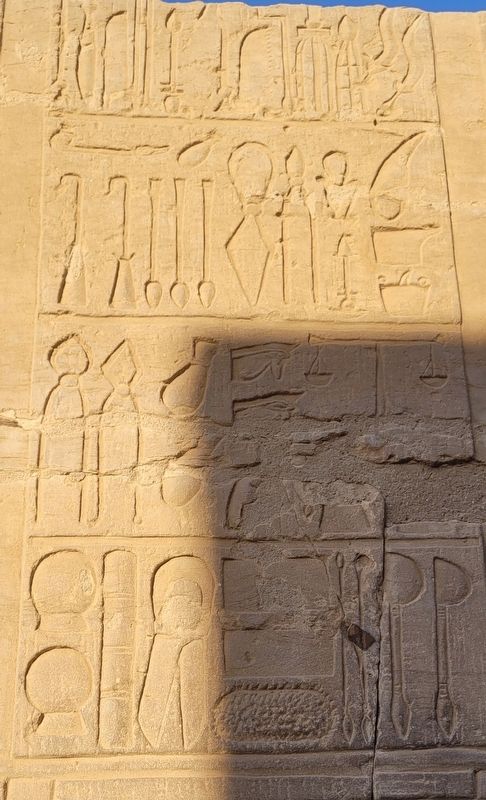
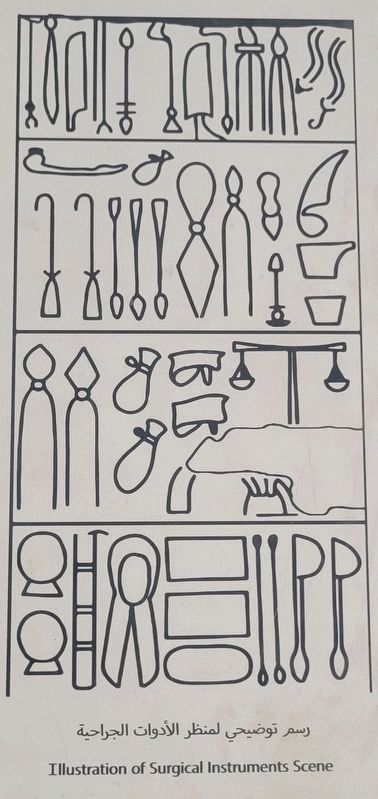
 This unique scene was most likely carved between the reigns of Roman Emperors Antoninus Pius and Macrinus (138-218 AD). The depicted medical and surgical instruments include scalpels, saws, hooks, forceps, scales, a sponge, and various vessels.
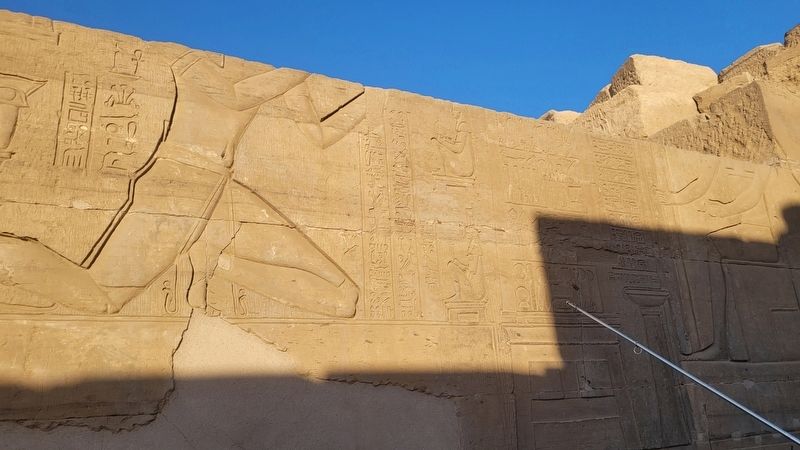
The emperor, on the left, is kneeling before an enthroned deity, most likely Harwer. This is supported by the relief being located in Harwer's left (north) half of the temple, rather than in Sobek's right (south) half, and by Harwer's association with medicine in the temple of Kom Ombo, where several texts refer to him as the 'head of physicians'.
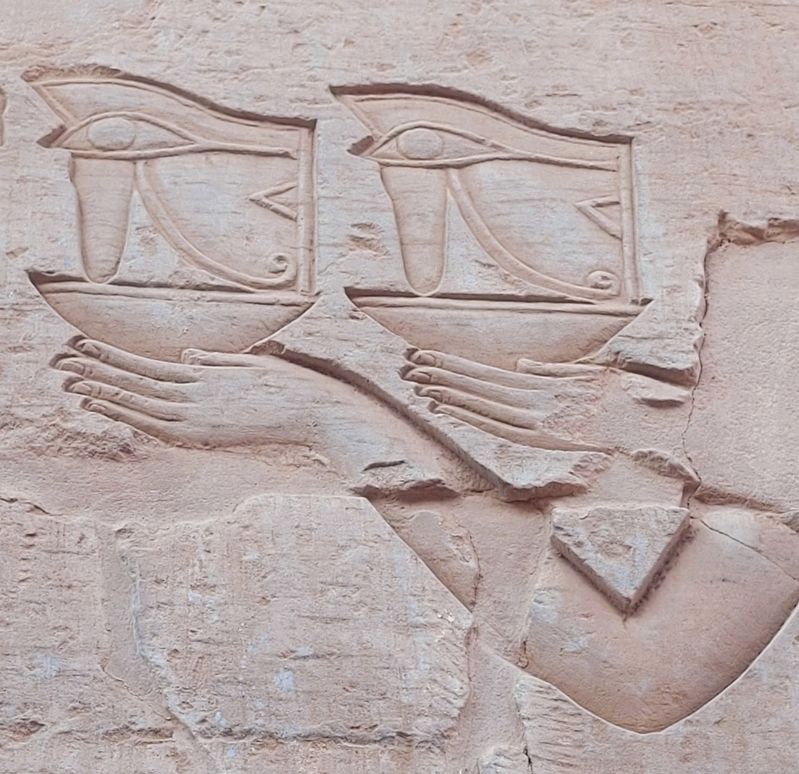
Although what the emperor is presenting is not preserved, the texts make it clear that it would have been a pair of wedjat-eyes. The wedjat refers to the Eye of Horus which, in ancient Egyptian belief, had been injured, but was then restored. This made it the perfect symbol for the restoration of order and defeat of chaos. The two wedjat-eyes here together represent Upper and Lower Egypt. By presenting the two restored and uninjured wedjat-eyes to the gods, the king is offering them a powerful and united Egypt.
Captions
(Photo #1) Illustration of Surgical Instruments Scene
منظر الأدوات الجراحية
تم نقش هذا المنظر الفريد على الأرجح بين عهدي الإمبراطور الروماني انطونينوس بيوس وماكرينوس ۱۳۸-۲۱۸) م) ، حيث صورت مجموعة من الأدوات الجراحية المتنوعة ما بين مشارط ومناشير وخطافات وملقاط ومقاييس وإسفنجة وأوعية مختلفة وغيرها من أدوات تتعلق بالطب والجراحة.
كما يظهر الإمبراطور راكعا أمام الإله المتوج ، ومن الأرجح أن يكون الإله المصور هو حر ور، حيث يقع المنظر في الجزء الأيسر من المعبد الخاص بـ حر ور، وليس في النصف الأيمن الخاص بسوبك. بالإضافة إلى ارتباط حر ور بالطب في معبد كوم امبو، حيث تشير عدة نقوش إليه على أنه رئيس الأطباء"، وتظهر بها أيضًا أشكال تشبه الوديات المعروفة بعين حورس التي كانت قد أصيبت طبقًا للأسطورة المصرية القديمة، ولكن تم إعادتها لما كانت عليه.
أصبحت عيون حورس رمزاً للتعبير عن استعادة النظام وهزيمة الفوضى، حيث تمثل عينا الوديات هنا معًا مصر العليا والسفلى من خلال تقديم العينين المستعادة وغير المصابة للآلهة، وكأن الملك يقدم لهم مصر قوية وموحدة.
(1) رسم توضيحي لمنظر الأدوات الجراحية
Erected by Ministry of Tourism & Antiquity, Aswan and unesco.
Topics. This historical marker is listed in these topic lists: Anthropology & Archaeology • Science & Medicine. A significant historical year for this entry is 138 CE.
Location. 24° 27.151′ N, 32° 55.714′ E. Marker is in Izbat Al Bayyarah, Aswan Governorate, in Markaz Kom Ombo. It is on Tariaq Bedon Esm. The marker is located on the grounds of the Kom Ombo Temple. Touch for map. Marker is in this post office area: Izbat Al Bayyarah, Aswan Governorate 12813-01, Egypt. Touch for directions.

Regionally, it is in Africa, specifically in North Africa, in the Middle East, on the Red Sea, and in a coastal Mediterranean country. Historically, it finds itself in what was once the Byzantine Empire, the Ottoman Empire, a British colony, and the Roman Empire.
Other nearby markers. At least 8 other markers are within walking distance of this marker: Chapel of the Hearing Ear (a few steps from this marker); a different marker also named The Surgical Instruments Scene (within shouting distance of this marker); Festival Calendars (within shouting distance of this marker); Inner Halls and Twin Sanctuaries (within shouting distance of this marker); Inner Hypostyle Hall (within shouting distance of this marker); Outer Hypostyle Hall (within shouting distance of this marker); The Temple of Ombos / Le temple d’Ombos (within shouting distance of this marker); The Open-Air Courtyard
this page online
More about this marker. There is a duplicate of this marker at the temple
Also see . . . Temple of Kom Ombo. Wikipedia
The building is unique because its 'double' design meant that there were courts, halls, sanctuaries and rooms duplicated for two sets of gods. The southern half of the temple was dedicated to the crocodile god Sobek, god of fertility and creator of the world with Hathor and Khonsu. Meanwhile, the northern part of the temple was dedicated to the falcon god Haroeris ("Horus the Elder"), along "with Tasenetnofret (the Good Sister, a special form of Hathor or Tefnut) and Panebtawy (Lord of the Two Lands)". The temple is atypical because everything is perfectly symmetrical along the main axis.(Submitted on November 24, 2025, by James Hulse of Medina, Texas.)
Photographed by James Hulse, October 12, 2024
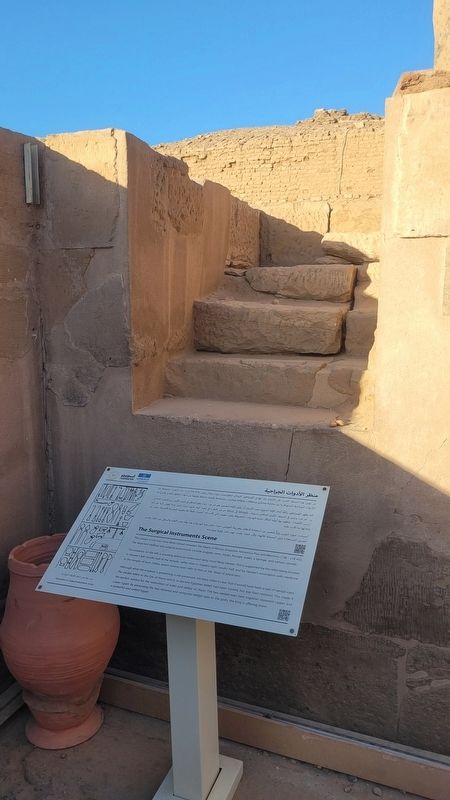
2. The Surgical Instruments Scene Marker
Photographed by James Hulse, October 12, 2024
3. The engraving to the right side of the marker
Photographed by James Hulse, October 12, 2024
4. The engraving of the Surgical Instruments
Photographed by James Hulse, October 12, 2024
5. Closeup of the Surgical Instruments from the marker
Photographed by James Hulse, October 12, 2024
6. Engraving of Wedjat-eyes (the Eye of Horus) - Egyptian symbols of protection, health, and wholeness
According to mythology, the god Set tore out Horus's eye, but it was later restored by the god Thoth, and this restored eye became a powerful symbol of healing, rebirth, and protection against evil.
Credits. This page was last revised on November 30, 2025. It was originally submitted on November 21, 2025, by James Hulse of Medina, Texas. This page has been viewed 87 times since then and 60 times this year. Photos: 1, 2, 3, 4, 5, 6. submitted on November 30, 2025, by James Hulse of Medina, Texas.
