Aswan, Aswan Governorate, Egypt — مصر (Northeast Africa)
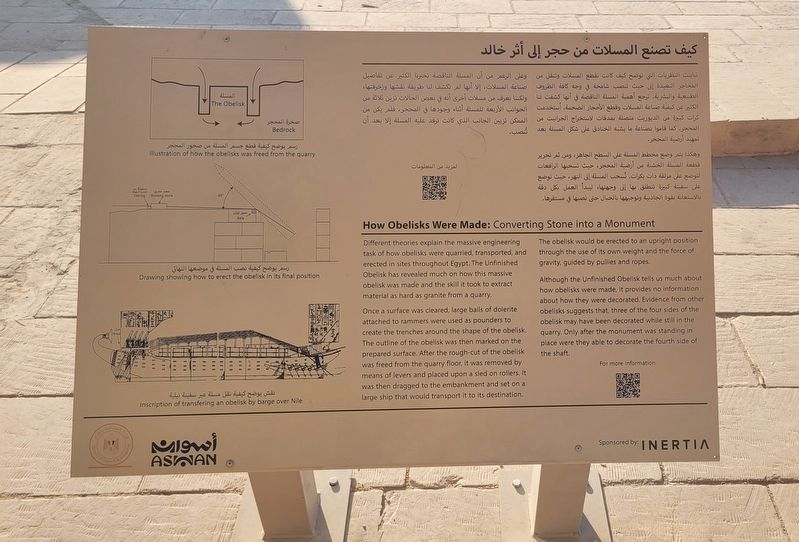
How Obelisks Were Made: Converting Stone into a Monument
Photographed by James Hulse, October 14, 2024
1. How Obelisks Were Made: Converting Stone into a Monument
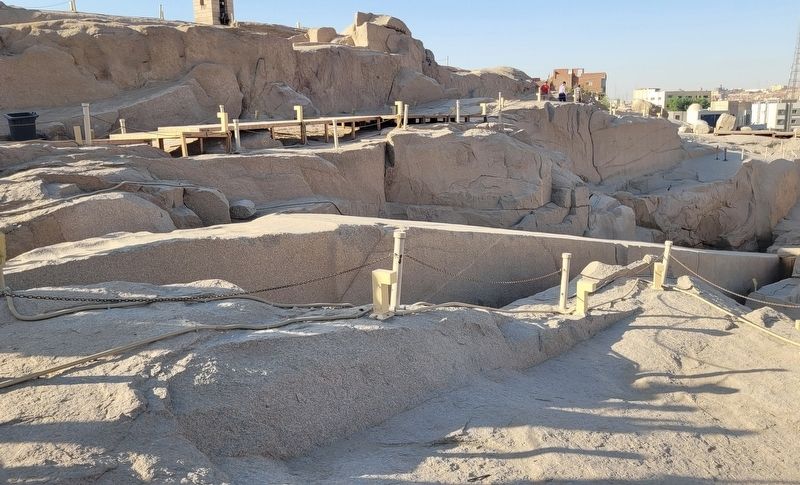
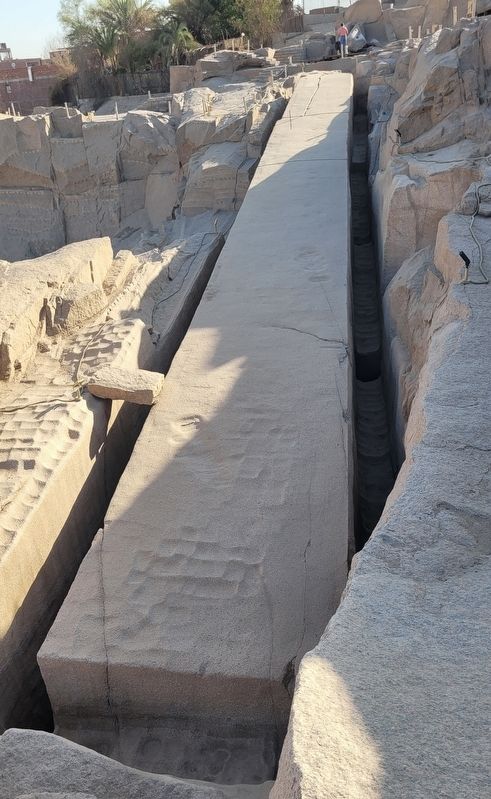
 Different theories explain the massive engineering task of how obelisks were quarried, transported, and erected in sites throughout Egypt. The Unfinished Obelisk has revealed much on how this massive obelisk was made and the skill it took to extract material as hard as granite from a quarry.
Once a surface was cleared, large balls of dolerite attached to rammers were used as pounders to create the trenches around the shape of the obelisk. The outline of the obelisk was then marked on the prepared surface. After the rough-cut of the obelisk was freed from the quarry floor, it was removed by means of levers and placed upon a sled on rollers. It was then dragged to the embankment and set on a large ship that would transport it to its destination.
The obelisk would be erected to an upright position through the use of its own weight and the force of gravity, guided by pullies and ropes.
Although the Unfinished Obelisk tells us much about how obelisks were made, it provides no information about how they were decorated. Evidence from other obelisks suggests that, three of the four sides of the obelisk may have been decorated while still in the quarry. Only after the monument was standing in place were they able to decorate the fourth side of the shaft.
Captions
(Photo #1) Illustration of how the obelisks was freed from the quarry
(Photo #2) Drawing showing how to erect the obelisk in its final position
(Photo #3) Inscription of transfering an obelisk by barge over Nile
كيف تصنع المسلات من حجر إلى أثر خالد
تباينت النظريات التي توضح كيف كانت تقطع المسلات وتنقل من المحاجر البعيدة إلى حيث تنصب شامخة في وجه كافة الظروف الطبيعية والبشرية. ترجع أهمية المسلة الناقصة في أنها كشفت لنا الكثير عن كيفية صناعة المسلات وقطع الأحجار الضخمة. استخدمت كرات كبيرة من الديوريت متصلة بمدقات لاستخراج الجرانيت من المحجر. كما قاموا بصناعة ما يشبه الخنادق على شكل المسلة بعد تمهيد أرضية المحجر.
وهكذا يتم وضع مخطط المسلة على السطح الجاهز، ومن ثم تحرير قطعة المسلة الخشنة من أرضية المحجر، حيث تسحبها الرافعات لتوضع على مزلقة ذات بكرات. تسحب المسلة إلى النهر، حيث توضع على سفينة كبيرة تنطلق بها إلى وجهتها، ليبدأ العمل بكل دقة بالاستعانة بقوة الجاذبية وتوجيهها بالحبال حتى نصبها في مستقرها
وعلى الرغم من أن المسلة الناقصة تخبرنا الكثير عن تفاصيل صناعة المسلات، إلا أنها لم تكشف لنا طريقة نقشها وزخرفتها، ولكننا نعرف من مسلات أخرى أنه في بعض الحالات تزين ثلاثة من الجوانب الأربعة للمسلة أثناء وجودها في المحجر، فلم يكن من الممكن تزيين الجانب الذي كانت ترقد عليه المسلة إلا بعد أن تنصب.
(1) رسم يوضح كيفية قطع جسم المسلة من صخور المحجر
(2) رسم يوضح كيفية نصب المسلة في موضعها النهائي
(3) نقش يوضح كيفية نقل مسلة عبر سفينة نيلية
Erected by Ministry
this page online
Topics. This historical marker and monument is listed in these topic lists: Anthropology & Archaeology • Science & Medicine.
Location. 24° 4.652′ N, 32° 53.682′ E. Marker is in Aswan, Aswan Governorate. It is on Doctor Abd Al Rady Hanafe' just east of El Sadat Road. The marker is located at the Aswan Quarry and Unfinished Obelisk Archaeological Site. Touch for map. Marker is in this post office area: Aswan, Aswan Governorate 12417-71, Egypt. Touch for directions.

Regionally, it is in Africa, specifically in North Africa, in the Middle East, on the Red Sea, and in a coastal Mediterranean country. Historically, it finds itself in what was once the Byzantine Empire, the Ottoman Empire, a British colony, and the Roman Empire.
Other nearby markers. At least 2 other markers are within walking distance of this marker: The Granite Quarries of Aswan (here, next to this marker); The Unfinished Obelisk (within shouting distance of this marker).
Also see . . . Unfinished obelisk. Wikipedia
The unfinished obelisk is the largest known ancient obelisk and is located in the northern region of the stone quarries of ancient Egypt in Aswan, Egypt. It was studied in detail by Reginald Engelbach in 1922.(Submitted on December 4, 2025, by James Hulse of Medina, Texas.)
The obelisk and wider quarry were inscribed on the UNESCO World Heritage List in 1979 along with other examples of Upper Egyptian architecture, as part of the "Nubian Monuments from Abu Simbel to Philae" (despite the quarry site being neither Nubian, nor between Abu Simbel and Philae).
Photographed by James Hulse, October 14, 2024
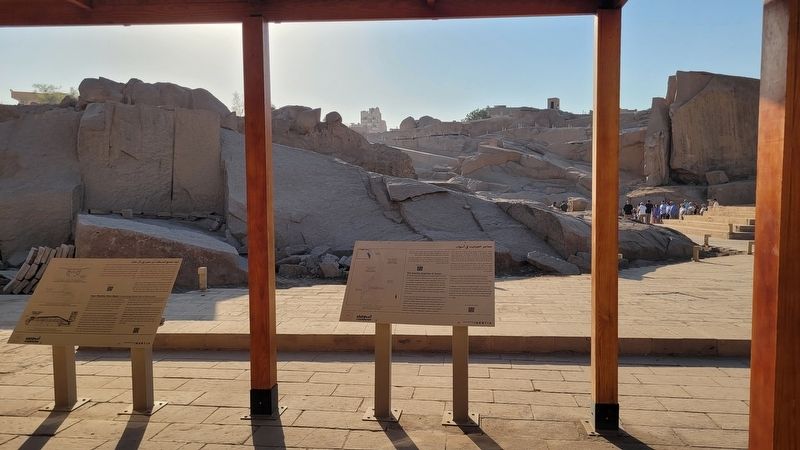
2. How Obelisks Were Made: Converting Stone into a Monument (left marker)
Photographed by James Hulse, October 14, 2024
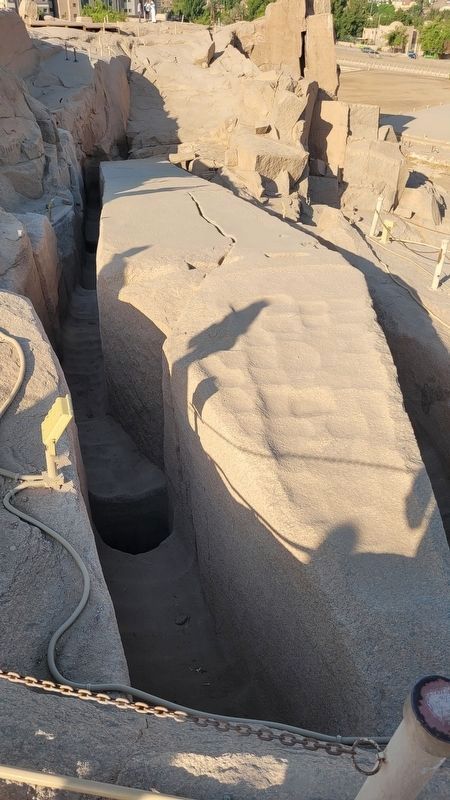
3. The Unfinished Obelisk
Large balls of dolerite attached to rammers were used as pounders to create the trenches around the shape of the obelisk.
Photographed by James Hulse, October 14, 2024
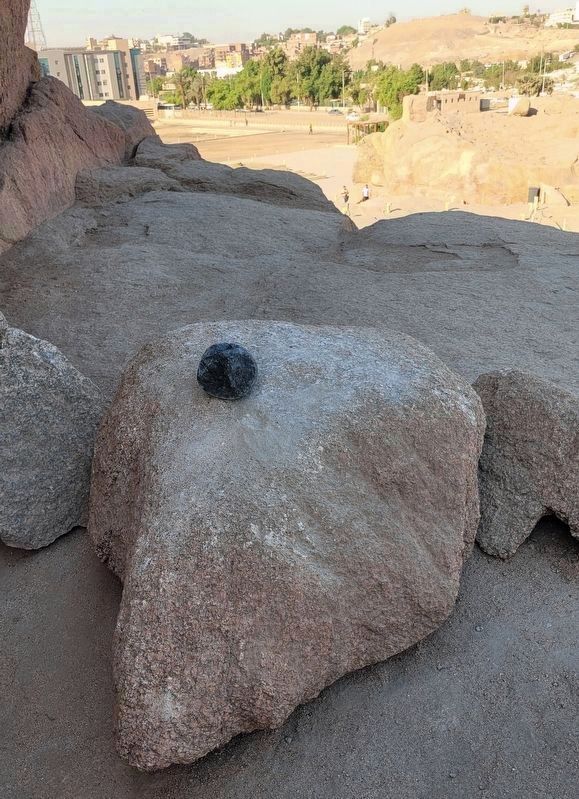
4. A dolerite ball on a granite rock
The dolerite ball was scratched or rubbed along the section of granite being worked.
Photographed by James Hulse, October 14, 2024
5. The view of the Unfinished Obelisk in the quarry
Photographed by James Hulse, October 14, 2024
6. The long view of the Unfinished Obelisk
Credits. This page was last revised on December 5, 2025. It was originally submitted on December 2, 2025, by James Hulse of Medina, Texas. This page has been viewed 158 times since then and 114 times this year. Photos: 1, 2, 3. submitted on December 4, 2025, by James Hulse of Medina, Texas. 4, 5, 6. submitted on December 5, 2025, by James Hulse of Medina, Texas.
