St. Augustine in St. Johns County, Florida — The American South (South Atlantic)
African Origins
| — | Fort Mose Historic State Park | — |
Photographed by Cosmos Mariner, December 10, 2014
1. African Origins Marker
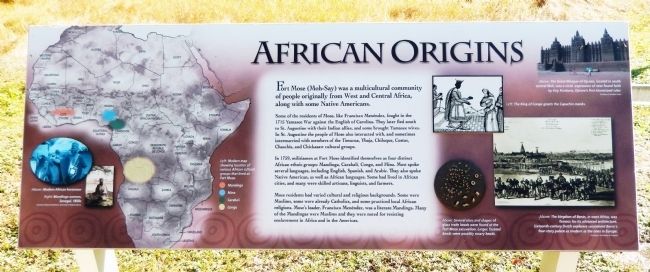
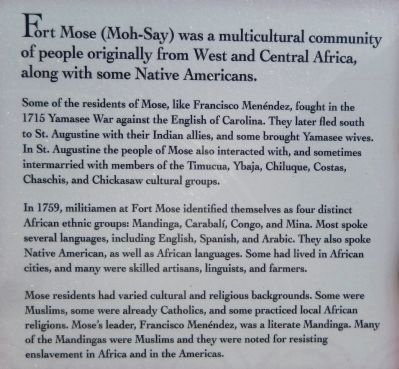
Some of the residents of Mose, like Francisco Menéndez, fought in the 1715 Yamasee War against the English of Carolina. They later fled south to St. Augustine with their Indian allies, and some brought Yamasee wives. In St. Augustine the people of Mose also interacted with, and sometimes intermarried with members of the Timucua, Ybaja, Chiluque, Costas, Chaschis, and Chickasaw cultural groups.
In 1759, militiamen at Fort Mose identified themselves as four distinct African ethnic groups: Mandinga, Carabali, Congo, and Mina. Most spoke several languages, including English, Spanish, and Arabic. They also spoke Native American, as well as African languages. Some had lived in African cities, and many were skilled artisans, linguists, and farmers.
Mose residents had varied cultural and religious backgrounds. Some were Muslims, some were already Catholics, and some practiced local African religions. Mose’s leader, Francisco Menéndez, was a literate Mandinga. Many of the Mandigas
this page online
Captions:
Above: Modern African horseman
Right: Mandinga woman, Senegal, 1850s
Courtesy of Special Collections, University of Virginia Library
Left: The King of Congo greets the Capuchin monks.
Above: Several sizes and shapes of glass trade beads were found at the Fort Mose excavation. Larger, faceted beads were possibly rosary beads.
Topics. This historical marker is listed in these topic lists: African Americans • Colonial Era • Forts and Castles • Indigenous Peoples and Communities. A significant historical year for this entry is 1715.
Location. Marker has been reported permanently removed. It was located near 29° 55.71′ N, 81° 19.521′ W. Marker was in St. Augustine, Florida, in St. Johns County. It was on Fort Mose Trail 0.2 miles east of North Ponce De Leon Boulevard (U.S. 1), on the right when traveling north. Marker is within Fort Mose Historic State Park, beside the sidewalk leading from the parking lot to the visitor center. Touch for map. Marker was at or near this postal address: 15 Fort Mose Trail, Saint Augustine
Photographed by Cosmos Mariner, December 10, 2014
2. African Origins Marker (center detail view)
We have been informed that this marker is no longer there and will not be replaced. This page is an archival view of what was.
Regionally, this marker was in First Coast and in Greater Jacksonville. It was also in the American South and on the Eastern Seaboard. Globally, it was in the North Atlantic Region, North America, a Gulf of Mexico state, the Western Hemisphere, the Western World, and the Anglosphere. Historically, it found itself in what was once New Spain, the territory of the Mississippian Culture, one of the Confederate States of America, and the Antebellum South.

Other nearby markers. At least 8 other markers are within walking distance of this location: Escape & Flight (within shouting distance of this marker); El Pueblo de Gracia Real de Santa Teresa de Mose (within shouting distance of this marker); Bloody Mose (within shouting distance of this marker); Fort Mose Site (about 300 feet away, measured in a direct line); Women of Fort Mose (about 300 feet away); Barca Chata (about 400 feet away); On Watch (about 400 feet away); “Slave Catchers” (about 500 feet away). Touch for a list and map
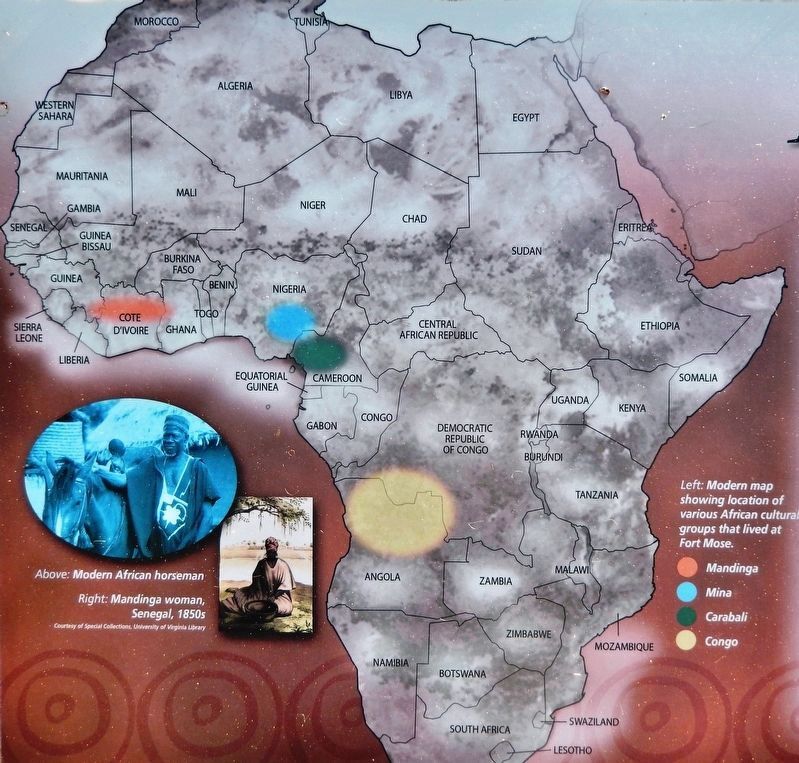
3. Marker detail: Map showing location of various African cultural groups that lived at Fort Mose
Mandinga, Mina, Carabali and Congo.
Other markers no longer nearby. Middle Passage (was here, next to this marker but has been permanently removed); British Enslavement (was a few steps from this marker but has been permanently removed); Fort Mose I (was within shouting distance of this marker but has been permanently removed); Fort Mose II (was within shouting distance of this marker but has been permanently removed); Evacuation (was within shouting distance of this marker but has been permanently removed).
More about this marker. This marker has been permanently removed.
The Fort Mose Historical State Park recently went through extensive renovations. The park reopened in May, 2025. During the renovation process all historical markers were replaced with different markers containing additional more current information.
Related markers. Click here for a list of markers that are related to this marker. Fort Mose Historic State Park
Also see . . . Francisco Menendez.
Born in Africa, Francisco Menéndez was brought to America as a slave in the early 1700s. He escaped and fled from the British territories
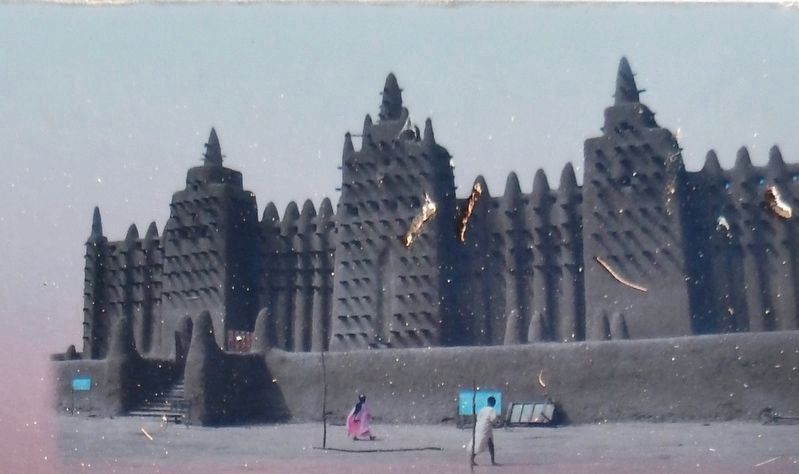
4. Marker detail: The Great Mosque of Djenne
Located in south central Mali, was a vivid expression of new found faith by Koy Konboro, Djenne’s first Islamicized ruler.
Courtesy of the Library of Congress
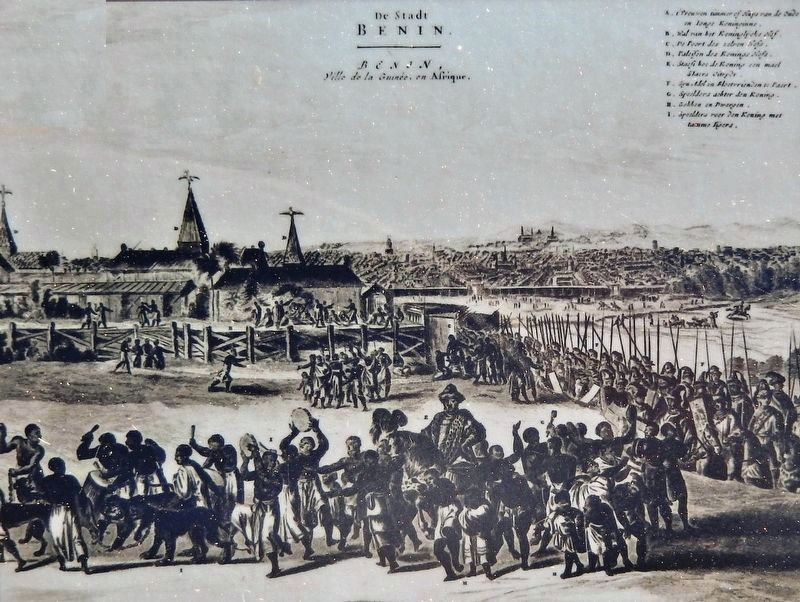
5. Marker detail: The kingdom of Benin, in west Africa
The kingdom of Benin, in west Africa, was famous for its advanced architecture. Sixteenth-century Dutch explorers considered Benin’s four-story palace as modern as the ones in Europe.
Photographed by Cosmos Mariner, December 10, 2014
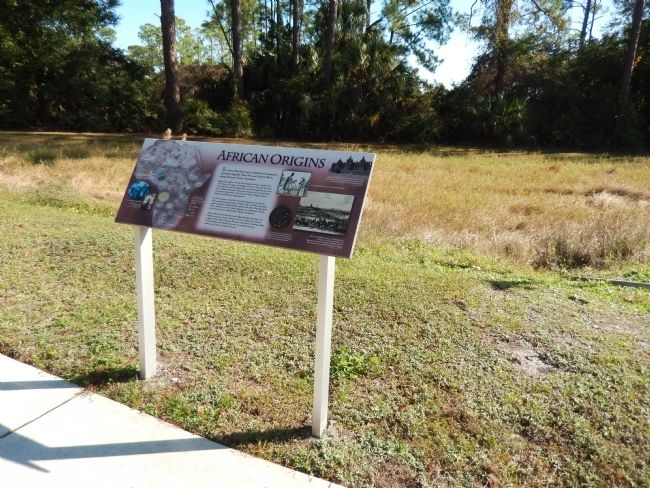
6. African Origins Marker (wide view)
Credits. This page was last revised on December 7, 2025. It was originally submitted on December 11, 2014, by Cosmos Mariner of Cape Canaveral, Florida. This page has been viewed 1,064 times since then and 53 times this year. Last updated on December 7, 2025, by Brandon D Cross of Flagler Beach, Florida. Photos: 1, 2. submitted on December 11, 2014, by Cosmos Mariner of Cape Canaveral, Florida. 3, 4, 5. submitted on December 2, 2018, by Cosmos Mariner of Cape Canaveral, Florida. 6. submitted on December 11, 2014, by Cosmos Mariner of Cape Canaveral, Florida. • Bernard Fisher was the editor who published this page.
