Delta in Delta County, Colorado — The American Mountains (Southwest)
The Tipi and the Wickiup
Traditional Native American Shelter
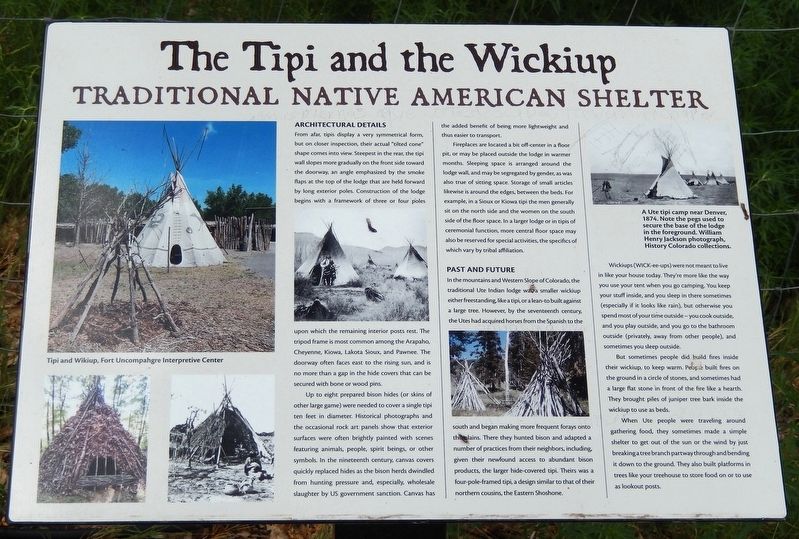
Photographed by Cosmos Mariner, July 19, 2025
1. The Tipi and the Wickiup Marker
Architectural Details
From afar, tipis display a very symmetrical form, but on closer inspection, their actual "tilted cone" shape comes into view. Steepest in the rear, the tipi wall slopes more gradually on the front side toward the doorway, an angle emphasized by the smoke flaps at the top of the lodge that are held forward by long exterior poles. Construction of the lodge begins with a framework of three or four poles upon which the remaining interior posts rest. The tripod frame is most common among the Arapaho, Cheyenne, Kiowa, Lakota Sioux, and Pawnee. The doorway often faces east to the rising sun, and is no more than a gap in the hide covers that can be secured with bone or wood pins.
Up to eight prepared bison hides (or skins of other large game) were needed to cover a single tipi ten feet in diameter. Historical photographs and the occasional rock art panels show that exterior surfaces were often brightly painted with scenes featuring animals, people, spirit beings, or other symbols. In the nineteenth century, canvas covers quickly replaced hides as the bison herds dwindled from hunting pressure and, especially,
this page online
Fireplaces are located a bit off-center in a floor pit, or may be placed outside the lodge in warmer months. Sleeping space is arranged around the lodge wall, and may be segregated by gender, as was also true of sitting space. Storage of small articles likewise is around the edges, between the beds. For example, in a Sioux or Kiowa tipi the men generally sit on the north side and the women on the south side of the floor space. In a larger lodge or in tipis of ceremonial function, more central floor space may also be reserved for special activities, the specifics of which vary by tribal affiliation.
Past and Future
In the mountains and Western Slope of Colorado, the traditional Ute Indian lodge was a smaller wickiup either freestanding, like a tipi, or a lean-to built against a large tree. However, by the seventeenth century, the Utes had acquired horses from the Spanish to the south and began making more frequent forays onto the plains. There they hunted bison and adapted a number of practices from their
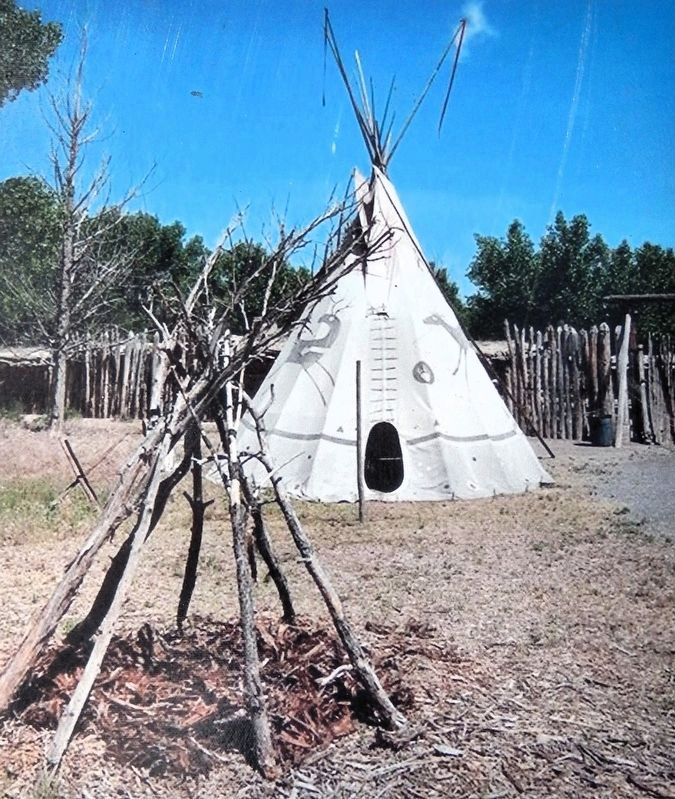
2. Marker detail: Tipi
Wickiups (WICK-ee-ups) were not meant to live in like your house today. They're more like the way you use your tent when you go camping. You keep your stuff inside, and you sleep in there sometimes (especially if it looks like rain), but otherwise you spend most of your time outside — you cook outside, and you play outside, and you go to the bathroom outside (privately, away from other people), and sometimes you sleep outside.
But sometimes people did build fires inside their wickiup, to keep warm. People built fires on the ground in a circle of stones, and sometimes had a large flat stone in front of the fire like a hearth. They brought piles of juniper tree bark inside the wickiup to use as beds.
When Ute people were traveling around gathering food, they sometimes made a simple shelter to get out of the sun or the wind by just breaking a tree branch partway through and bending it down to the ground. They also built platforms
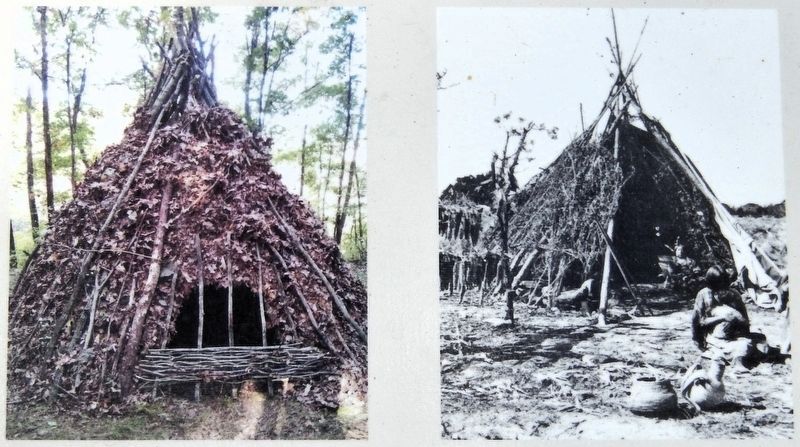
3. Marker detail: Wickiup
Topics. This historical marker is listed in these topic lists: Anthropology & Archaeology • Architecture • Indigenous Peoples and Communities.
Location. 38° 44.981′ N, 108° 4.401′ W. Marker is in Delta, Colorado, in Delta County. It can be reached from Gunnison River Drive (North Palmer Street) 0.3 miles west of U.S. 50. The marker is on the Fort Uncompahgre Interpretive Center grounds. Touch for map. Marker is at or near this postal address: 330 Gunnison River Drive, Delta CO 81416, United States of America. Touch for directions.

Regionally, this marker is in the Western Slope. It is also in the American Mountain West and on the Colorado Plateau. Globally, it is in North America, the Rocky Mountains, the Western Hemisphere, the Western World, and the Anglosphere. Historically, it finds itself in what was once Mexico’s Alta California.
Other nearby markers. At least 8 other markers are within walking distance of this marker: The Ute Council Tree (a few steps from this marker); Historic Fort Uncompahgre

William Henry Jackson, History Colorado Collections
4. Marker detail: A Ute tipi camp near Denver, 1874
Note the pegs used to secure the base of the lodge in the foreground.
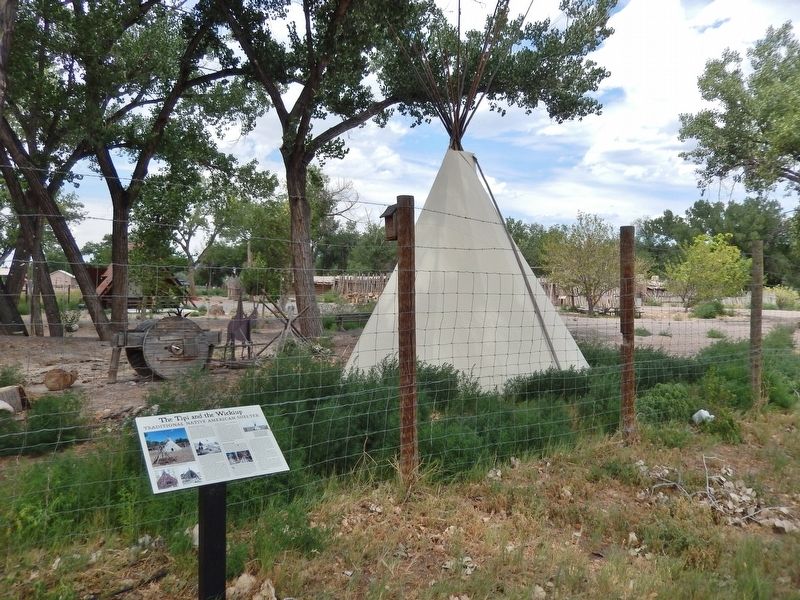
Photographed by Cosmos Mariner, July 19, 2025
5. The Tipi and the Wickiup Marker
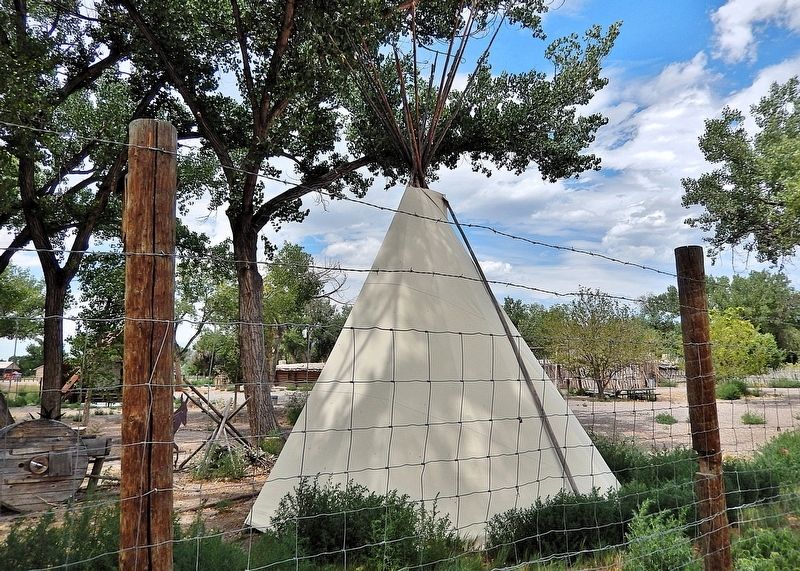
Photographed by Cosmos Mariner, July 19, 2025
6. Tipi at Fort Uncompahgre Interpretive Center
Credits. This page was last revised on January 1, 2026. It was originally submitted on December 31, 2025, by Cosmos Mariner of Cape Canaveral, Florida. This page has been viewed 131 times since then and 130 times this year. Photos: 1, 2, 3, 4, 5, 6. submitted on January 1, 2026, by Cosmos Mariner of Cape Canaveral, Florida.
