Gambles Hill in Richmond, Virginia — The American South (Mid-Atlantic)
Raceways
Photographed by Bernard Fisher, November 3, 2009
1. Raceways Marker
Topics. This historical marker is listed in these topic lists: Industry & Commerce • Waterways & Vessels.
Location. Marker has been permanently removed. It was located near 37° 32.14′ N, 77° 26.754′ W. Marker was in Richmond, Virginia. It was in Gambles Hill. It could be reached from Tredegar Street 0.1 miles west of South 5th Street. This marker is located outside the Civil War Visitor Center at Tredegar Iron Works. Touch for map. Marker was at or near this postal address: 500 Tredegar Street, Richmond VA 23219, United States of America.
We have been informed that this marker is no longer there and will not be replaced. This page is an archival view of what was.
Regionally,
this page online

Other nearby markers. within walking distance of this location: Touch for a list and map of all markers in Richmond.
Other markers no longer nearby. President Lincoln Visits Richmond (was a few steps from this marker but has been permanently removed); a different marker also named President Lincoln Visits Richmond (was within shouting distance of this marker but has been confirmed missing); Adapting Power (was within shouting distance of this marker but has been permanently removed); Francis Turbine (was within shouting distance of this marker but has been permanently removed); Toledo 1000-ton Press (was within shouting distance of this marker but has been permanently removed); Early Industrial Patterns (was within
Photographed by Bernard Fisher, November 3, 2009
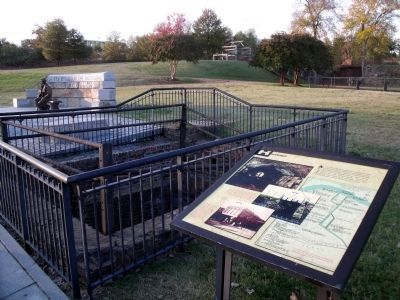
2. Underground raceway to the left of the marker.
More about this marker.
Photographed by Bernard Fisher, November 3, 2009
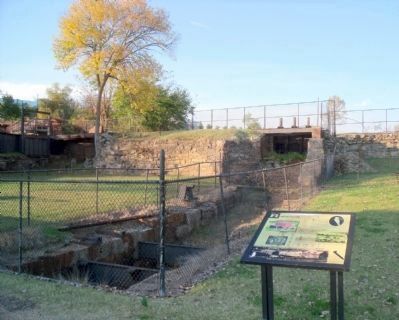
3. Metal gate at the stone wall
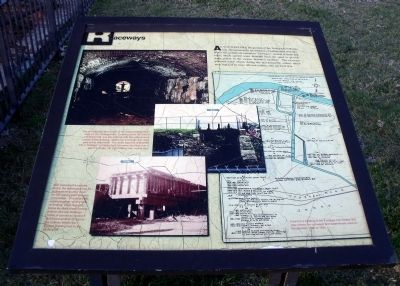
On the lower left is a photograph of a forebay with the caption, “After powering the turbines above, the water continued its underground journey down the hill, rushing past your current position. The water then entered another holding tank, or forebay, which was just below the black metal flooring between the two buildings. Tubes or penstocks carried it downward another 22 feet to the turbines beside the Pattern Building next to the parking lot.”
On the right is a map of the Tredegar site raceways with the caption, “Found in a building at the Tredegar Iron Works, this map shows the raceways and waterwheels used on the site from 1800 to 1935.”
Photographed by Bernard Fisher, November 3, 2009
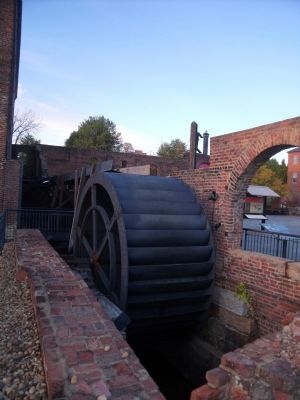
4. Overshot Waterwheel
Credits. This page was last revised on January 20, 2026. It was originally submitted on November 7, 2009, by Bernard Fisher of Richmond, Virginia. This page has been viewed 990 times since then and 26 times this year. Last updated on January 19, 2026, by Evan Dwyer of Richmond, Virginia. Photos: 1, 2, 3, 4. submitted on November 7, 2009, by Bernard Fisher of Richmond, Virginia. • Devry Becker Jones was the editor who published this page.
