Near Larchwood in Lyon County, Iowa — The American Midwest (Upper Plains)
Blood Run National Historic Landmark
January 11, 2026
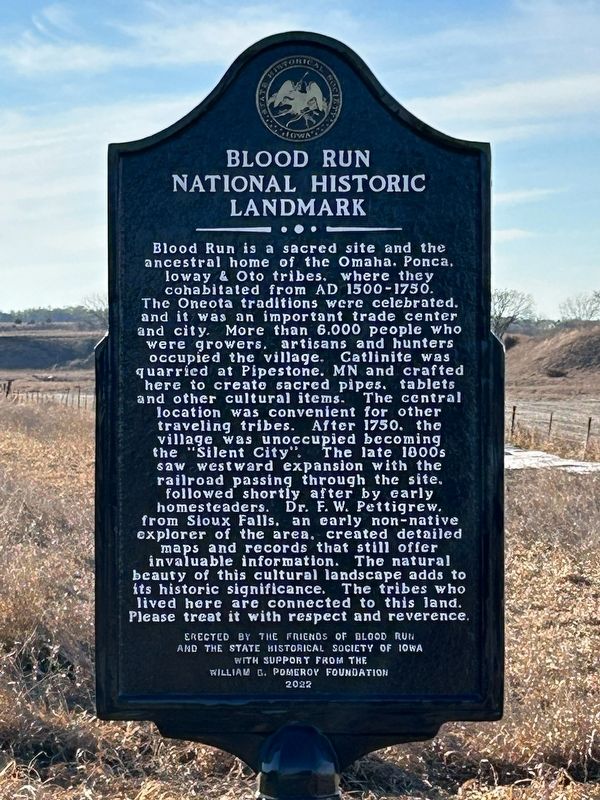
1. Blood Run National Historic Landmark Marker
Erected 2022 by the Friends of Blood Run and the State Historical Society of Iowa with support from the William G. Pomeroy
this page online
Topics and series. This historical marker is listed in these topic lists: Anthropology & Archaeology • Exploration • Indigenous Peoples and Communities • Religion & Religious Structures. In addition, it is included in the Iowa - State Historical Society of Iowa, and the William G. Pomeroy Foundation series lists. A significant historical year for this entry is 1500.
Location. 43° 28.005′ N, 96° 33.983′ W. Marker is near Larchwood, Iowa, in Lyon County. It is on Apple Avenue 0.2 miles south of 125th Street (County Highway K10), on the right when traveling south. Touch for map. Marker is at or near this postal address: 1109 125th St, Larchwood IA 51241, United States of America. Touch for directions.

Regionally, this marker is in Western Iowa. It is also in the American Midwest and in the Corn Belt. Globally, it is in North America, the Western Hemisphere, the Western World, and the Anglosphere. Historically, it finds itself in what was once the territory of the Mississippian Culture and also the Louisiana Purchase.
Other nearby markers. At least 8 other markers are within 2 miles
January 11, 2026
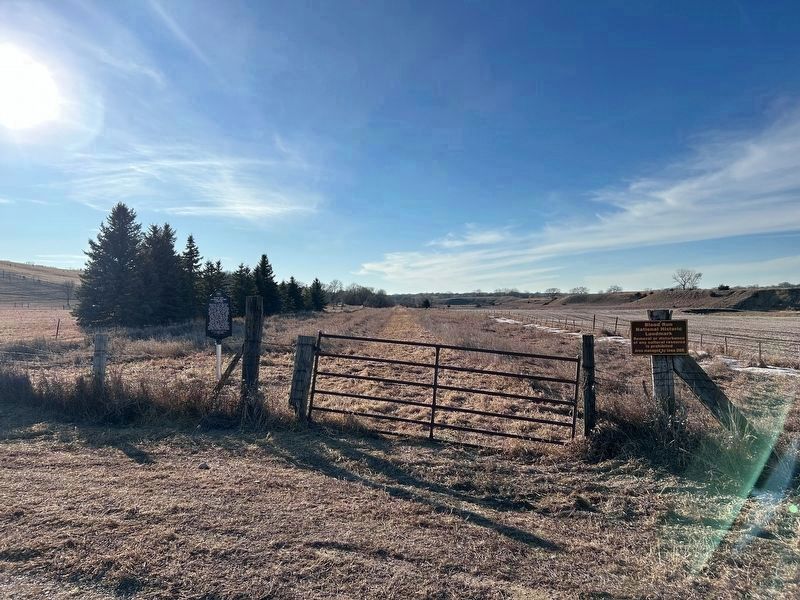
2. Blood Run National Historic Landmark Marker, from the east
Sign:
Blood Run National Historic Landmark
Removal or disturbance of any cultural resource is prohibited
Area managed by Iowa DNR
Removal or disturbance of any cultural resource is prohibited
Area managed by Iowa DNR
Also see . . .
1. Blood Run National Historic Landmark | State Historical Society of Iowa.
Imagine this site as it once was—a large village and ceremonial site of the ancestors of the Omaha, Ponca, Iowa and Oto-Missouria tribes, participants in the Oneota traditions. These people were attracted to the site by the Big Sioux River, abundant game, fertile soil and access to pipestone. The land was inhabited from 900 A.D. to 1720 A.D. and was a major trading site from about 1500 to 1700.(Submitted on January 31, 2026.)
2. Native American cultural site forgotten in Iowa, preserved in South Dakota.
January 11, 2026
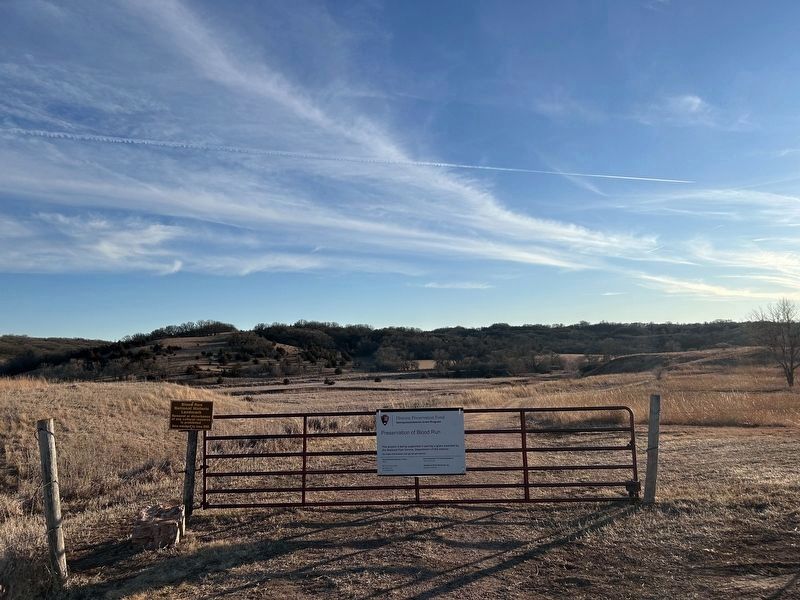
3. Blood Run National Historic Landmark, North Entrance
January 11, 2026
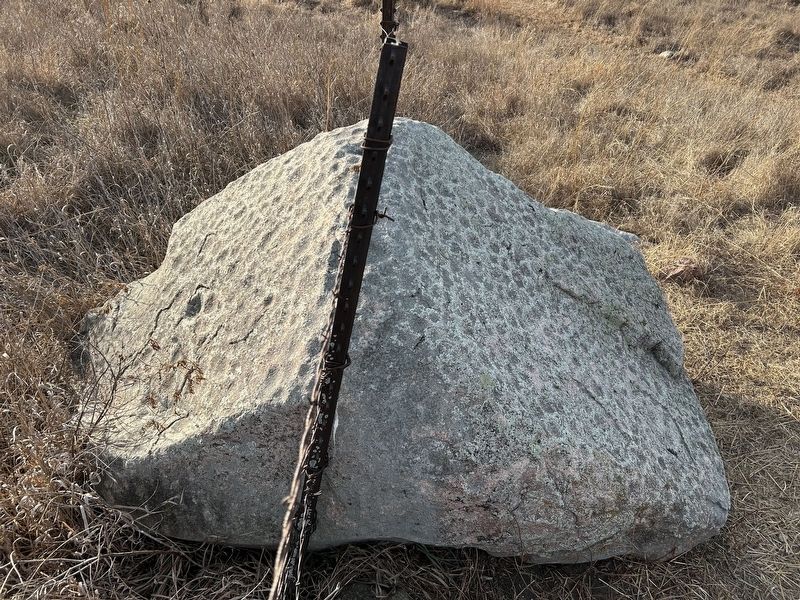
4. Pitted Boulder at Blood Run
Credits. This page was last revised on February 2, 2026. It was originally submitted on January 31, 2026. This page has been viewed 71 times since then. Photos: 1, 2, 3, 4. submitted on January 31, 2026. • Devry Becker Jones was the editor who published this page.
