Yorktown in York County, Virginia — The American South (Mid-Atlantic)
Nelson House, circa 1730
Historic Yorktown
| — | Colonial National Historical Park | — |
Photographed by Don Morfe, December 9, 2011
1. Nelson House, circa 1730 Marker
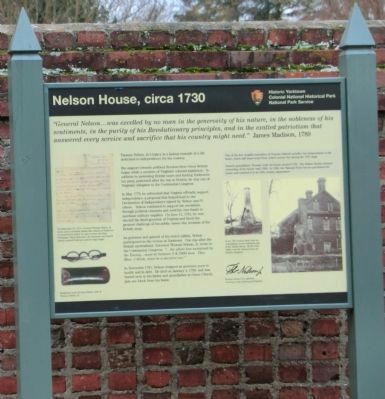
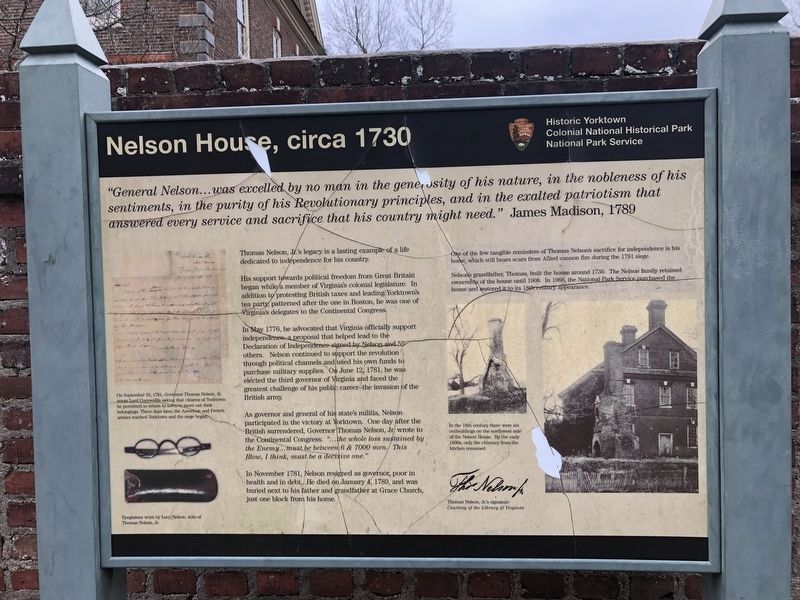
"General Nelson…was excelled by no man in the generosity of his nature, in the nobleness of his sentiments, in the purity of his Revolutionary principles, and in the exalted patriotism that answered every service and sacrifice that his country might need." James Madison, 1789
Thomas Nelson, Jr.'s legacy is a lasting example of a life dedicated to independence for his country.
His support towards political freedom from Great Britain began while a member of Virginia’s colonial legislature. In addition to protesting British taxes and leading Yorktown's tea party, patterned after the one in Boston, he was one of Virginia's delegates to the Continental Congress.
In May 1776, he advocated that Virginia officially support independence—a proposal that helped lead to the Declaration of Independence signed by Nelson and 55 others. Nelson continued to support the revolution through political channels and used his own funds to purchase military supplies. On June 12, 1781, he was elected the third governor of Virginia and faced the greatest challenge of his public career—the invasion of the British army.
As governor
this page online
In November 1781, Nelson resigned as governor, poor in health and in debt. He died on January 4, 1789, and was buried next to his father and grandfather at Grace Church, just one block from his home.
[Captions:]
On September 25, 1781, Governor Thomas Nelson, Jr. wrote Lord Cornwallis asking that citizens of Yorktown be permitted to return to town to move out their belongings. Three days later, the American and French armies reached Yorktown and the siege began.
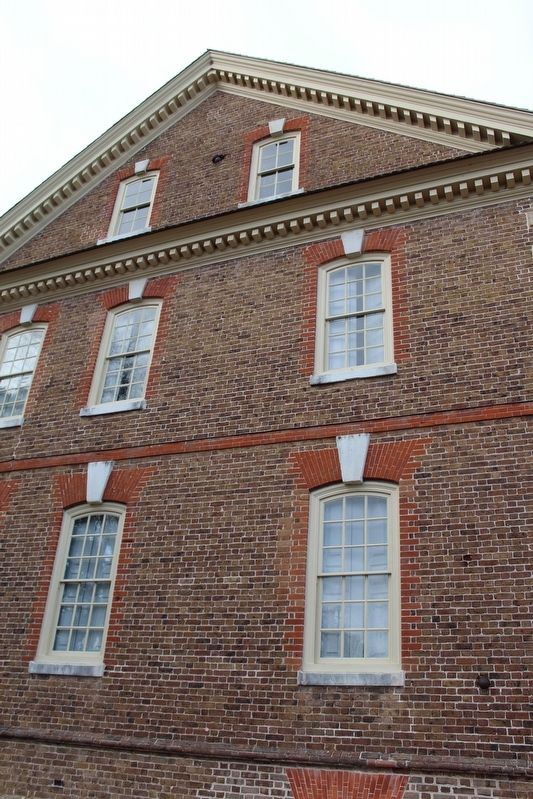
One of the few tangible reminders of Thomas Nelson’s sacrifice for independence is his home, which still bears scars from Allied cannon fire during the 1781 siege.
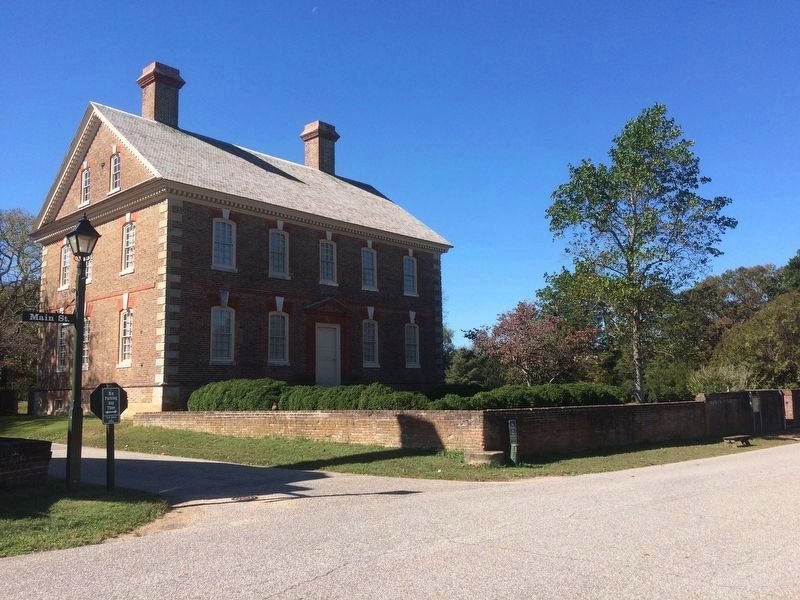
Nelson’s grandfather, Thomas, built the house around 1730. The Nelson family retained ownership of the house until 1908. In 1968, the National Park Service purchased the house and restored it to its 18th century appearance.
In the 18th century there were six outbuilding on the northwest side of the Nelson House. By the early 1900s, only the chimney from the kitchen remained.
Erected by National
Photographed by Devry Becker Jones (CC0), February 26, 2021
2. Nelson House, circa 1730 Marker
The marker has experienced significant weather damage.
Topics and series. This historical marker is listed in these topic lists: Colonial Era • Patriots & Patriotism • War, US Revolutionary. In addition, it is included in the Former U.S. Presidents: #04 James Madison series list. A significant historical date for this entry is January 4, 1789.
Location. Marker is missing. It was located near 37° 14.066′ N, 76° 30.428′ W. Marker was in Yorktown, Virginia, in York County. It was on Main Street west of Nelson Street, on the left when traveling west. Touch for map. Marker was at or near this postal address: 507 Main St, Yorktown VA 23690, United States of America. Touch for directions.

Regionally, this marker was on Virginia’s Peninsula, in Coastal Virginia, and in the Hampton Roads Metropolitan Area. It was also in the American South, specifically in the Upper South, in the Tidewater, and on the Eastern Seaboard. Globally, it was in the North Atlantic Region, North America, the Western Hemisphere, the Western World, and the Anglosphere. Historically, it found itself in what was once the territory of the Mississippian Culture, one
Photographed by J. Makali Bruton, October 23, 2016
3. Nelson House, circa 1730 Marker
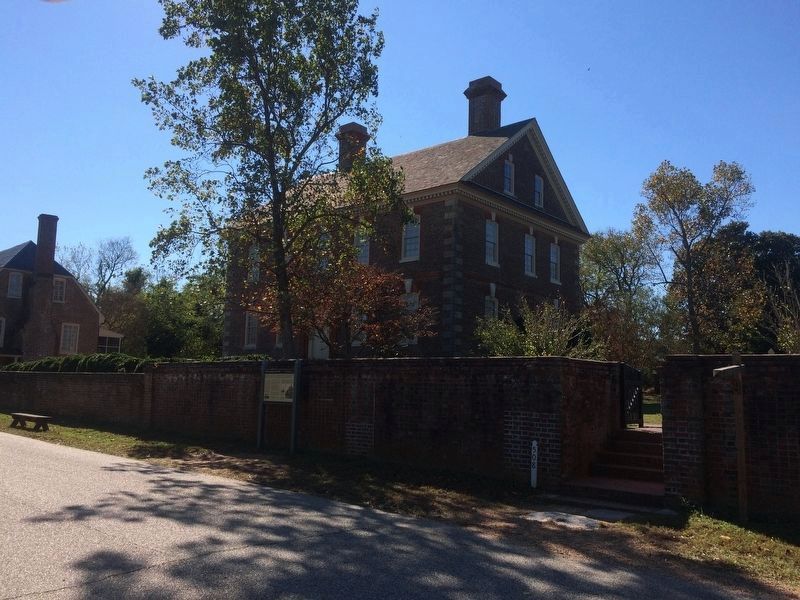
The marker is at the far right in this view, to the west along the wall in front of the Nelson House.
Other nearby markers. At least 8 other markers are within walking distance of this location: William Nelson House Site (a few steps from this marker); The Great Valley (within shouting distance of this marker); Sessions-Pope-Sheild Property (within shouting distance of this marker); Earl Cornwallis (within shouting distance of this marker); Charles Cox House (within shouting distance of this marker); William Rogers' (the "poor potter") Pottery Ruins (within shouting distance of this marker); Comte de Grasse (within shouting distance of this marker); Revolutionary War Patriots (within shouting distance of this marker). Touch for a list and map of all markers in Yorktown.
Also see . . .
1. The Nelson House. Yorktown Battlefield, Colonial National Historical Park Virginia (Submitted on December 5, 2012.)
2. Signer of the Declaration of Independence - Thomas Nelson Jr. 5:39 minute YouTube video. (Submitted on May 12, 2020.)
Photographed by J. Makali Bruton, October 23, 2016
4. Nelson House, circa 1730 Marker
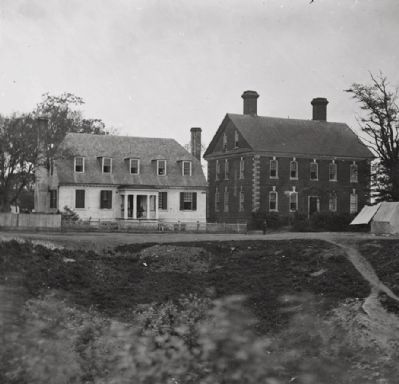
circa 1862
5. Yorktown, Va. Thomas Nelson house (right), used as a hospital;…
From: Civil War photographs, 1861-1865 / compiled by Hirst D. Milhollen and Donald H. Mugridge, Washington, D.C. : Library of Congress, 1977. No. 0045. Photo courtesy of the Library of Congress.
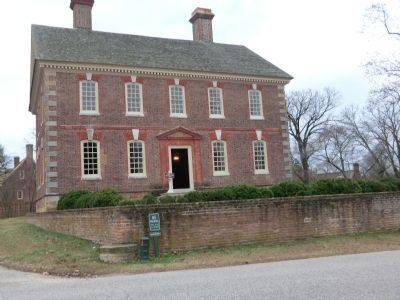
Photographed by Don Morfe, December 9, 2011
6. Nelson House
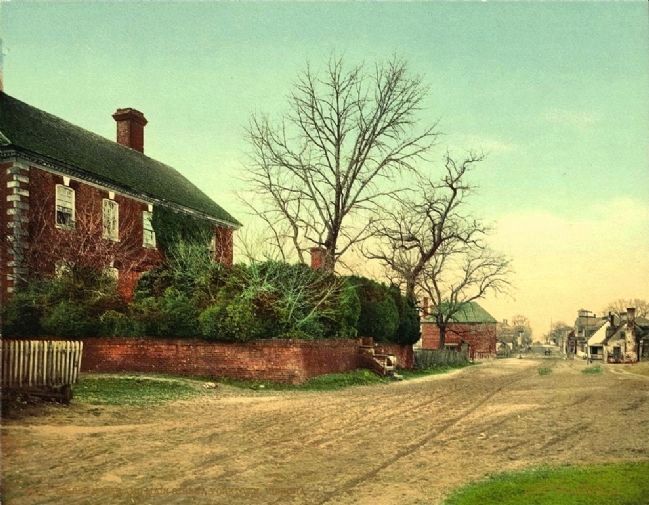
Postcard by the Detroit Photographic Company, 1902
7. Nelson House and Main Street, Yorktown, Virginia
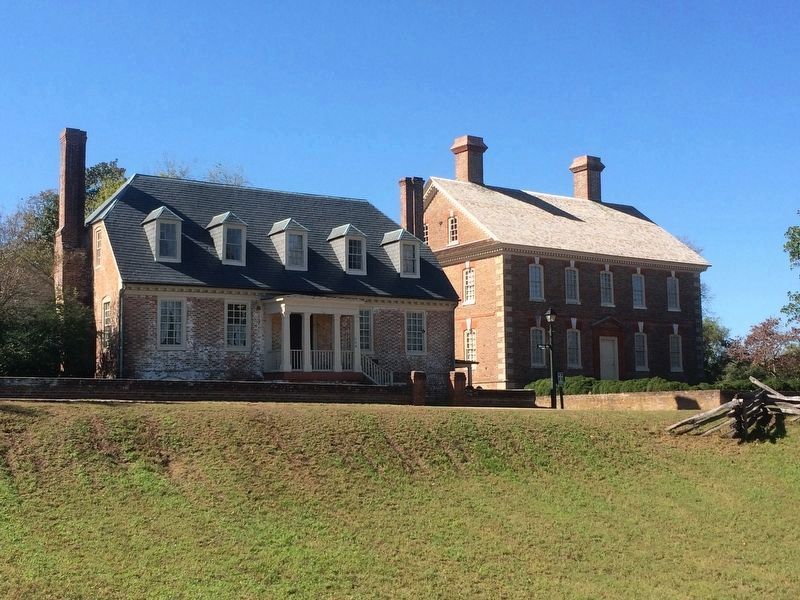
Photographed by J. Makali Bruton, October 23, 2016
8. Nelson House and Stores
An attempt to match the Civil War era photograph seen in photo #5.
Photographed by Evan Dwyer, January 5, 2026
9. Nelson House Cannonball Damage
Replica cannonballs are mortared into original impact holes on the southeast side of the house.
Credits. This page was last revised on February 26, 2026. It was originally submitted on December 5, 2012, by Don Morfe of Baltimore, Maryland. This page has been viewed 1,544 times since then and 89 times this year. Last updated on February 15, 2026, by Evan Dwyer of Richmond, Virginia. Photos: 1. submitted on December 5, 2012, by Don Morfe of Baltimore, Maryland. 2. submitted on March 1, 2021, by Devry Becker Jones of Washington, District of Columbia. 3, 4. submitted on October 24, 2016, by J. Makali Bruton of Washington, District of Columbia. 5. submitted on December 27, 2014. 6. submitted on December 5, 2012, by Don Morfe of Baltimore, Maryland. 7. submitted on December 27, 2014. 8. submitted on October 24, 2016, by J. Makali Bruton of Washington, District of Columbia. 9. submitted on February 15, 2026, by Evan Dwyer of Richmond, Virginia. • Devry Becker Jones was the editor who published this page.
