San Luis in Costilla County, Colorado — The American Mountains (Southwest)
Acequias
Photographed by Cosmos Mariner, July 12, 2025
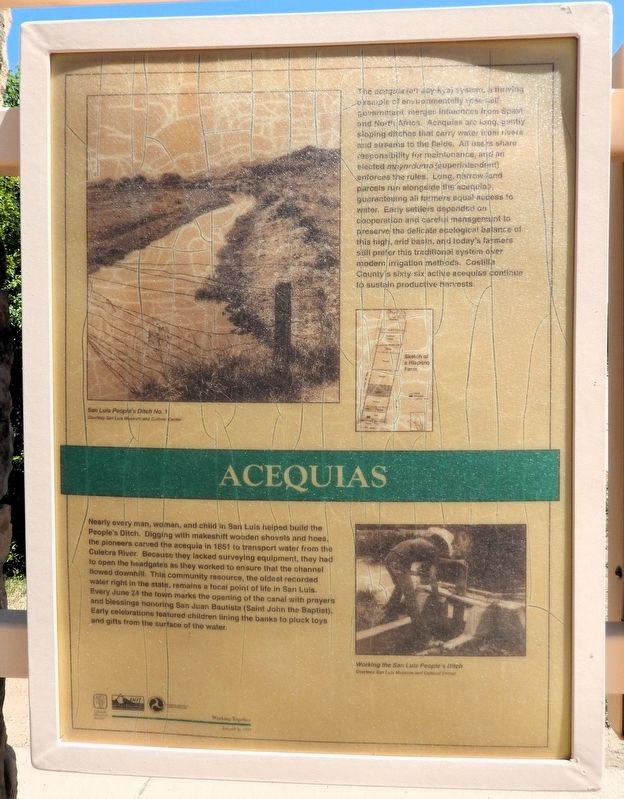
1. Acequias Marker
The acequia (ah-say-kya) system, a thriving example of environmentally wise self-government, merges influences from Spain and North Africa. Acequias are long, gently sloping ditches that carry water from rivers and streams to the fields. All users share responsibility for maintenance, and an elected mayordomo (superintendent) enforces the rules. Long, narrow land parcels run alongside the acequias, guaranteeing all farmers equal access to water. Early settlers depended on cooperation and careful management to preserve the delicate ecological balance of this high, arid basin, and today’s farmers still prefer this traditional system over modern irrigation methods. Costilla County’s sixty-six active acequias continue to sustain productive harvests.
Nearly every man, woman, and child in San Luis helped build the People's Ditch. Digging with makeshift wooden shovels and hoes, the pioneers carved the acequia in 1851 to transport water from the Culebra River. Because they lacked surveying equipment, they had to open the headgates as they worked to ensure that the channel flowed downhill. This community resource, the oldest recorded
this page online
[photo captions]
• San Luis People’s Ditch No. 1
• Working the San Luis People’s Ditch
Erected 1997 by Colorado Historical Society, Colorado Department of Transportation, and Federal Highway Administration.
Topics. This historical marker is listed in these topic lists: Agriculture • Hispanic Americans • Natural Resources • Settlements & Settlers. A significant historical year for this entry is 1851.
Location. 37° 12.042′ N, 105° 25.562′ W. Marker is in San Luis, Colorado, in Costilla County. It is on Main Street (State Highway 159) just north of State Highway 142, on the left when traveling north. The marker is on the sidewalk at the north end of the Stations of the Cross Park Picnic Area. Touch for map. Marker is in this post office area: San Luis CO 81152, United States of America. Touch for directions.

Regionally,
Photographed by Cosmos Mariner, July 12, 2025
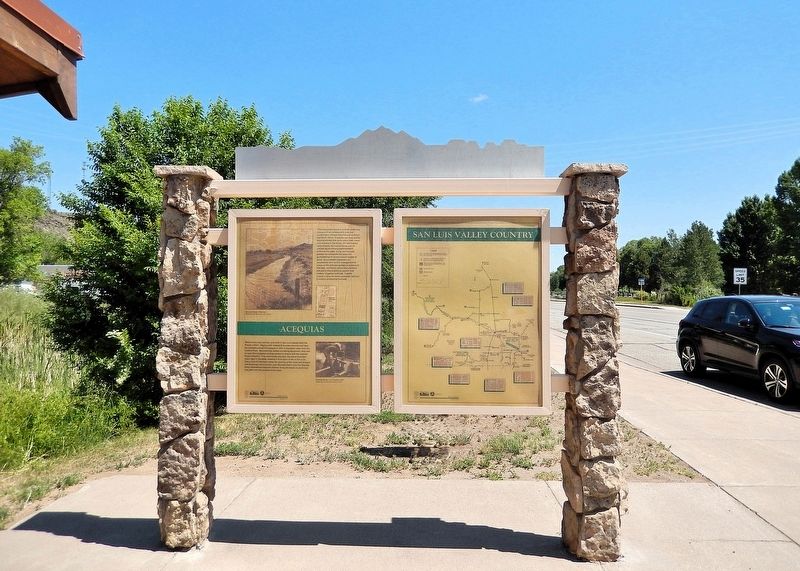
2. San Luis Interpretive Kiosk
Looking north; Main Street is on the right. This historical marker is the leftmost of two interpretive panels on the south side of the kiosk.
Other nearby markers. At least 8 other markers are within walking distance of this marker: Hispano Folkways (here, next to this marker); San Luis Valley Country (here, next to this marker); San Luis (here, next to this marker); Plaza de San Luis de la Culebra (about 500 feet away, measured in a direct line); San Luis and Costilla County Veterans Memorial (about 500 feet away); R & R Market (about 600 feet away); Welcome to El Valle de San Luis (about 600 feet away); Oldest Town in Colorado (about 600 feet away). Touch for a list and map of all markers in San Luis.
Related markers. Click here for a list of markers that are related to this marker.
Also see . . . A look at the San Luis People’s Ditch (Coyote Gulch).
(From The Pueblo Chieftain) Excerpt: Originally a long, shallow, earthwork excavation, this “acequia” or gravity-fed irrigation channel was hand-dug by San Luis’ first settlers to channel water for crops and livestock from the Culebra River and its tributaries. Extending 4 miles west from La Vega, the town’s communal grazing land, it is the oldest continuously used community irrigation ditch in Colorado.(Submitted on February 19, 2026, by Cosmos Mariner of Cape Canaveral, Florida.)
The People’s Ditch was granted the first adjudicated water rights in what is now Colorado, referred to as “court decree priority No. 1” and dating from April 10, 1852. These rights were conveyed just 370 days after San Luis was established — and 24 years before Colorado became a state. Today, the ditch serves some 16 “parciantes” or affiliated water-users and irrigates more than 2,000 acres of hay and other crops.
Credits. This page was last revised on February 19, 2026. It was originally submitted on February 17, 2026, by Cosmos Mariner of Cape Canaveral, Florida. This page has been viewed 57 times since then. Photos: 1, 2. submitted on February 18, 2026, by Cosmos Mariner of Cape Canaveral, Florida.
