Smithsonian National Zoo in Northwest Washington in Washington, District of Columbia — The American Northeast (Mid-Atlantic)
Kori Bustard
Ardeotis kori
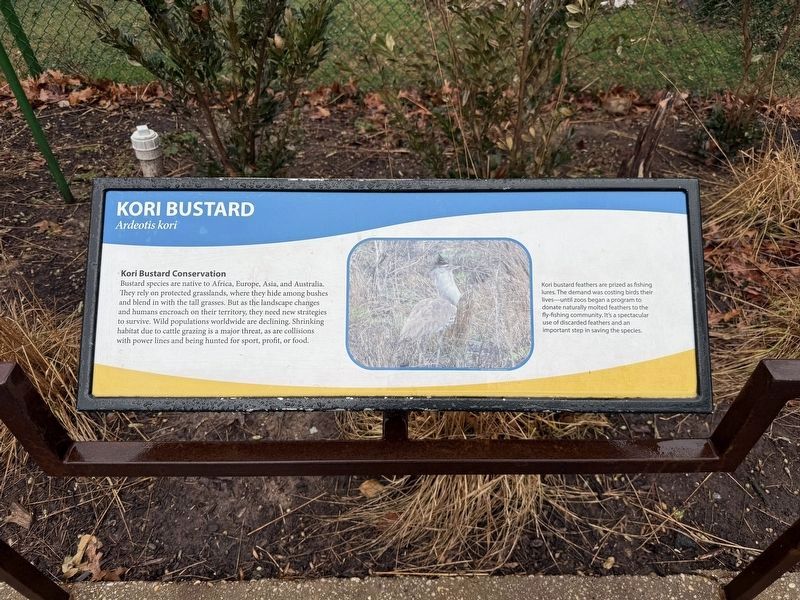
Kori Bustard Conservation
Bustard species are native to Africa, Europe, Asia, and Australia. They rely on protected grasslands, where they hide among bushes and blend in with the tall grasses. But as the landscape changes and humans encroach on their territory, they need new strategies to survive. Wild populations worldwide are declining. Shrinking habitat due to cattle grazing is a major threat, as are collisions with power lines and being hunted for sport, profit, or food.
Kori bustard feathers are prized as fishing lures. The demand was costing birds their lives—until zoos began a program to donate naturally molted feathers to the fly-fishing community. It's a spectacular use of discarded feathers and an important step in saving the species.
Erected by Smithsonian National Zoo.
Topics. This historical marker is listed in these topic lists: Agriculture • Animals • Environment • Industry & Commerce.
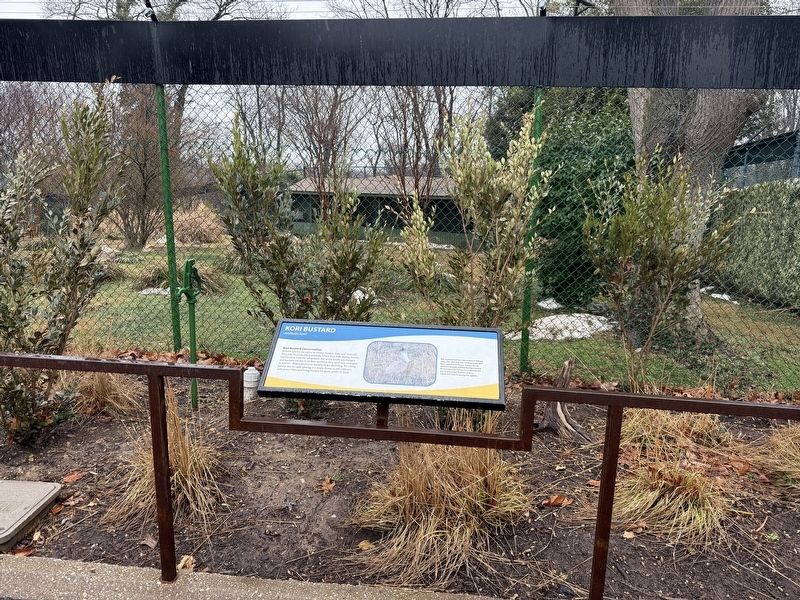
Location. 38° 55.755′ N, 77° 3.048′ W. Marker is in Northwest Washington in Washington, District of Columbia. It is in Smithsonian National Zoo.
this page online

Regionally, this marker is in the Washington Metropolitan Area. It is also in the American Northeast, in the Upper South, in the Mid-Atlantic, in the Tidewater, and in the Chesapeake Bay Region. Globally, it is in North America, the Western Hemisphere, the Western World, and the Anglosphere.
Other nearby markers. At least 8 other markers are within walking distance of this marker: Working for Whoopers (within shouting distance of this marker); Whooping Crane (within shouting distance of this marker); Ross's Goose (within shouting distance of this marker); Flamingo Breeding (within shouting distance of this marker); Eagle Statue (about 400 feet away, measured in a direct line); A Capital Bird (about 400 feet away); Bald Eagle (about 400 feet away); Historic Column Capital (about 500 feet away). Touch for a list and map of all markers in Northwest Washington.
Credits. This page was last revised on February 22, 2026. It was originally submitted on February 22, 2026, by Devry Becker Jones of Washington, District of Columbia. This page has been viewed 25 times since then. Photos: 1, 2. submitted on February 22, 2026, by Devry Becker Jones of Washington, District of Columbia.
