Intramuros in Manila in Metropolitan Manila First District, Metro Manila, Philippines — Southeast Asia
Charles IV, King of Spain

February 15, 2026
1. Charles IV, King of Spain Marker
Charles IV, King of Spain
Monument in honor of Charles IV, King of Spain (1788-1808). Erected in gratitude for decreeing the introduction of vaccine for smallpox in the Philippines. Cast in bronze under Governor General Rafael Maria Aguilar and directed by Ambrosio Casas, 1805-1808; unveiled, 1824. Replaced by a monument to hero-martyrs Gomez, Burgos, and Zamora (GomBurZa), 1961. Reinstated under the Intramuros Administration, 1981. Monument declared a National Cultural Treasure, 2016.
Erected by Intramuros Administration.
Topics. This historical marker is listed in these topic lists: Colonial Era • Science & Medicine. A significant historical date for this entry is November 30, 1803.
Location. 14° 35.528′ N, 120° 58.388′ E. Marker is in Manila, Metro Manila, in Metropolitan Manila First District. It is in Intramuros. It can be reached from Santo Tomas Street. Touch for map. Marker is at or near this postal address: Santo Tomas Street, Manila, Metro Manila 1002, Philippines. Touch for directions.

Regionally, it is in Asia, specifically in Southeast Asia, in the Malay Archipelago, in the Pacific Ocean, in North Pacific,
this page online
Other nearby markers. At least 8 other markers are within walking distance of this marker: Plaza de Roma (here, next to this marker); Ciudad Murada (a few steps from this marker); Manila Metropolitan Cathedral-Basilica (within shouting distance of this marker); In Gratitude for the Generous Financial Support by the People of Spain (within shouting distance of this marker); In Grateful Recognition of the Generous Donations by the People of the Philippines (within shouting distance of this marker); Pope John Paul II (within shouting distance of this marker); In Recognition of the Generous Donation by the Japanese People (within shouting distance of this marker); In Grateful Acknowledgment of the Generous Donation by the People of the United States of America (within shouting distance of this marker). Touch for a list and map of all markers in Manila.
Also see . . . Balmis Expedition (Wikipedia). Excerpt:
The Royal Philanthropic Vaccine Expedition (Spanish: Real Expedición Filantrópica de la Vacuna),(Submitted on March 5, 2026.)commonly referred to as the Balmis Expedition, was a Spanish healthcare mission that lasted from 1803 to 1806, led by Dr Francisco Javier de Balmis, which vaccinated hundreds of thousands against smallpox in Spanish America, the Philippines, and China. The vaccine was transported through children: orphaned boys who sailed with the expedition and, for part of the journey, three enslaved girls from Cuba.February 15, 20262. Charles IV, King of Spain Marker
The mission took the vaccine to the Canary Islands, Puerto Rico, Venezuela, Colombia, Ecuador, Peru, Mexico, the Philippines and China. The ship carried also scientific instruments and translations of the Historical and Practical Treatise on the Vaccine by Moreau de Sarthe to be distributed to the local vaccine commissions to be founded.
… In the Philippines, they received help from the Catholic church, which was initially reluctant until Governor-General Rafael Aguilar made an example by vaccinating his five children.…
The Balmis expedition can be considered the first international healthcare expedition in history. Jenner himself wrote, "I don't imagine the annals of history furnish an example of philanthropy so noble, so extensiveas this."February 15, 20263. Charles IV, King of Spain Monument


Additional keywords. public health

February 15, 2026
4. Charles IV, King of Spain Monument Marker

February 15, 2026
5. Charles IV, King of Spain Monument Marker Reverse
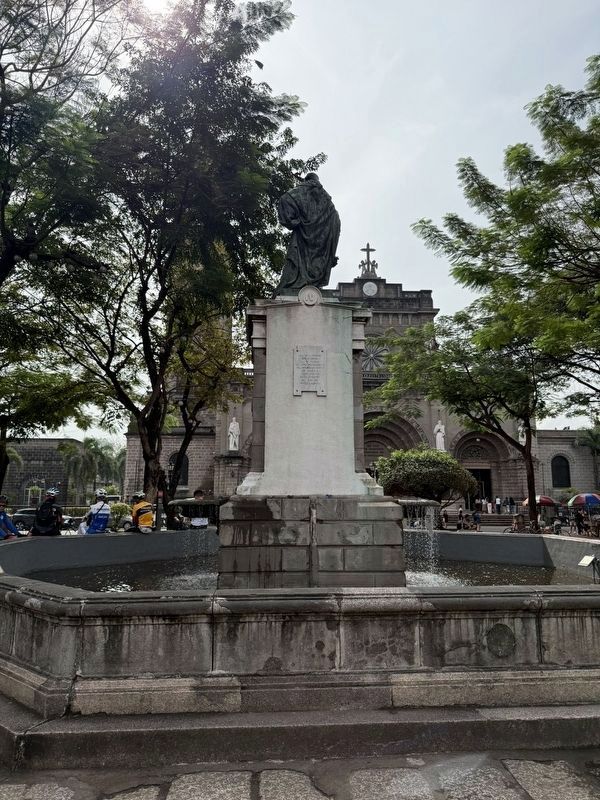
February 15, 2026
6. Charles IV, King of Spain Monument (Back)
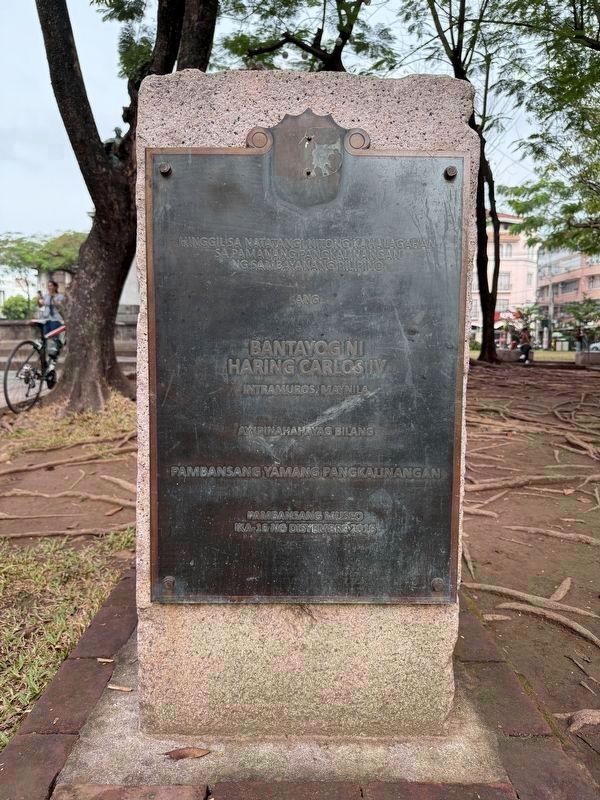
February 15, 2026
7. Nation Cultural Property declaration plaque (2016)
This nearby plaque, erected by the Pambansang Museo, declares the Carlos IV monument a National Cultural Property (in translation):
“Monument of King Charles IV, Intramuros, Manila is hereby declared
a National Cultural Property in view of its unique significance in the cultural heritage of the Filipino people.”
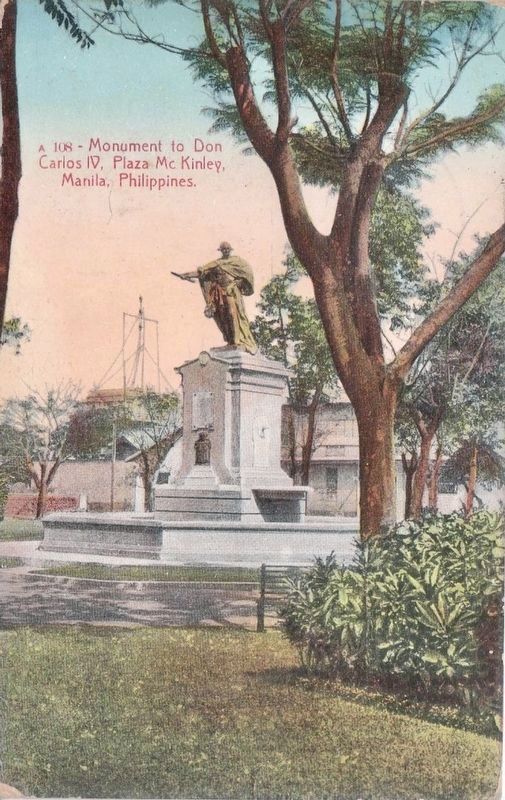
circa 1920
8. Monument to Don Carlos IV
Credits. This page was last revised on March 13, 2026. It was originally submitted on March 4, 2026. This page has been viewed 50 times since then. Photos: 1, 2. submitted on March 4, 2026. 3, 4, 5, 6. submitted on March 5, 2026. 7. submitted on February 24, 2026. 8. submitted on March 5, 2026. • Andrew Ruppenstein was the editor who published this page.
