Wetmore
We're halfway to a lot of places

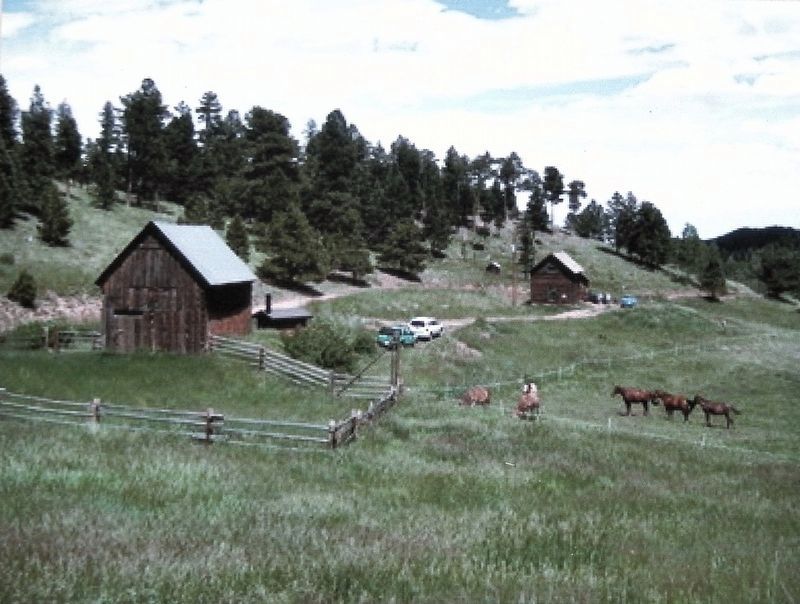
Wildlife is Part of Daily Life
Custer County's diverse habitats support more than 275 bird species. Look for bighorn sheep, deer, black bear, pronghorn, coyotes, beaver, turkey and bobcats.
Getting Through Winter
When cold weather moved in, Native Americans moved to lower ground. Now, locals hunker down and take care of business — feeding cattle, chopping wood, catching up with each other.
Take a Hike
Numerous trails, from short and easy to long and difficult, provide access to some of Colorado's most remote and pristine areas.
Get in the Game
Fur or feather, the area has attracted hunters for more than a thousand years. Professional outfitters and processors are available to support the hunt.
Saddle Up!
Explore the region on horseback, as conquistadors and cowboys did. Venture out on your own or with a guide on a day ride or pack trip.
Ride On!
Get out the bike and take a leisurely ride on rural back roads or pedal up over peaks exceeding 13,000 feet in elevation.
[photo captions]
• Red Tail Hawk
• Rocky Mountain Bighorn Sheep
• Pack Train
• Lover’s Leap, Hardscrabble Mountain
• Jacob Betts and his buggy cart for horse racing
this page online
• Scamper, registered as Gills Bay Boy, was the 1977 Bay gelding bred by Walter (Buddy) Draper and Randy Lawson, both of Westmore. Scamper was inducted into the ProRodeo Hall of Fame in Colorado Springs in 1966
Erected by Colorado Department of Transportation and Custer County.
Topics. This historical marker is listed in these topic lists: Animals • Indigenous Peoples and Communities • Parks & Recreational Areas • Sports.
Location. 38° 14.285′ N, 105° 5.146′ W. Marker is in Wetmore, Colorado, in Custer County. It is at the intersection of State Highway 96 and State Highway 67, on the right when traveling west on State Highway 96. Touch for map. Marker is in this post office area: Wetmore CO 81253, United States of America. Touch for directions.

Regionally, this marker is in the American Mountain West. Globally, it is in North America, the Rocky Mountains, the Western Hemisphere, the Western World, and the Anglosphere. Historically, it finds itself in what was once the Comanchería and also the Republic of Texas.
Other nearby markers. At least 8 other
Related markers. Click here for a list of markers that are related to this marker.
Also see . . . A Brief History of Wetmore (Westmore Historical Society).
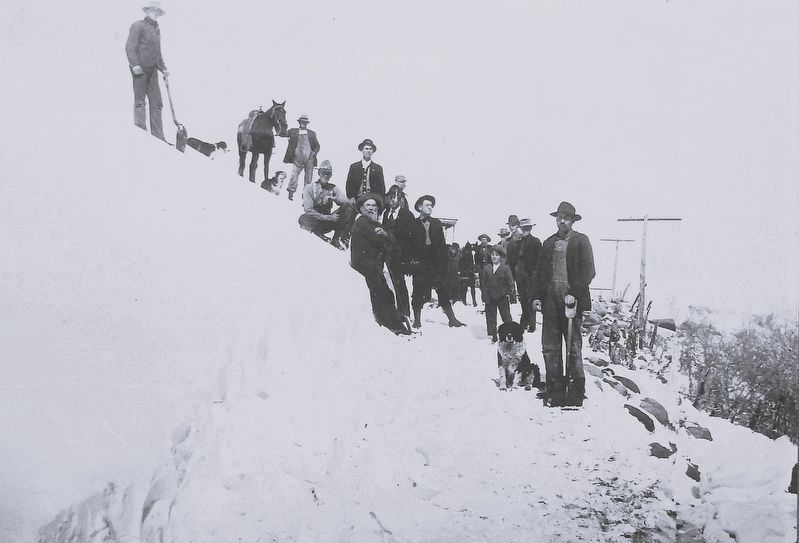
Excerpt: The Hardscrabble Creek and its tributaries flow north towards Pike’s Peak spilling into the Arkansas River at Penrose, making the waterways an important junction of trails. The Hardscrabble was a favorite spot for the early Indian tribes (Ute, Cheyenne, Sioux, Kiowa and Arapaho). Spanish explorers arrived in the 1600’s looking for gold and other riches. French, Mexican, and American trappers,(Submitted on March 13, 2026, by Cosmos Mariner of Cape Canaveral, Florida.)traders and settlers arrived as early as 1830.Wetmore-Hardscrabble Genealogical and Historical Society3. Marker detail: Clearing the Road, 1905Ike Talyor and neighbors clearing the road north from Wetmore towards Florence.Ft. LeDuc was believed to have been built in 1830 by French trappers looking to trade with neighboring Indians, mountain men, and the few Mexican and Anglo settlers in the territory. In 1844, several Americans from El Pueblo established a trading post at San Buenaventura de los Tres Arrollos, located about 5 miles northeast of Ft. LeDuc. The name was later changed to Hardscrabble. According to George Simpson, one of its founders, the name came from the “hard scrabbling to get in a crop” in the gravelly soil.
The Homestead Act was passed in 1862 granting 160 acres to anyone who would live on the land and make improvements. American settlers began to move west to the eligible public lands. The settlers came by covered wagon and ox teams. Most were on their way further west, but some settled near the Hardscrabble Creek because of thick, lush grasses and availability of water. By 1870 most of the Indian tribes had been relocated to reservations and much of the land near the Hardscrabble was settled.
William H. Wetmore and his wife Francis moved to the area about 1878. William Wetmore was a
jack of many trades working as a prospector, Pony Express rider, deputy marshal, clerk, surveyor, rancher-stockman, as well as a correspondent for the Pueblo newspaper. No plat of the town has been found so there is no date when the site was actually named Wetmore, but it was some time after the land was purchased in 1880 and prior to April 19, 1881 when the Wetmore Post Office was established with S. H. Callen as Postmaster.Photographed by Cosmos Mariner, July 25, 20254. Wetmore MarkerThis marker is the leftmost of three interpretive panels in the Wetmore CDOT interpretive kiosk.

Credits. This page was last revised on March 13, 2026. It was originally submitted on March 11, 2026, by Cosmos Mariner of Cape Canaveral, Florida. This page has been viewed 27 times since then. Photos: 1, 2, 3, 4. submitted on March 13, 2026, by Cosmos Mariner of Cape Canaveral, Florida.
