Near Lucketts in Loudoun County, Virginia — The American South (Mid-Atlantic)
Lee Crosses Into Maryland
"Movement is attended with much risk"
| — | Antietam Campaign 1862 | — |
Photographed by Brandon Stahl, February 3, 2017
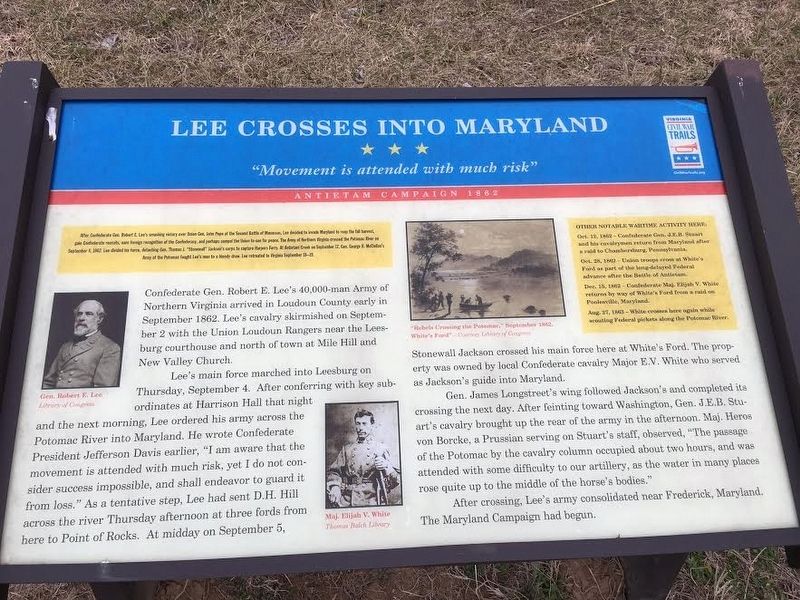
1. Lee Crosses Into Maryland Marker
After Confederate Gen. Robert E. Lee's smashing victory over Union Gen. John Pope at Second Battle of Manassas, Lee decided to invade Maryland to reap the fall harvest, gain Confederate recruits, earn foreign recognition of the Confederacy, and perhaps compel the Union to sue for peace. The Army of Northern Virginia crossed the Potomac River on September 4, 1862. Lee divided his force, detaching Gen. Thomas J. "Stonewall" Jackson's corps to capture Harpers Ferry. At Antietam Creek on September 17, Gen. George B. McClellan's Army of the Potomac fought Lee's men to a bloody draw. Lee retreated to Virginia September 18-19
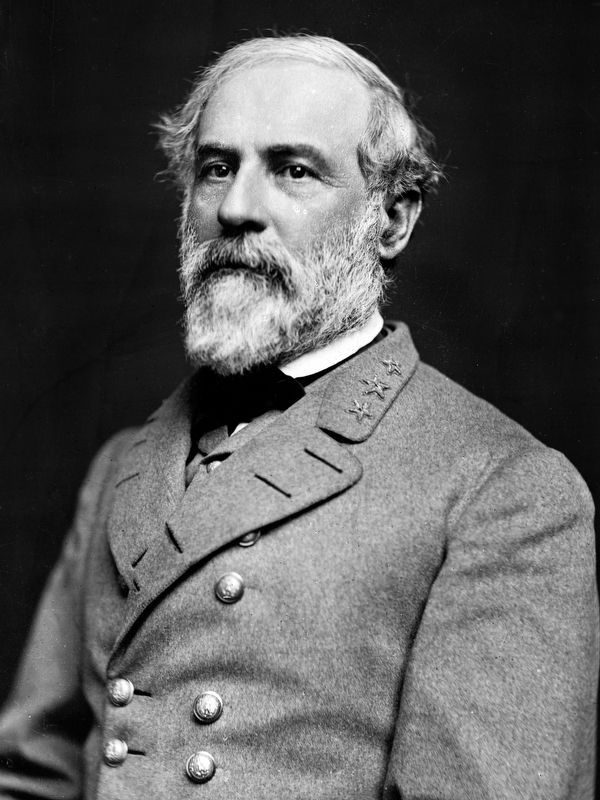
Confederate Gen. Robert E. Lee's 40,000-man Army of Northern Virginia arrived in Loudoun County early September 1862. Lee's cavalry skirmished on September 2 with the Union Loudoun Rangers near Leesburg courthouse and north of town at Mile Hill and New Valley Church.
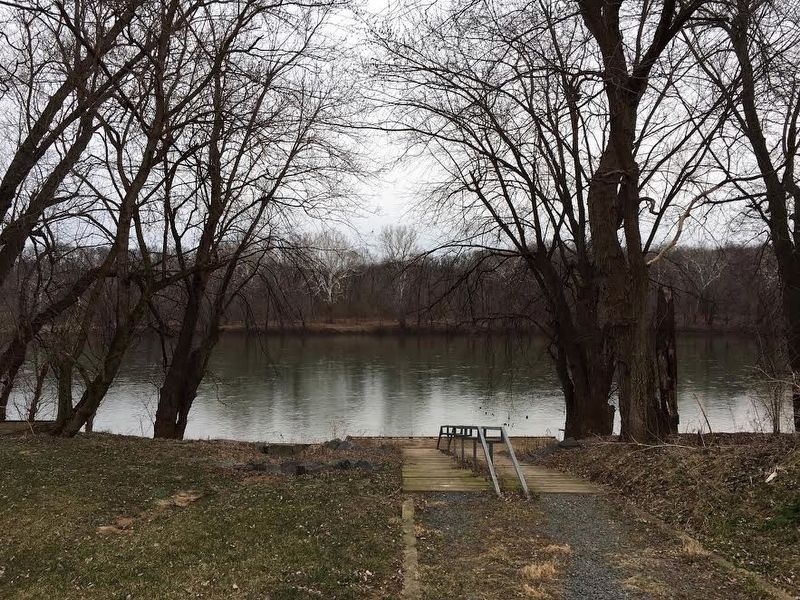
Lee's main force marched into Leesburg Thursday, September 4. After conferring with key subordinates at Harrison Hall that night and the next morning, Lee ordered his army across the Potomac River into Maryland. He wrote Confederate President
this page online
Gen. James Longstreet's wing followed Jackson's and completed its crossing the next day. After feinting toward Washington, Gen. J.E.B. Stuart's cavalry brought up the rear of the army in the afternoon. Maj. Heros von Borcke, a Prussian serving on Stuart's staff, observed, "The passage of the Potomac by the cavalry column occupied about two hours, and was attended with some difficulty to our artillery, as the water in many places rose quite up to the middle of the horse's bodies."
After crossing, Lee's army consolidated near Frederick, Maryland. The Maryland Campaign had begun.
[Sidebar:]
Other Notable Wartime Activity Here:
Oct. 12, 1862- Confederate Gen. J.E.B. Stuart and his cavalrymen returned from Maryland after a raid to Chambersburg, Pennsylvania.
Oct. 28, 1862- Union troops crossed at White's Ford as part of the long-delayed Federal advance after the Battle of Antietam
Dec. 15, 1862- Confederate Maj. Elijah V. White returns by way of White's Ford from a rain on Poolesville, Maryland.
Aug. 27, 1863- White crosses here again while scouting Federal pickets along the Potomac River.
Erected by Virginia
Photographed by Brandon Stahl, February 3, 2017
2. White's Ford
Topics and series. This historical marker is listed in these topic lists: War, US Civil • Waterways & Vessels. In addition, it is included in the Virginia Civil War Trails series list. A significant historical date for this entry is September 5, 1862.
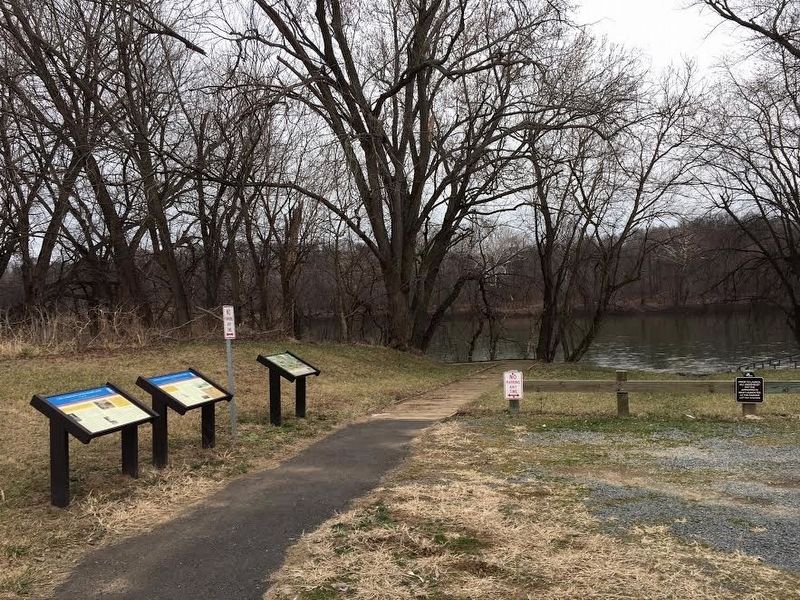
Location. 39° 11.253′ N, 77° 28.995′ W. Marker is near Lucketts, Virginia, in Loudoun County. It can be reached from Hibler Road (Virginia Route 656) east of Harrison Hill Lane, on the right when traveling east. The marker stands in White's Ford Regional Park at the end of the access road (0.4 m south) on the left as you face the Potomac River. Touch for map. Marker is at or near this postal address: 43646 Hibler Rd, Leesburg VA 20176, United States of America. Touch for directions.

Regionally, this marker is in the Washington Metropolitan Area and in Northern Virginia. It is also in the American South, specifically in the Upper South, and in the Mid-Atlantic. Globally, it is in North America, the Western Hemisphere, the Western World, and the Anglosphere. Historically, it finds itself in what was once the territory of the Mississippian Culture, one of the original
Photographed by Brandon Stahl, February 3, 2017
3. Lee Crosses Into Maryland Marker
Other nearby markers. At least 8 other markers are within 3 miles of this marker, measured as the crow flies: Early Crosses At White's Ford (here, next to this marker); The Monacan Confederacy and Culture (a few steps from this marker); White's Ford (approx. half a mile away in Maryland); a different marker also named White's Ford (approx. 0.9 miles away in Maryland); a different marker also named White’s Ford (approx. 1.7 miles away in Maryland); Warren Historic Site (approx. 1.7 miles away in Maryland); Linden Farm (approx. 2 miles away in Maryland); Seneca Stone Barn (approx. 2.1 miles away in Maryland).
Another marker is no longer nearby. White’s Ford (was approx. 0.9 miles away in Maryland but has been replaced with another marker now near it).
Also see . . . White's Ford Regional Park - History. Northern Virginia Regional Park Authority (Submitted on March 15, 2017.)
Library of Congress
4. Gen. Robert E. Lee
by J. Vannerson, published March 1864.
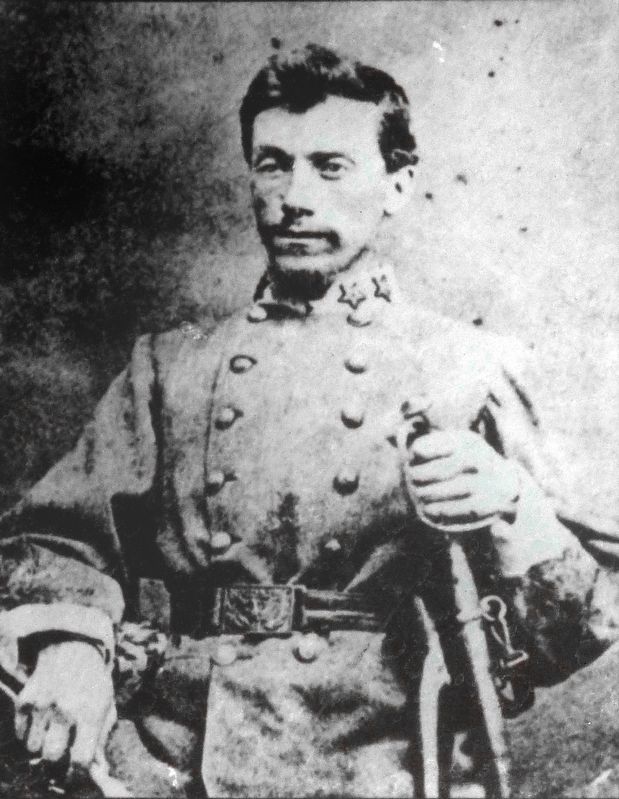
Photographed by Allen C. Browne, April 18, 2019
5. Major Elijah Viers White
Credits. This page was last revised on March 22, 2026. It was originally submitted on March 15, 2017, by Brandon Stahl of Fairfax, Virginia. This page has been viewed 2,428 times since then and 180 times this year. Last updated on March 22, 2026, by Carl Gordon Moore Jr. of North East, Maryland. Photos: 1, 2, 3. submitted on March 15, 2017, by Brandon Stahl of Fairfax, Virginia. 4, 5. submitted on April 24, 2019, by Allen C. Browne of Silver Spring, Maryland. • Devry Becker Jones was the editor who published this page.
