Seminary Hill in Alexandria, Virginia — The American South (Mid-Atlantic)
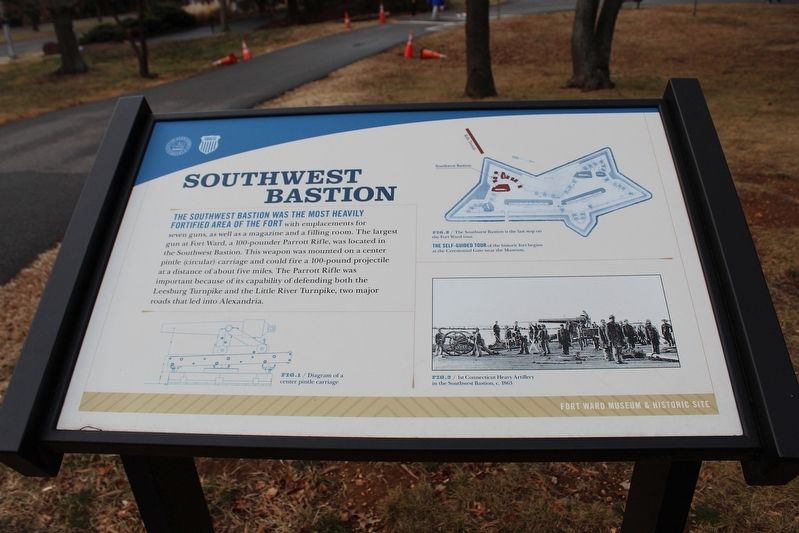
Southwest Bastion
| — | Fort Ward Museum & Historic Site | — |
Photographed by Evan Dwyer, January 17, 2026
1. Southwest Bastion Marker
(Captions)
Fig. 1 / Diagram of a center pintle carriage
Fig. 2 / The Southwest Bastion is the last stop on the Fort Ward tour. The Self-Guided Tour of the historic fort begins at the Ceremonial Gate near the Museum.
Fig. 3 / 1st Connecticut Heavy Artillery in the Southwest Bastion, c. 1863
Erected by City of Alexandria, Virginia.
Topics. This historical marker is listed in these topic lists: Forts and Castles • Roads & Vehicles • War, US Civil. A significant historical year for this entry is 1863.
Location. 38° 49.777′ N, 77° 6.198′ W. Marker is in Alexandria, Virginia.
this page online

Regionally, this marker is in the Washington Metropolitan Area and in Northern Virginia. It is also in the American South, specifically in the Upper South, in the Mid-Atlantic, and on the Eastern Seaboard. Globally, it is in the North Atlantic Region, North America, the Western Hemisphere, the Western World, and the Anglosphere. Historically, it finds itself in what was once the territory of the Mississippian Culture, one of the original Thirteen Colonies, one of the Confederate States of America, and the Antebellum South.
Other nearby markers. At least 8 other markers are within walking distance of this marker: Jackson Cemetery (within shouting distance of this marker); Jackson Cemetery Memorial (within shouting distance of this marker); a different marker also named Fort Ward (about 300 feet away); a
Photographed by Evan Dwyer, January 17, 2026
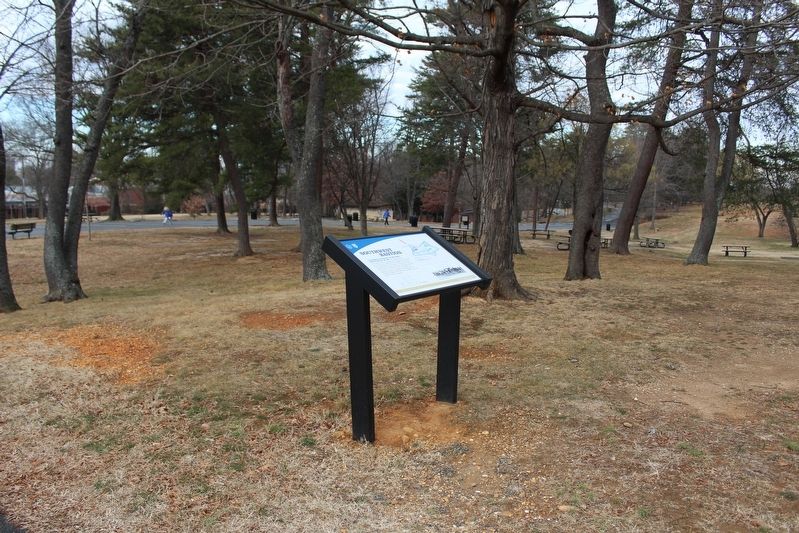
2. Southwest Bastion Marker
Other markers no longer nearby. Southwest Bastion (was a few steps from this marker but has been permanently removed); Fort Ward (was about 300 feet away, measured in a direct line but has been replaced with another marker now near it); Entrance Gate to Fort Ward / Officers' Hut (was about 300 feet away but has been replaced with another marker now near it); a different marker also named Bombproof (was about 400 feet away but has been replaced with another marker now near it); a different marker also named Fort Ward (was about 400 feet away but has been permanently removed).
Related marker. Click here for another marker that is related to this marker. It preceded this marker in the same location.
Photographed by Evan Dwyer, January 17, 2026
3. Southwest Bastion
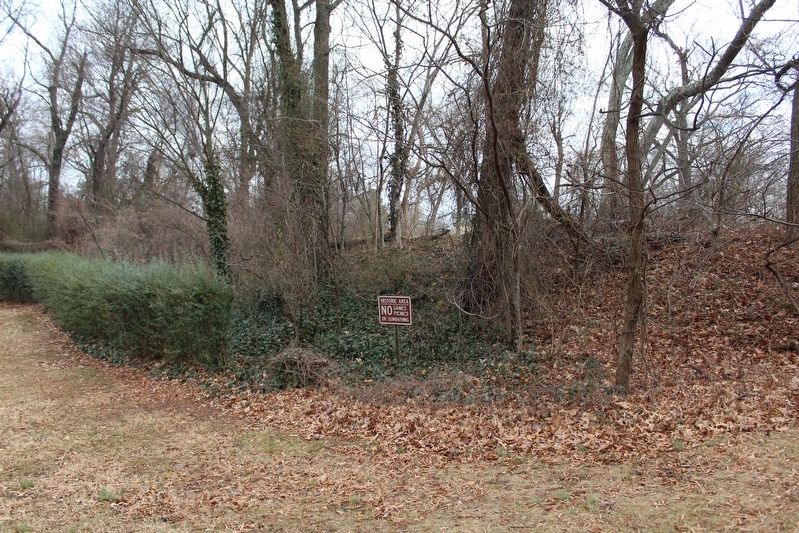
This is the exterior of the Southwest Bastion nearest the marker. Where the fort's walls bend north towards the Northwest Bastion is evident at far left where the bushes make an abrupt turn.
Photographed by Evan Dwyer, January 17, 2026
4. Southwest Bastion Interior
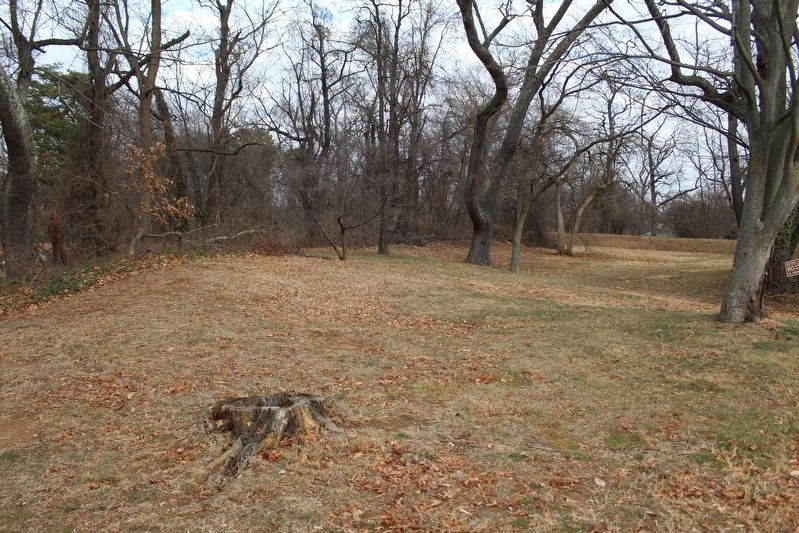
The parapet of the Southwest Bastion has been heavily eroded. The traces of gun platforms, in the form of dirt ramps, are visible rising (running from right to left) to where the parapet once sat. The slope leading down into the exterior ditch is indicated at far left by the angle of the parapet trace. In the background at right beyond the immediate trees is Bombproof No. 1.
Photographed by Evan Dwyer, January 17, 2026
5. South Trace
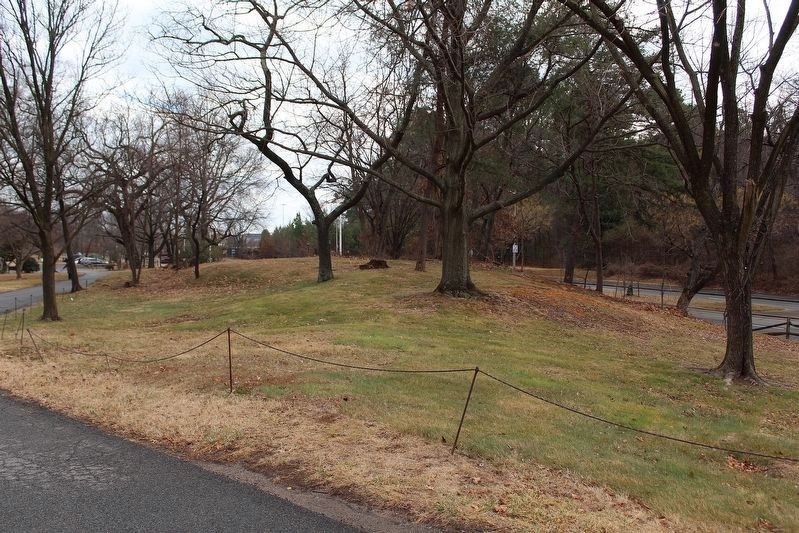
Just southeast of the marker, on the opposite side of the trail (between the trail and West Braddock Road) is the remaining trace of the fort's south magazine.
Photographed by Usgs, January 16, 2026
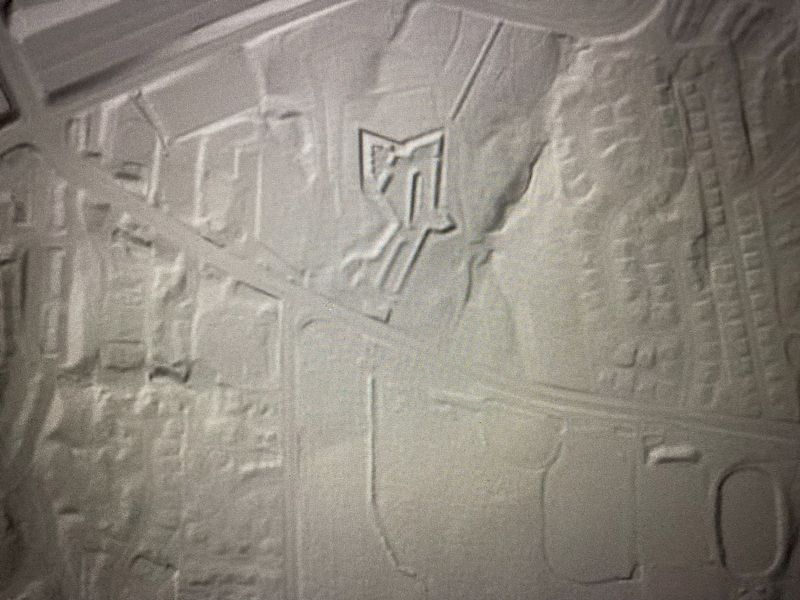
6. Southwest Bastion LiDAR View
Aerial LiDAR image from the USGS' 3D Elevation Program (3DEP) shows how Braddock Road cuts through the south end of the fort and where the Southwest Bastion has eroded away entirely. Compare the lack of distinction in the outline of the Southwest Bastion to the prominently angular and well-defined shape of the restored Northwest Bastion.
Credits. This page was last revised on April 4, 2026. It was originally submitted on March 30, 2026, by Evan Dwyer of Richmond, Virginia. This page has been viewed 24 times since then. Photos: 1, 2, 3, 4, 5, 6. submitted on March 30, 2026, by Evan Dwyer of Richmond, Virginia. • Bernard Fisher was the editor who published this page.
