Jackson in Madison County, Tennessee — The American South (East South Central)
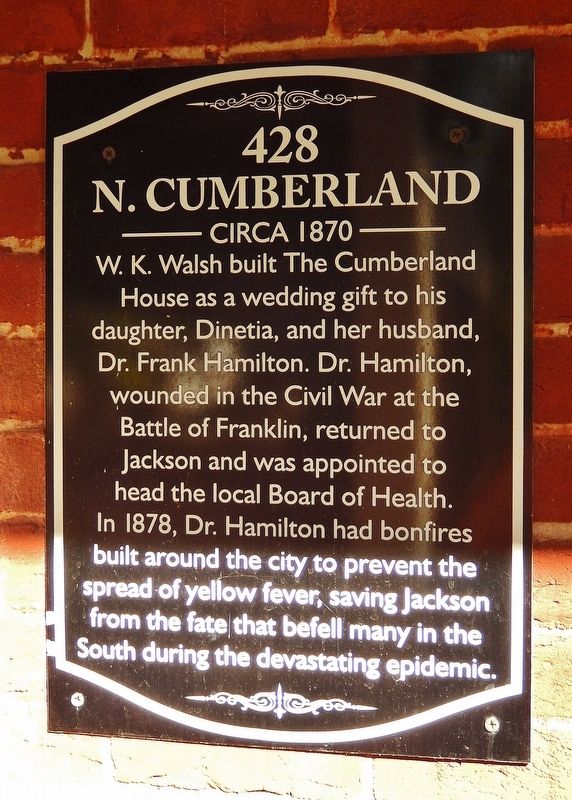
428 N. Cumberland
Circa 1870
Photographed by Cosmos Mariner, September 29, 2025
1. 428 N. Cumberland Marker
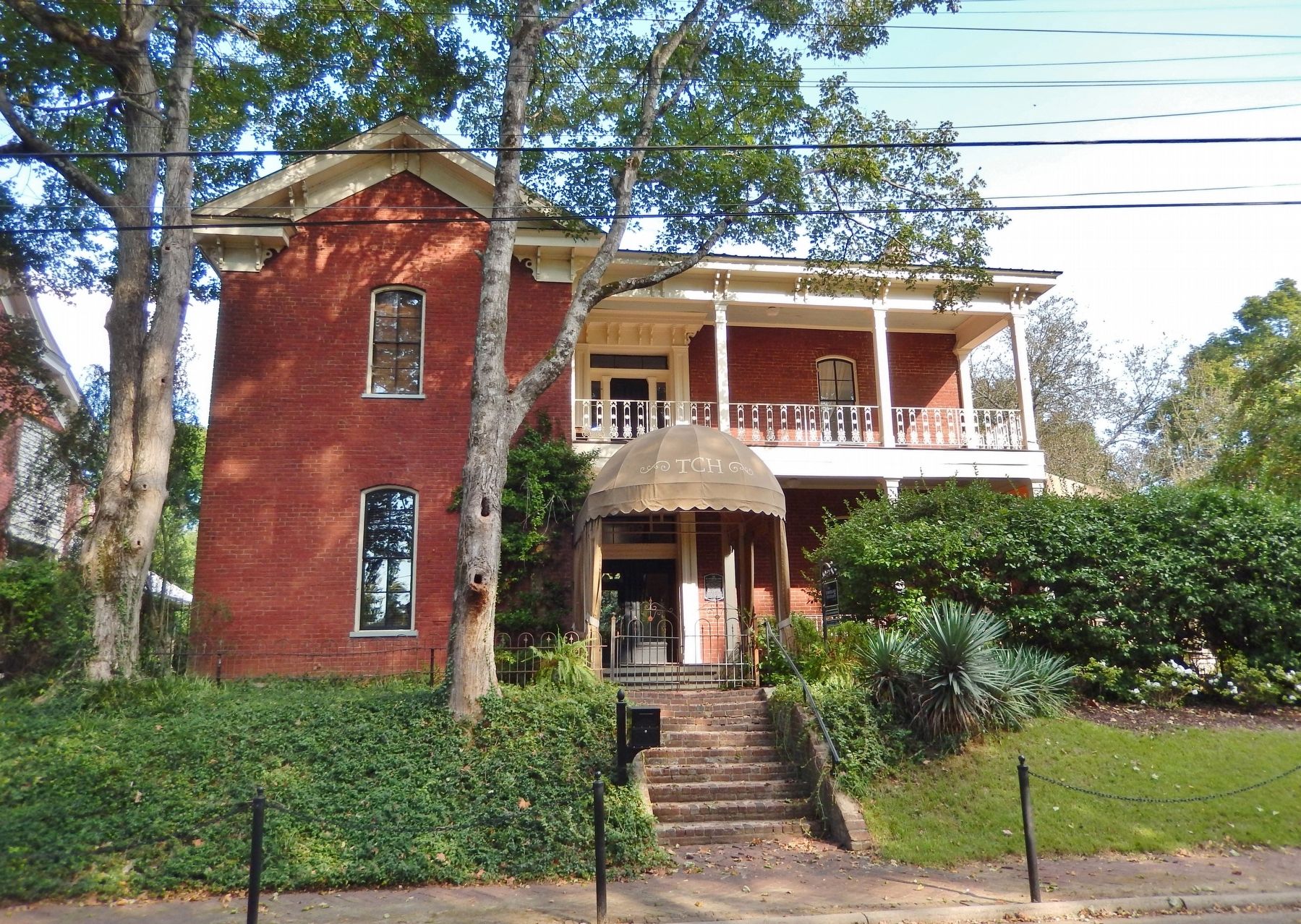
W. K. Walsh built The Cumberland House as a wedding gift to his daughter, Dinetia, and her husband, Dr. Frank Hamilton. Dr. Hamilton, wounded in the Civil War at the Battle of Franklin, returned to Jackson and was appointed to head the local Board of Health.
In 1878, Dr. Hamilton had bonfires built around the city to prevent the spread of yellow fever, saving Jackson from the fate that befell many in the South during the devastating epidemic.
Topics. This historical marker is listed in these topic lists: Architecture • Science & Medicine • War, US Civil. A significant historical year for this entry is 1870.
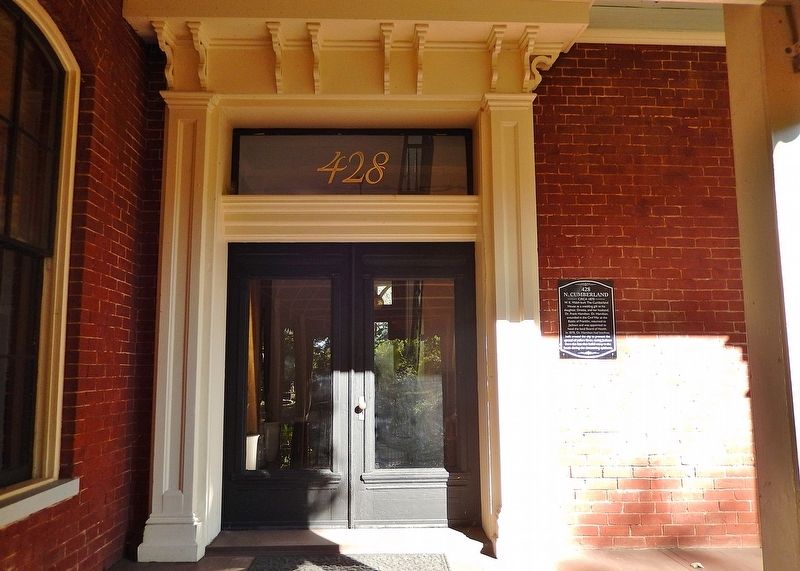
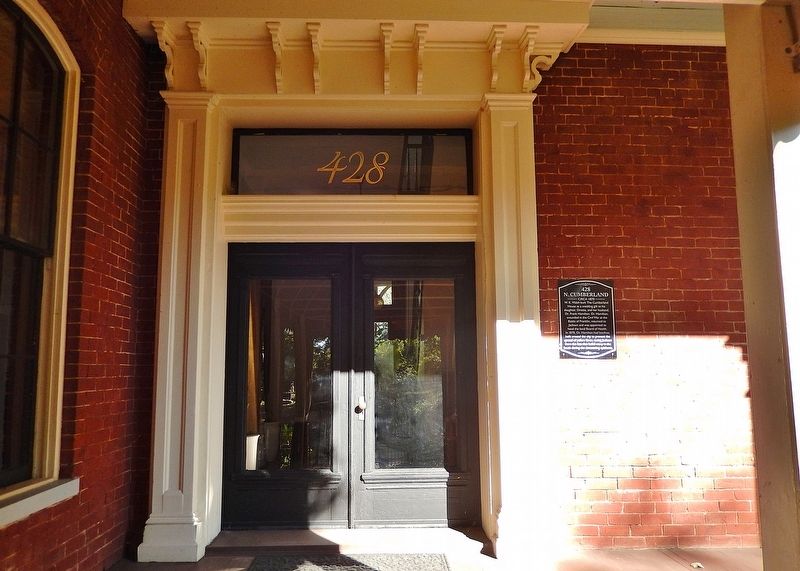
Location. 35° 37.17′ N, 88° 48.944′ W. Marker is in Jackson, Tennessee, in Madison County. It is on North Cumberland Street just south of East Deaderick Street, on the right when traveling north. The marker is mounted directly on the subject house, on the right side of the front/west entrance. Touch for map. Marker is at or near this postal address: 428 North Cumberland Street, Jackson TN 38301, United States of America. Touch for directions.

Regionally, this marker is in West Tennessee. It is also in the American
this page online
Other nearby markers. At least 8 other markers are within walking distance of this marker: W.K. Walsh House (within shouting distance of this marker); Jackson's First Free Library (approx. ¼ mile away); Gil Scott-Heron "Godfather of Rap" (approx. ¼ mile away); Occupation of Jackson (approx. ¼ mile away); 209-217 N. Church (approx. ¼ mile away); 208 N. Liberty (approx. 0.3 miles away); 320 E Lafayette (approx. 0.3 miles away); 316-318 E. Lafayette (approx. 0.3 miles away). Touch for a list and map of all markers in Jackson.
Related markers. Click here for a list of markers that are related to this marker.
Also see . . .
1. Cumberland House History.
Excerpt: In 1870, The Cumberland House was built as a wedding gift from William Walsh to his daughter, Dinetia, and her husband,(Submitted on April 6, 2026, by Cosmos Mariner of Cape Canaveral, Florida.)Dr. Frank Hamilton. The Hamiltons were an integral part of the community, and Dr. Hamilton served as the head of the Local Board of Health. Dr. Hamilton's legacy was determined when his knowledge and leadership were called into play to address the devastating yellow fever epidemic of 1878. The epidemic killed an average of 200 people a day in Memphis, while only six people died of the epidemic in Jackson. Dr. Hamilton was credited with the decisive actions (including building huge bonfires) that saved our city from yellow fever. Descendents of the Hamiltons and Walshes lived in the home until the 1940's. The home was converted into apartments, and fortunately, in the 1990's, the home was bought by a couple aware of the historic significance of the home and saved it from being condemned.Photographed by Cosmos Mariner, September 29, 20252. 428 N. Cumberland MarkerThe marker is on the right side of the front entrance.
2. Dr. Frank Bascom Hamilton Sr. (Find A Grave).
(Riverside Cemetery, Jackson, Madison County, Tennessee, USA) Excerpt: He was a prominent citizen of Jackson TN. He was first married to Denetia H. Walsh about 1870 to which several children were born.(Submitted on April 6, 2026, by Cosmos Mariner of Cape Canaveral, Florida.)After the death of Denetia, he married a woman named Cornelia Hudson. Dr. Hamilton served in Co. C 6th Tenn. Inf Reg during the Civil War. According to Military records he was severely wounded at the Battle of Franklin.Photographed by Cosmos Mariner, September 29, 20253. 428 N. Cumberland MarkerThe marker is on the right side of the front entrance.
3. Yellow Fever Epidemics (Tennessee Encyclopedia).
(Written by Christopher Caplinger) Excerpt: Epidemic diseases caused great concern for nineteenth-century Tennesseans. For residents of West Tennessee, and particularly Memphis, yellow fever posed the greatest threat. The disease caused fevers, chills, hemorrhaging, severe pains, and sometimes a jaundicing of the skin, which gave yellow fever its name. The trademark of the disease, however, was the victim’s black vomit, composed of blood and stomach acids. Although its cause was unknown until 1900, yellow fever was transmitted from person to person by the female Aedes aegypti mosquito. Sailors on ships from the Caribbean or West Africa, from which the disease most likely originated, docked in New Orleans, where mosquitoes spread the disease from the infected person to the local(Submitted on April 6, 2026, by Cosmos Mariner of Cape Canaveral, Florida.)population.Photographed by Cosmos Mariner, September 29, 20254. Cumberland House SignRiver traffic carried yellow fever up the Mississippi Valley as long as mosquitoes were available to transmit the disease from human to human. Reprieve came only with the first frost. Fleeing Memphians encountered quarantines throughout the South. Some of these, like the one at Jackson, Tennessee, were successful in keeping the disease from spreading. But like the attempts at quarantine in Memphis, most of these efforts were not thorough enough. Hardest hit were the Tennessee towns along the various railroads leading out of Memphis.
Photographed by Cosmos Mariner, September 29, 2025
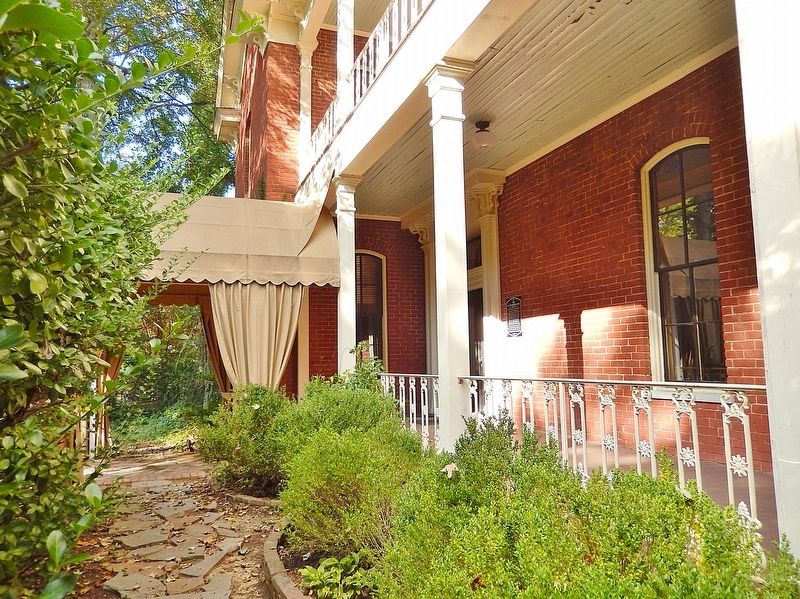
5. Cumberland House Front Porch
Photographed by Cosmos Mariner, September 29, 2025
6. Cumberland House (west/front elevation)
Credits. This page was last revised on April 6, 2026. It was originally submitted on April 4, 2026, by Cosmos Mariner of Cape Canaveral, Florida. This page has been viewed 19 times since then. Photos: 1, 2, 3, 4, 5, 6. submitted on April 6, 2026, by Cosmos Mariner of Cape Canaveral, Florida.
