
Akron in Summit County, Ohio — The American Midwest (Great Lakes)
Akron Community Service Center and Urban League
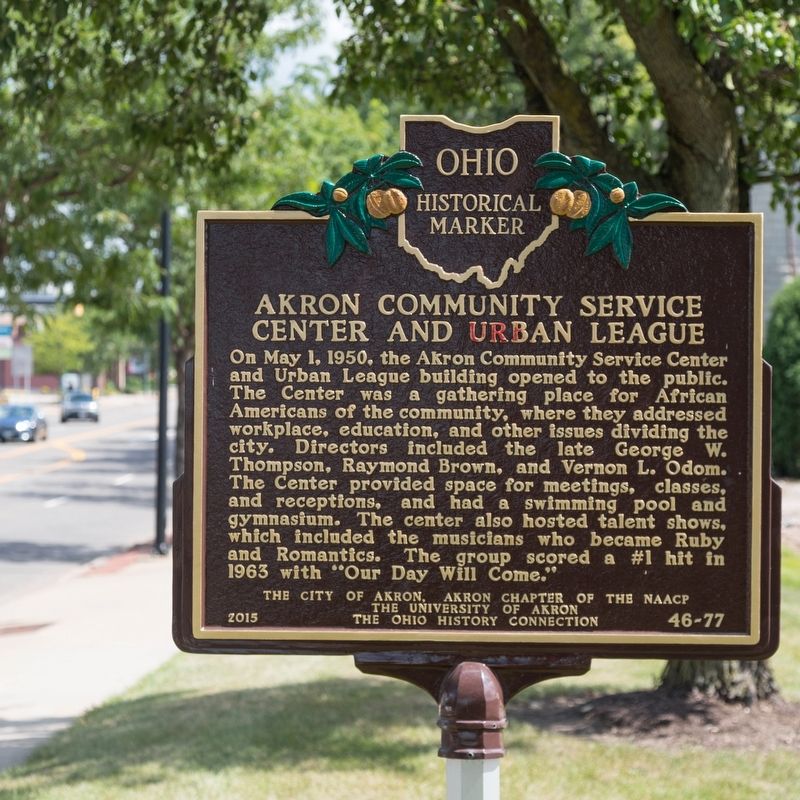
Photographed by J. J. Prats, August 23, 2019
1. Akron Community Service Center and Urban League Marker
On May 1, 1950, the Akron Community Service Center and Urban League building opened to the public. The Center was a gathering place for African Americans of the community, where they addressed workplace, education, and other issues dividing the city. Directors included the late George W. Thompson, Raymond Brown, and Vernon L. Odom. The Center provided space for meetings, classes, and receptions, and had a swimming pool and gymnasium. The center also hosted talent shows, which included the musicians who became Ruby and the Romantics. The group scored a #1 hit in 1963 with “Our Day Will Come."
Erected 2015 by the City of Akron, Akron Chapter of the NAACP, the University of Akron and The Ohio History Connection. (Marker Number 46-77.)
Topics and series. This historical marker is listed in these topic lists: African Americans • Arts, Letters, Music • Civil Rights • Parks & Recreational Areas. In addition, it is included in the Ohio Historical Society / The Ohio History Connection series list. A significant historical date for this entry is May 1, 1950.
Location. Marker is missing. It was located near 41° 4.93′ N, 81° 30.572′ W. Marker was in Akron, Ohio, in Summit County. It
this page online

Regionally, this marker was in Greater Cleveland and in the Western Reserve. It was also in the American Midwest. Globally, it was in North America, the Western Hemisphere, the Western World, and the Anglosphere. Historically, it found itself in what was once the Haudenosaunee (Iroquois) Confederacy, the territory of the Mississippian Culture, and the Northwest Territory.
Other nearby markers. At least 8 other markers are within walking distance of this location: 1936 Akron Rubber Strike (approx. 0.3 miles away); GG9 (approx. 0.4 miles away); Sojourner Truth (approx. 0.4 miles away); Site of Sojourner Truth's Speech on Women's Rights (approx. 0.4 miles away); Contributions Of Women To Akron's Rubber Industry (approx. 0.4 miles away); Contributions Of African Americans To Akron's Rubber Industry (approx. 0.4 miles away); United States Synthetic Rubber Program 1939-1945 (approx. 0.4 miles away); Creating Crossroads of Commerce (approx. 0.4 miles away). Touch for a list and map of all markers in Akron.
Another marker is no longer nearby. Wesley Temple African Methodist Episcopal Zion Church (was approx. ¼ mile away but has been confirmed missing).
More about this marker. The building has been razed but this marker marks the location.
Also see . . .
1. A Long and Local History. Excerpt:
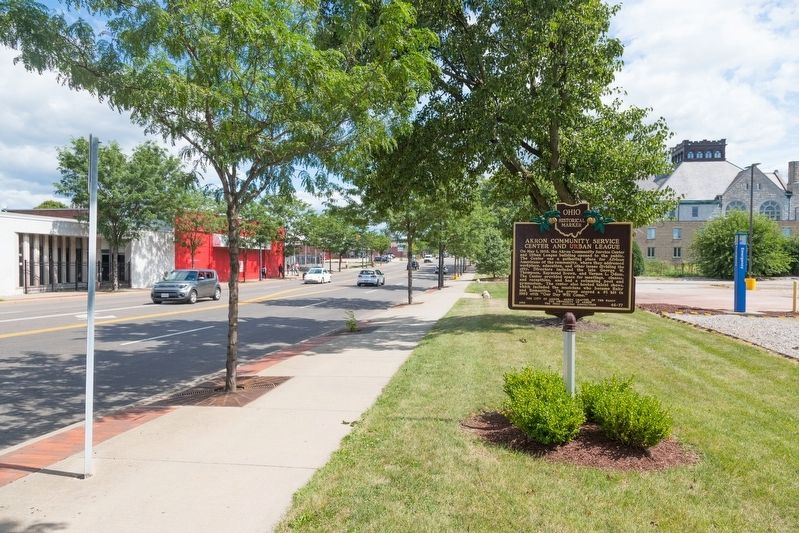
With its location on Perkins Street, the Center was significantly hampered in its ability to provide services. In May of 1950, a new Akron Community(Submitted on November 20, 2019.)Service Center and Urban League was constructed at 250 E. Market St. This new facility included all the amenities that were lacking for the black community. Fully equipped, the community center included a gymnasium, swimming pool, meeting rooms, classrooms, library, lounges and a kitchen. In the 1960s, an auditorium was added. It became the safe haven for the black community and offered recreational programs for children and adults when no other facilities in Akron would allow them through the doors.Photographed by J. J. Prats, August 23, 20192. Akron Community Service Center and Urban League Marker
2. Wikipedia entry for Ruby & the Romantics. Excerpt:
After auditioning, the group was signed to New York-based Kapp Records; Kapp Records artist and repertoire chief Allen Stanton changed their name to “Ruby & the Romantics.” Their hit song “Our Day Will Come” was originally intended for another artist on the label, crooner Jack Jones of “Wives and Lovers” fame, but the group saw its potential and persuaded Stanton to let them record it. Their song became a smash, going all the way to # 1 on the Billboard Hot 100 Pop Chart, as well as reaching # 1 on the Billboard R&B Chart.(Submitted on November 20, 2019.)
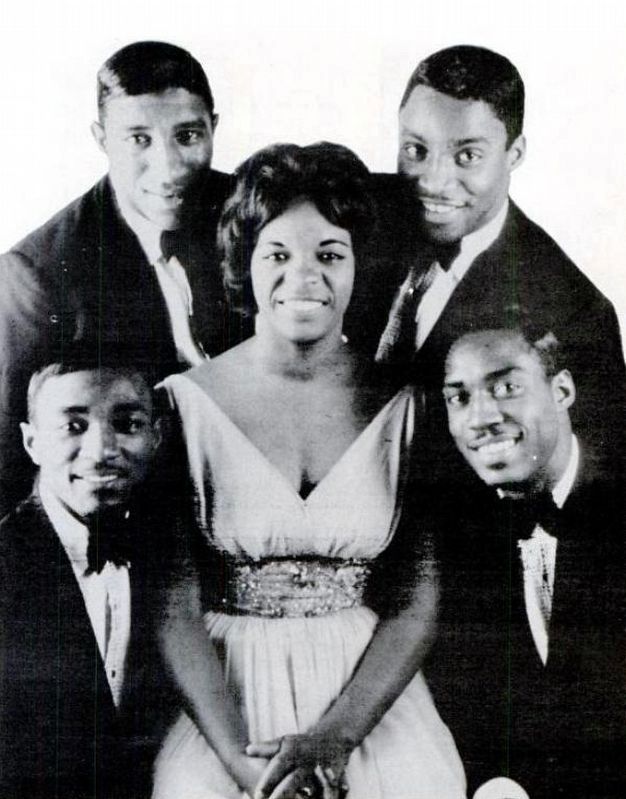
By the year 1963, the group’s next release, “My Summer Love,” reached The Top 20, charting at No. 16 on the Hot 100 and a third release, the original version of “Hey There Lonely Boy” climbedto No. 27.Kapp Records publicity via Billboard, February 6, 19653. Ruby & the RomanticsClockwise from bottom left: George Lee, Ronald Mosely, Ruby Nash, Leroy Fann, Ed Roberts.
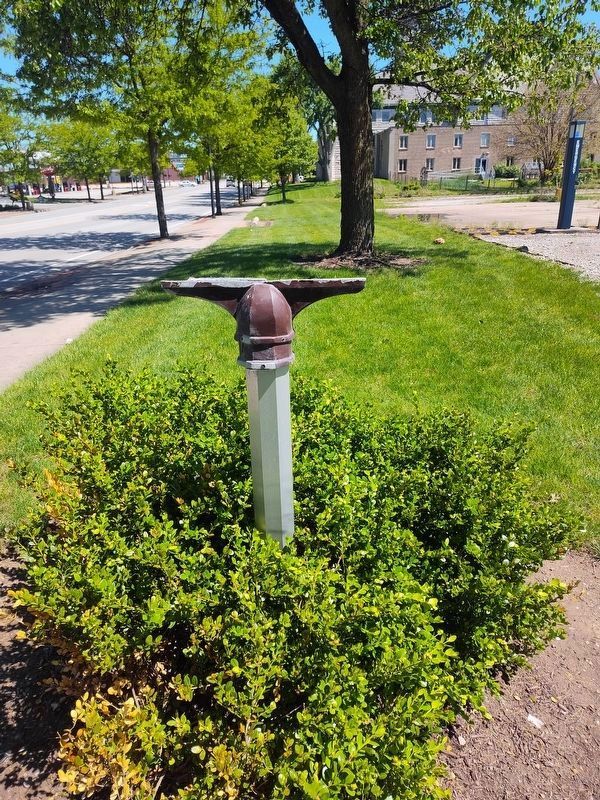
Photographed by Craig Doda, May 10, 2026
4. Akron Community Service Center and Urban League Marker
Credits. This page was last revised on May 14, 2026. It was originally submitted on November 20, 2019, by J. J. Prats of Powell, Ohio. This page has been viewed 833 times since then and 26 times this year. Last updated on May 13, 2026, by Craig Doda of Napoleon, Ohio. Photos: 1, 2, 3. submitted on November 20, 2019, by J. J. Prats of Powell, Ohio. 4. submitted on May 13, 2026, by Craig Doda of Napoleon, Ohio. • Devry Becker Jones was the editor who published this page.
