Le métier et les combats des allumettières


Le Phosphore Blanc
En 1830, le phosphore blanc, utilisé dans la mort-aux-rats pour son effet létal, est introduit dans le processus de fabrication des allumettes. Pour éviter qu'elles ne s'enflamment, celles-ci sont encore humides tors de leur mise en boîte par les allumettières. Les vapeurs toxiques qui s'en dégagent et les résidus qui collent aux mains des ouvrières pénètrent dans leurs gencives et leurs dents, s'attaquant aux os de leur mâchoire. Provoquant une grande souffrance, tes parties infectées doivent souvent être retirées, ce qui défigure considérablement le visage de ces femmes.
this page online
Des Femmes de Tète
En 1918, les allumettières de la E. B. Eddy se syndicalisent pour contrer les conditions de travail difficiles et les dangers de l'emploi. Georgina Cabana est nommée présidente de l'Association ouvrière catholique féminine de Hull et Donalda Charron, contremaîtresse, devient éventuellement porte-parole de la branche syndicale des ouvrières des allumettes de Hull. Elles vont jouer un rôle déterminant lors des conflits de travail de 1919 et de 1924 qui opposent les allumettières à la E. B. Eddy. Les litiges portent surtout sur les conditions de travail, la question morale et la non-reconnaissance du nouveau syndicat. Si les mésententes de 1919 se règlent rapidement, celles de 1924
The Profession and the Struggles of the Matchgirls
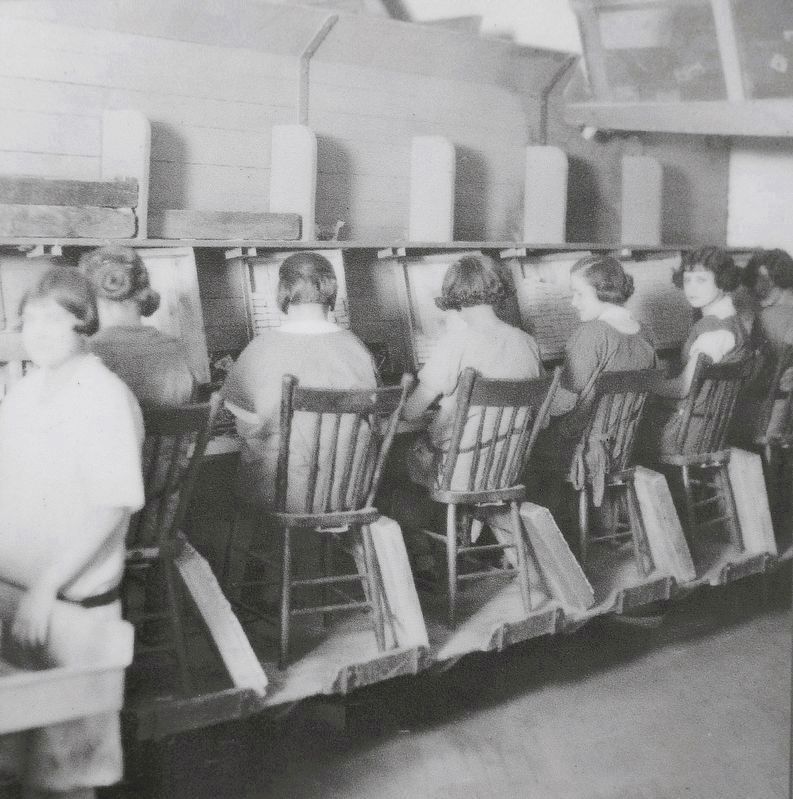
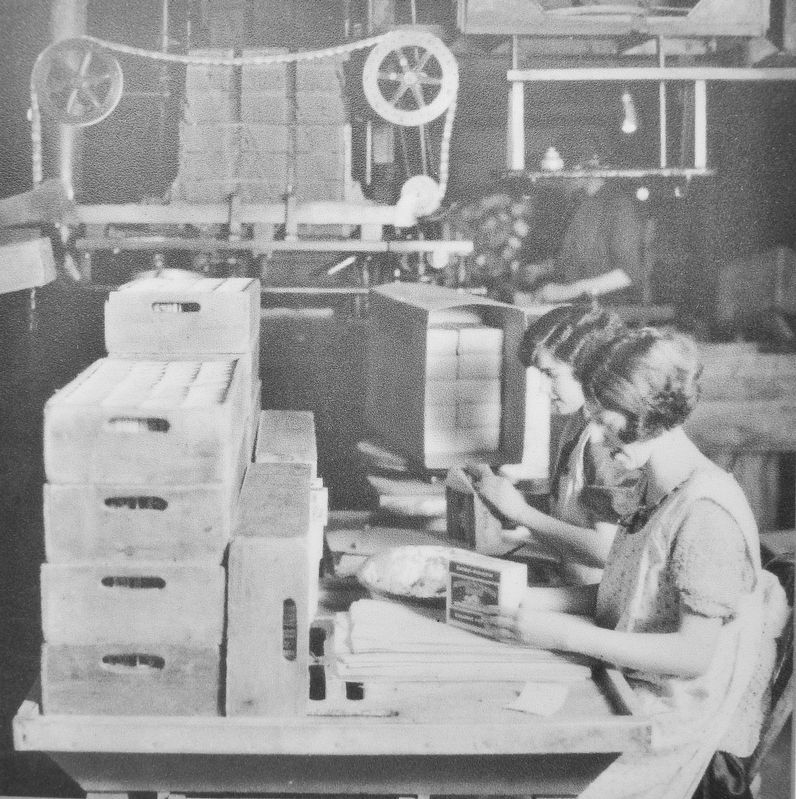
For more than 75 years, hundreds of women have worked at the E. B. Eddy factory. Young and single, often from disadvantaged backgrounds, those known as "match girls" pack and box matches under difficult conditions. The work week ranges between 50 and 60 hours, for a weekly wage ranging from $2.50 to $6.50. Fires break out daily, and the workers are exposed to a chemical that causes a terrible disease, jaw necrosis.
White Phosphorus
In 1830, white phosphorus, used in rat poison for its lethal effect, was introduced into the match manufacturing process. To prevent them from igniting, the matches are still damp when boxed by the match girls. The toxic fumes released and the residue that sticks to the workers' hands penetrate their gums and teeth, attacking the bones of their jaws.
Strong-Willed Women
In 1918, the matchwomen of E. B. Eddy unionized to counter difficult working conditions and the dangers of the job. Georgina Cabana was appointed president of the Hull Catholic Women's Labor Association, and Donalda Charron, a forewoman, eventually became the spokesperson for the Hull matchworkers' union branch. They would play a decisive role during the labor disputes of 1919 and 1924 between the matchwomen and E. B. Eddy. The disputes were mainly over working conditions, moral issues, and the non-recognition of the new union. While the disagreements of 1919 were quickly resolved,

Erected by Ville de Gatineau, Québec, Entente de développement culturel.
Topics. This historical marker is listed in these topic lists: Industry & Commerce • Labor Unions • Women. A significant historical year for this entry is 1918.
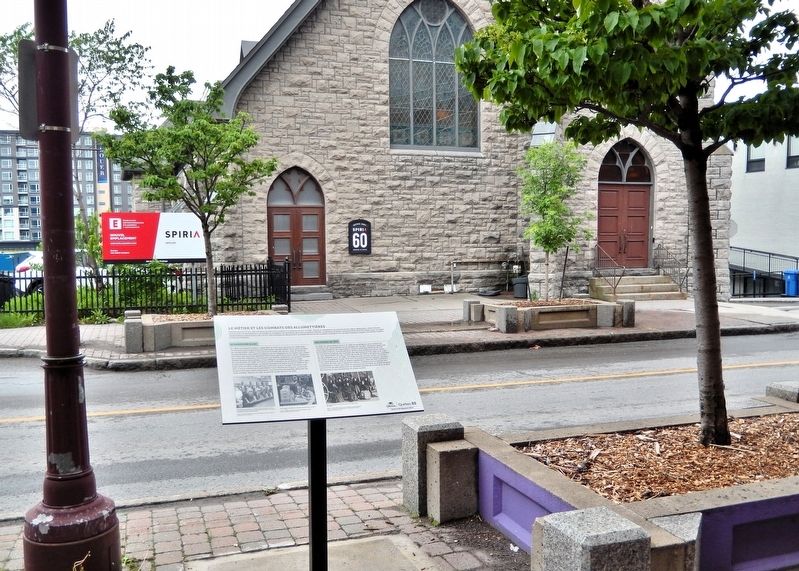
Location. 45° 25.508′ N, 75° 43.124′ W. Marker is in Gatineau, Québec, in Outaouais. It is in District de Hull. It is on Promenade du Portage just east of Rue Saint-Jacques, on the right when traveling west. Touch for map. Marker is at or near this postal address: 55 Promenade du Portage, Gatineau QC J8X 2J9, Canada. Touch for directions.

Regionally, this marker is in the Ottawa Metropolitan Area and in the Outaouais & Eastern Townships. It is also in Central Canada. Globally, it is in North America, the Great North Woods, the Western Hemisphere, and the Western World. Historically, it finds itself in what was once a
Other nearby markers. At least 8 other markers are within walking distance of this marker: Bienvenue à Wrightstown (here, next to this marker); Les débuts modestes de l'usine E. B. Eddy (within shouting distance of this marker); L'édifice Jules-Léger / The Jules Léger Building (about 90 meters away, measured in a direct line); Hull au début du XXe siècle (about 150 meters away); Hull, une ville ouvrière dans l'âme (about 210 meters away); Philemon Wright (approx. 0.2 kilometers away); Ce bâtiment est un haut lieu du syndicalisme Québécois (approx. 0.3 kilometers away); Maison Aubry (approx. 0.3 kilometers away). Touch for a list and map of all markers in Gatineau.
Also see . . . Bringing matchmakers out of the shadows: Workers at the E. B. Eddy match factory in Hull (1854-1928).
Excerpt: Who were the "matchmakers" at Hull's E. B. Eddy pulp and paper mill? Exploited young women or committed union activists? Between 1854 and 1928, the women responsible for making 90% of the country's matches worked in a backbreaking and extremely dangerous occupation involving fire hazards and toxic chemicals. The consequences were disastrous for them. These difficult conditions and low wages led to unionization and the first "women's strike" in Quebec history.(Submitted on June 8, 2026, by Cosmos Mariner of Cape Canaveral, Florida.)In this YouTube presentation, historian Kathleen Durocher tells the fascinating story of this anonymous workforce, a story pieced together from Canadian censuses, government, private and parish archives, as well as from numerous articles in scholarly journals and mass-circulation newspapers. Ms. Durocher has drawn up a demographic profile of the matchmakers, and will tell us about their daily lives; their role within the working class; their functions in the factory; their working conditions, the dangers of the job (especially those associated with white phosphorus); and their union activities, from 1918 to 1928 - when the factory left Hull.
Tragic and inspiring, the story of the matchmakers has marked the region and the country’s history for over a century but remains too little known.
Credits. This page was last revised on June 15, 2026. It was originally submitted on June 8, 2026, by Cosmos Mariner of Cape Canaveral, Florida. This page has been viewed 18 times since then. Photos: 1, 2, 3, 4, 5. submitted on June 8, 2026, by Cosmos Mariner of Cape Canaveral, Florida.
