
Medemblik, North Holland, Netherlands — Northwestern Europe
Medemblik: heden en verleden
⎯⎯⎯
Medemblik: Past and Present
Photographed by Andrew Ruppenstein, June 2, 2026
1. Medemblik: heden en verleden / Medemblik: Past and Present

Middeleeuwse stad en Kasteel Radboud
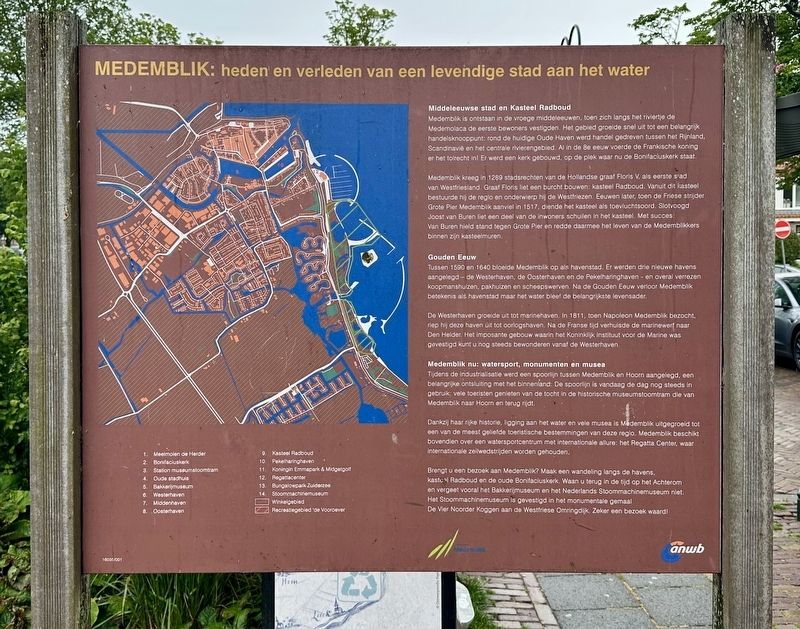
Medemblik is ontstaan in de vroege middeleeuwen, toen zich langs het riviertje de Medemolaca de eerste bewoners vestigden. Het gebied groeide snel uit tot een belangrijk handelsknooppunt: rond de huidige Oude Haven werd handel gedreven tussen het Rijnland, Scandinavië en het centrale rivierengebied. Al in de 8e eeuw voerde de Frankische koning er het tolrecht in! Er werd een kerk gebouwd, op de plek waar nu de Bonifaciuskerk staat.
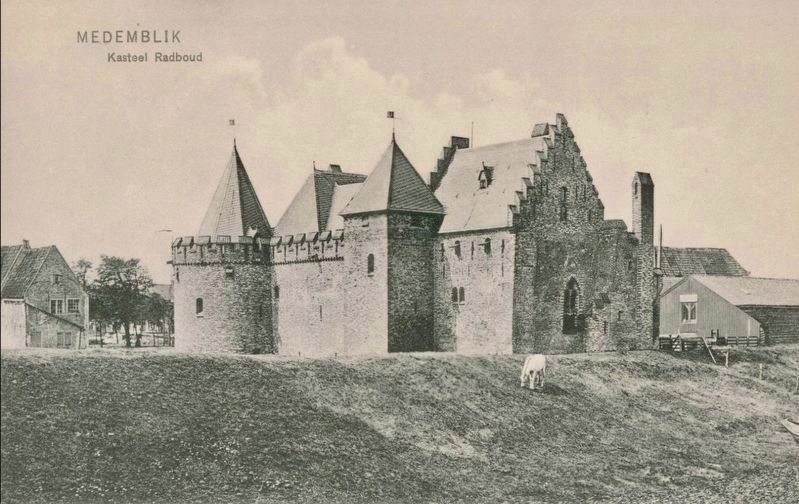
Medemblik kreeg in 1289 stadsrechten van de Hollandse graaf Floris V, als eerste s'ad van Westfriesland. Graaf Floris liet een burcht bouwen: kasteel Radboud. Vanuit dit kasteel bestuurde hij de regio en onderwierp hij de Westfriezen. Eeuwen later, toen de Friese strijder Grote Pier Medemblik aanviel in 1517, diende het kasteel als toevluchtsoord. Slotvoogd Joost van Buren liet een deel van de inwoners schuilen in het kasteel. Met succes: Van Buren hield stand tegen Grote Pier en redde daarmee het leven van de Medemblikkers binnen zijn kasteelmuren.
Gouden Eeuw
Tussen 1590 en 1640 bloeide Medemblik op als havenstad. Er werden drie nieuwe havens aangelegd - de Westerhaven, de Oosterhaven en de Pekelharinghaven - en overal verrezen koopmanshuizen, pakhuizen en scheepswerven. Na de Gouden Eeuw verloor Medemblik betekenis als havenstad maar het water bleef de belangrijkste levensader.
De Westerhaven groeide uit tot marinehaven. In 1811, toen Napoleon Medemblik bezocht, riep hij deze haven uit tot oorlogshaven. Na de Franse tijd verhuisde de marinewerf naar Den Helder. Het imposante gebouw waarin het Koninklijk Instituut voor de Marine was gevestigd kunt u nog steeds bewonderen vanaf de Westerhaven.
Medemblik nu: watersport, monumenten en musea
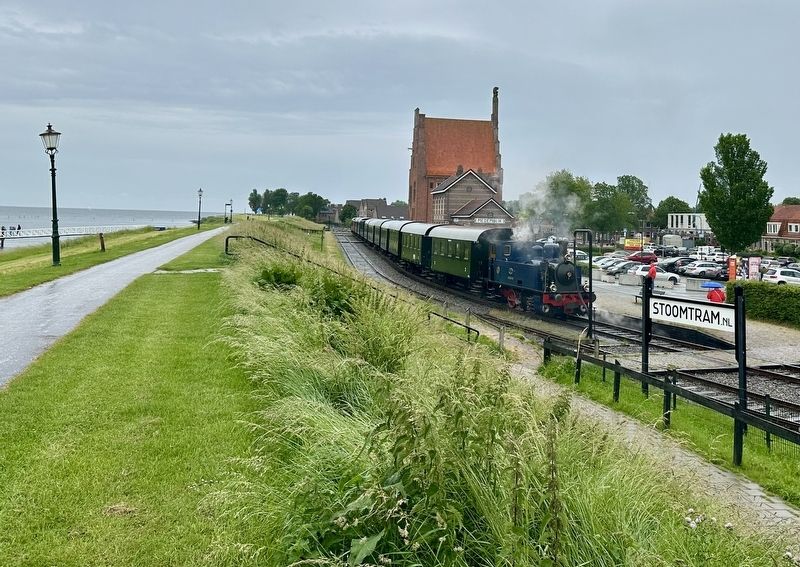
Tijdens de industrialisatie werd een spoorlijn tussen Medemblik en Hoorn aangelegd, een belangrijke ontsluiting met het binnenland: De spoorlijn is vandaag de dag nog steeds in gebruik: vele toeristen genieten van de tocht in de historische museumstoomtram die van Medemblik naar Hoorn en terug rijdt.
Dankzij haar rijke historie, ligging aan het water en vele musea is Medemblik uitgegroeid tot een van de meest geliefde toeristische bestemmingen van deze regio. Medemblik beschikt bovendien over een watersportcentrum met internationale allure: het Regatta Center, waar internationale zeilwedstrijden worden gehouden.
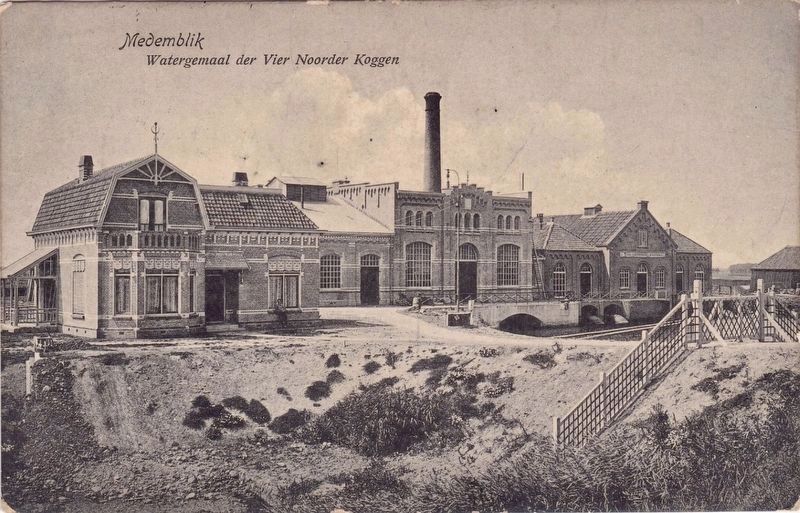
Brengt u een bezoek aan Medemblik? Maak een wandeling langs de havens, kasteel Radboud en de oude Bonifaciuskerk. Waan u terug in de tijd op het Achterom en vergeet vooral het Bakkerijmuseum en het Nederlands Stoommachinemuseum niet. Het Stoommachinemuseum is gevestigd in het monumentale gemaal De Vier Noorder Koggen aan de Westfriese Omringdijk. Zeker een bezoek waard!
Medemblik: Past and Present of a Lively Waterfront Town
Medieval town and Radboud Castle
Medemblik originated in the early Middle Ages, when the first settlers established themselves along the small river Medemolaca. The area rapidly developed into a major trading hub: trade took place around the present-day Old Harbor, linking the Rhineland, Scandinavia, and the central river region. As early as the 8th century, the Frankish king introduced toll rights there! A church was built on the site where the Bonifacius Church now stands.
In 1289, Medemblik was granted city rights by Count Floris V of Holland, becoming the first city in West Friesland. Count Floris commissioned the construction of a stronghold: Radboud Castle. From this castle, he governed the region and subjugated the West Frisians. Centuries later, when the Frisian warrior Grote Pier attacked Medemblik in 1517, the castle served as a refuge. Castellan Joost van Buren sheltered some of the townspeople within the castle walls. He succeeded: Van Buren held his ground against Grote Pier, thereby saving the lives of the Medemblik residents inside.
Golden Age
Between 1590 and 1640, Medemblik flourished as a port city. Three new harbors were constructed—the Westerhaven, the Oosterhaven, and the Pekelharinghaven—and merchant houses, warehouses, and shipyards sprang up everywhere. After the Golden Age, Medemblik lost its significance as a port city, yet the water remained its vital lifeline.
The Westerhaven developed into a naval harbor. In 1811, during a visit to Medemblik, Napoleon designated it a naval base. Following the French period, the naval shipyard relocated to Den Helder. You can still admire the impressive building that once housed the Royal Naval Institute from the Westerhaven.
Medemblik today: water sports, monuments, and museums
During the era of industrialization, a railway line was constructed between Medemblik and Hoorn, providing a vital link to the hinterland. The line remains in use today; many tourists enjoy the journey aboard the historic museum steam tram that runs between Medemblik and Hoorn.
Thanks to its rich history, waterfront location, and numerous museums, Medemblik has become one of the region's most popular tourist destinations. Furthermore, the town boasts a world-class water sports facility—the Regatta Center—which hosts international sailing competitions.
Are you visiting Medemblik? Take a stroll past the harbors, Radboud Castle, and the historic Bonifacius Church. Step back in time along the Achterom street, and be sure not to miss the Bakery Museum and the Dutch Steam Engine Museum. The Steam Engine Museum is housed in the monumental De Vier Noorder Koggen pumping station, situated along the West Frisian Ring Dike. It is well worth a visit!
Erected by the
this page online
Topics. This historical marker is listed in these topic lists: Industry & Commerce • Railroads & Streetcars • Wars, Non-US • Waterways & Vessels. A significant historical year for this entry is 1289.
Location. 52° 46.436′ N, 5° 6.356′ E. Marker is in Medemblik, Noord-Holland (North Holland). It is on Dam. Touch for map. Marker is at or near this postal address: Dam 2A, Medemblik, Noord-Holland 1671 AW, Netherlands. Touch for directions.

Regionally, it is in Europe, the European Union, Atlantic Europe, the Benelux Low Countries, the Schengen Area, Western Europe, and the Western World. Historically, it finds itself in what was once the Holy Roman Empire.
Other nearby markers. At least 8 other markers are within 6 kilometers of this marker, measured as the crow flies: Station (a few steps from this marker); Stadhuis / Town Hall (a few steps from this marker); Oorlogsmonument Medemblik / Medemblik War Memorial (about 90 meters away, measured in a direct line); Het Koggehuis / The Koggehuis (about 120 meters away); Alle Euwen Bedrijvigheid / Centuries of Activity (about 150 meters
Photographed by Andrew Ruppenstein
2. Medemblik: heden en verleden / Medemblik: Past and Present Marker
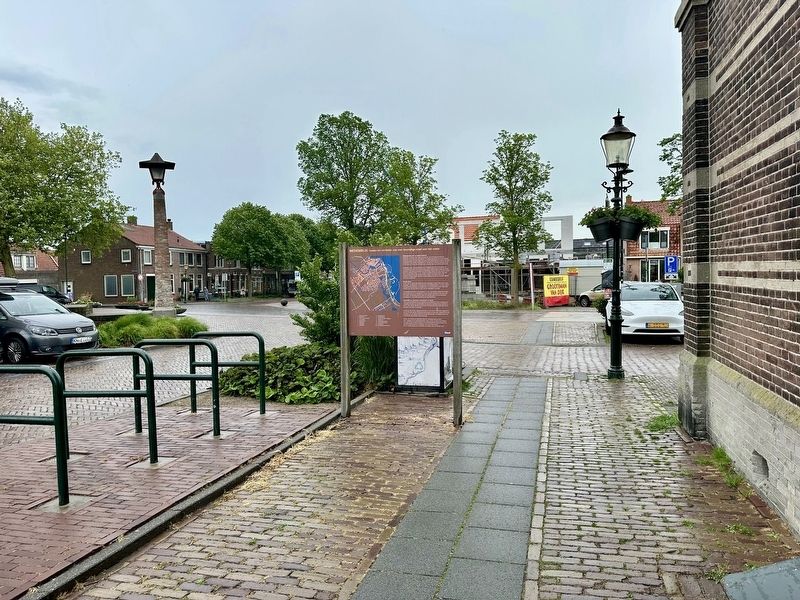
More about this marker. The marker is located on the east side of the steam-tram station.
Also see . . . Medemblik (Wikipedia). (Submitted on June 13, 2026.)
Weenenk and Snel (courtesy Trinity College, Hartford via JSTOR), circa 1905
3. Kasteel Radboud (mentioned on the marker)
“ After Medemblik town walls were constructed in 1572, the castle lost its role as a refuge for the citizens, which led to its partially dismantling in 1578. Over the centuries the castle fell into decay, but in 1889 it became property of the crown and was restored to be used as a courthouse, which function it served until 1934. Anticipating the German invasion, the Rijksmuseum in September 1939 chose the castle as the initial hiding place of Rembrandt's Night Watch.” - Wikipedia
Photographed by Andrew Ruppenstein, June 2, 2026
4. Medemblik - Hoorn historic steam tram (mentioned on the marker)
Photographed by Uitg. K.H. Idema, circa 1905
5. Water Pumping Station Vier Noorder Koggen (mentioned on the marker)
Now housing the steam tram museum
Credits. This page was last revised on June 13, 2026. It was originally submitted on June 13, 2026, by Andrew Ruppenstein of Lamorinda, California. This page has been viewed 7 times since then. Photos: 1, 2, 3, 4, 5. submitted on June 13, 2026, by Andrew Ruppenstein of Lamorinda, California.
