Midtown in Milwaukee in Milwaukee County, Wisconsin — The American Midwest (Great Lakes)
Lynden Hill: A Site of African American Resilience
Photographed by Mallory Hanson, June 13, 2026
1. Lynden Hill: A Site of African American Resilience Marker
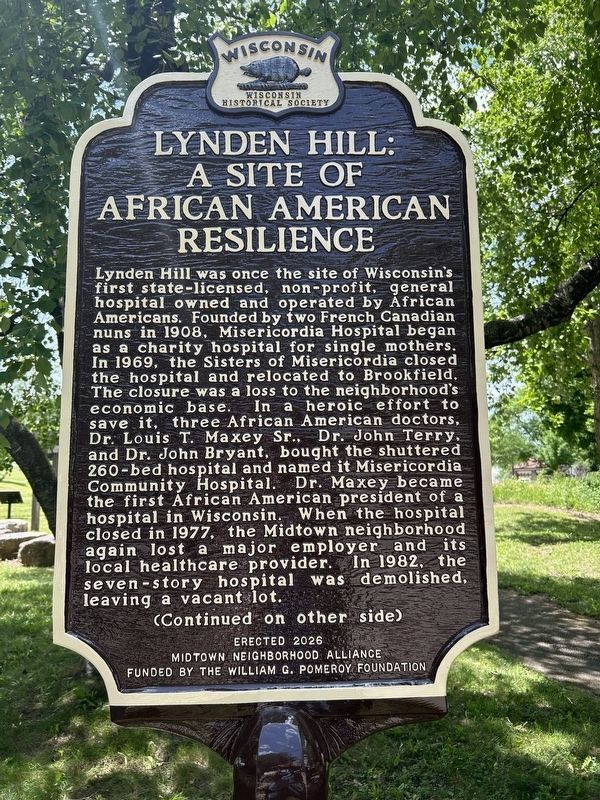
Lynden Hill was once the site of Wisconsin’s first state-licensed, non-profit, general hospital owned and operated by African Americans. Founded by two French Canadian nuns in 1908, Misericordia Hospital began as a charity hospital for single mothers. In 1969, the Sisters of Misericordia closed the hospital and relocated to Brookfield. The closure was a loss to the neighborhood’s economic base. In a heroic effort to save it, three African American doctors, Dr. Louis T. Maxey Sr., Dr. John Terry, and Dr. John Bryant, bought the shuttered 260-bed hospital and named it Misericordia Community Hospital. Dr. Maxey became the first African American president of a hospital in Wisconsin. When the hospital closed in 1977, the Midtown neighborhood again lost a major employer and its local healthcare provider. In 1982, the seven-story hospital was demolished, leaving a vacant lot.
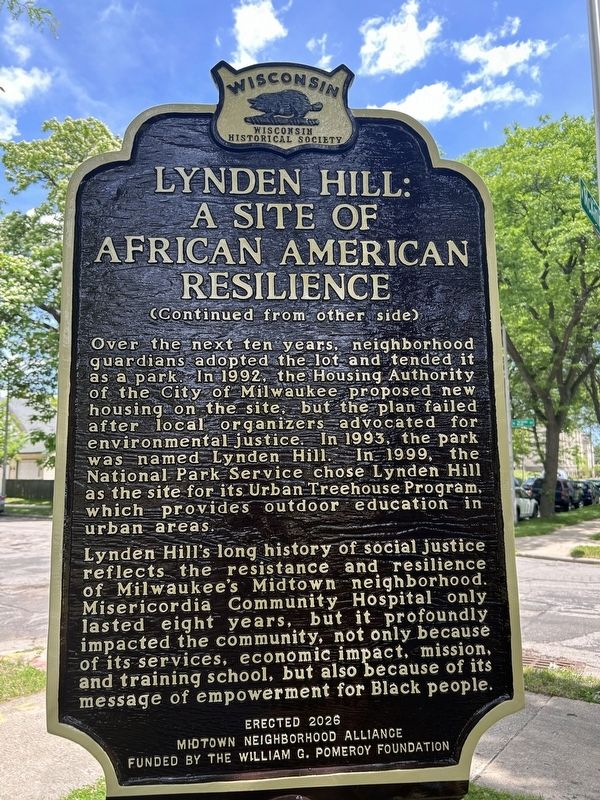
Over the next ten years, neighborhood guardians adopted the lot and tended it as a park. In 1992, the Housing Authority of the City of Milwaukee proposed new housing on the site, but the plan failed after local organizers advocated for environmental
this page online
Lynden Hill’s long history of social justice reflects the resistance and resilience of Milwaukee’s Midtown neighborhood. Misericordia Community Hospital only lasted eight years, but it profoundly impacted the community, not only because of its services, economic impact, mission, and training school, but also because of its message of empowerment for Black people.
Erected 2026 by Midtown Neighborhood Alliance; Wisconsin Historical Society; William G. Pomeroy Foundation. (Marker Number 639.)
Topics and series. This historical marker is listed in these topic lists: African Americans • Religion & Religious Structures • Science & Medicine • Women. In addition, it is included in the William G. Pomeroy Foundation, and the Wisconsin Historical Society series lists.
Location. 43° 2.821′ N, 87° 56.43′ W. Marker is in Milwaukee, Wisconsin, in Milwaukee County. It is in Midtown.
Photographed by Mallory Hanson, June 13, 2026
2. Lynden Hill: A Site of African American Resilience Marker

Regionally, this marker is in Southeast Wisconsin. It is also in the American Midwest and in the Corn Belt. Globally, it is in North America, on the Great Lakes, in the Western Hemisphere, in the Western World, and in the Anglosphere. Historically, it finds itself in what was once the territory of the Mississippian Culture and also the Northwest Territory.
Other nearby markers. At least 8 other markers are within walking distance of this marker: St. Michael's Roman Catholic Church (approx. ¼ mile away); 15th Street Freedom House (approx. 0.4 miles away); Captain Frederick Pabst (approx. 0.6 miles away); Milwaukee's Fair Housing Movement (approx. 0.7 miles away); Stop on the Underground Railroad (approx. ¾ mile away); At the State Fair on these Grounds (approx. ¾ mile away); Pabst Brewery (approx. 0.8 miles away); Police Confrontation with Marchers
Photographed by Devon Polzar, August 4, 2026
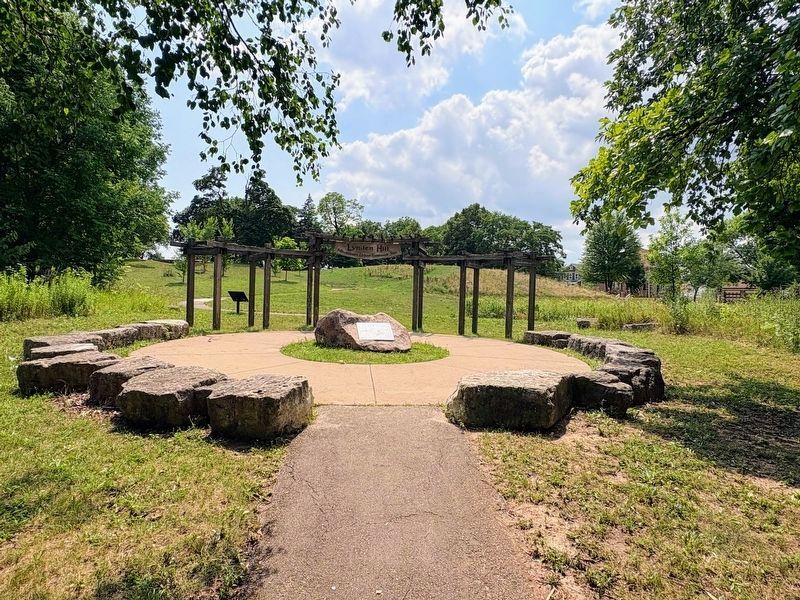
3. Lynden Hill
Photographed by Devon Polzar, 2026
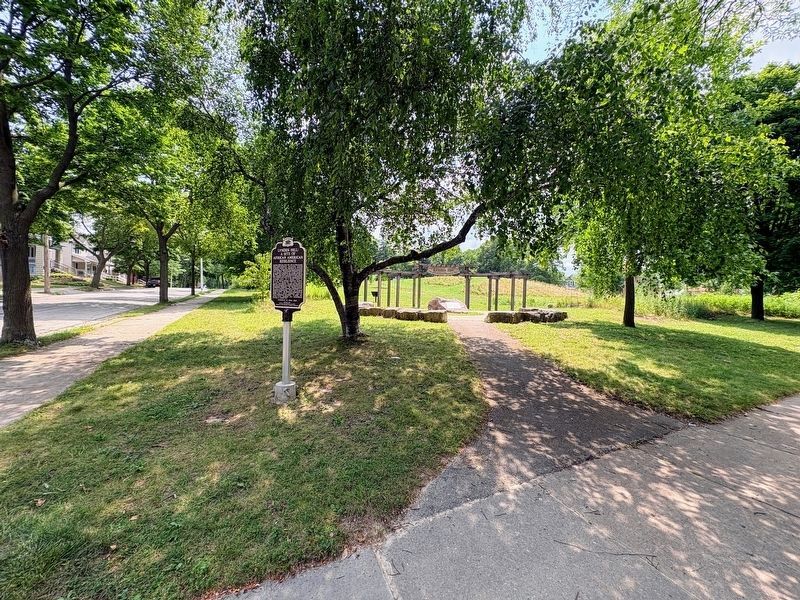
4. Lynden Hill: A Site of African American Resilience Marker
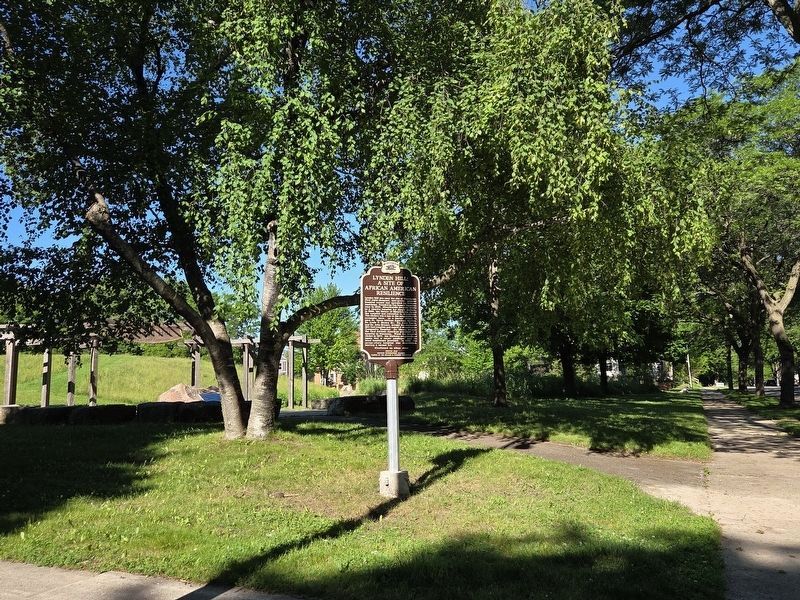
Photographed by Greta Schassler, June 19, 2026
5. Lynden Hill: A Site of African American Resilience Marker
Credits. This page was last revised on August 6, 2026. It was originally submitted on June 16, 2026, by Mallory Hanson of Madison, Wisconsin. This page has been viewed 54 times since then. Photos: 1, 2. submitted on June 16, 2026, by Mallory Hanson of Madison, Wisconsin. 3, 4. submitted on August 5, 2026, by Devon Polzar of Port Washington, Wisconsin. 5. submitted on August 5, 2026, by Greta Mulder of Milwaukee, Wisconsin. • Devry Becker Jones was the editor who published this page.
Editor’s want-list for this marker. A wide shot of the marker in context. • Can you help?
