
Masson-Angers in Gatineau in Outaouais, Québec — Central Canada (French-Canadian)
L'industrie du mica
La Maison Hector-Viau
Photographed by Cosmos Mariner, May 26, 2024
1. L'industrie du mica Marker

825, chemin de Masson
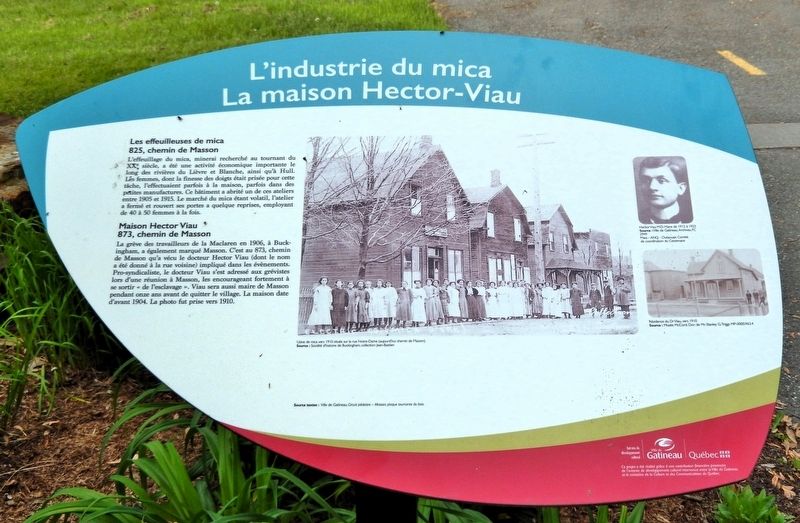
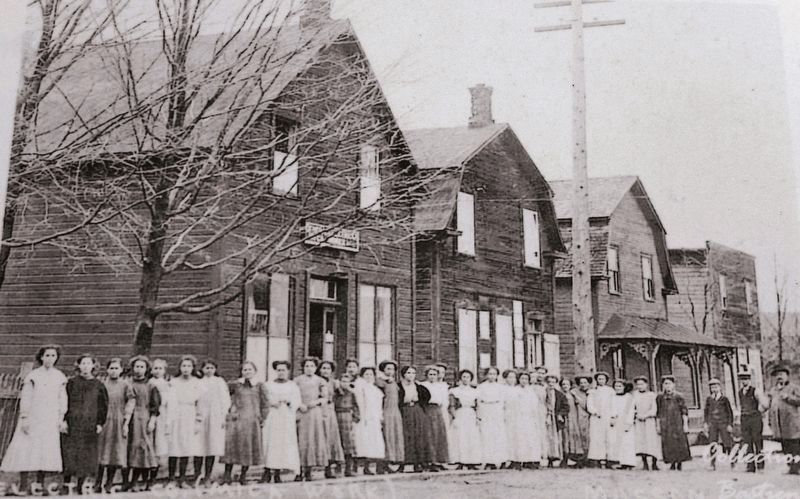
L'effeuillage du mica, minerai recherché au tournant du XXe, siècle, a été une activité économique importante le long des rivières du Lièvre et Blanche, ainsi qu'à Hull. Les femmes, dont la finesse des doigts était prisée pour cette tâche, l'effectuaient parfois à la maison, parfois dans des petites manufactures. Ce bâtiment a abrité un de ces ateliers entre 1905 et 1915. Le marché du mica étant volatil, l'atelier a fermé et rouvert ses portes a quelque reprises, employant de 40 à 50 femmes à la fois.
Maison Hector Viau
873, chemin de Masson
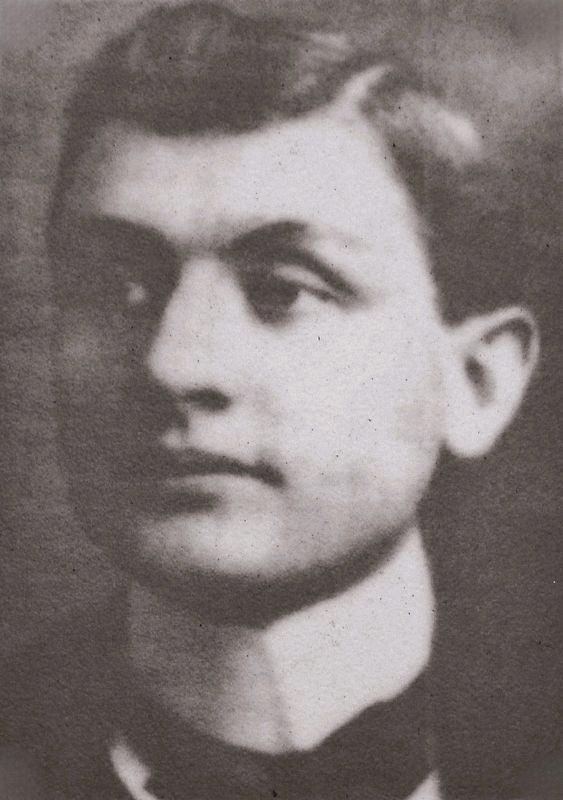
La grève des travailleurs de la Maclaren en 1906, à Buckingham, a également marqué Masson. C'est au 873, chemin de Masson qu'a vécu le docteur Hector Viau (dont le nom a été donné à la rue voisine) impliqué dans les évènements. Pro-syndicaliste, le docteur Viau s'est adressé aux grévistes lors d'une réunion à Masson, les encourageant fortement à se sortir « de l'esclavage ». Viau sera aussi maire de Masson pendant onze ans avant de quitter le village. La maison date d'avant 1904. La photo fut prise vers 1910.
The Mica Industry
The Hector-Viau House
Mica Peelers
825 Masson Road
Mica
this page online
Hector Viau House
873 Masson Road
The strike of the Maclaren workers in 1906, in Buckingham, also made its mark on Masson. It was at 873 Masson Road that Dr. Hector Viau (after whom the nearby street is named) lived, and he was involved in the events. A pro-union supporter, Dr. Viau spoke to the strikers at a meeting in Masson, strongly encouraging them to free themselves from “slavery.” Viau would also serve as mayor of Masson for eleven years before leaving the village. The house dates from before 1904. The photo was taken around 1910.
Erected by Ville de Gatineau, Québec, Entente de développement culturel.
Topics. This historical marker is listed in these topic lists:
Société d’histoire de Buckingham, collection Jean-Bastien
2. Marker detail: Usine de mica vers 1910 située sur la rue Notre-Dame (aujourd’hui chemin de Masson).
Mica factory around 1910 located on Notre-Dame Street (today Masson Road).
Location. 45° 32.747′ N, 75° 25.31′ W. Marker is in Gatineau, Québec, in Outaouais. It is in Masson-Angers. It can be reached from the intersection of Chemin de Masson (Québec Route 315) and Chemin de Montréal Ouest ( Route 148), on the right when traveling south. The marker is on the recreational trail that parallels Chemin de Montréal Ouest. Touch for map. Marker is in this post office area: Gatineau QC J8M 1A0, Canada. Touch for directions.

Regionally, this marker is in the Ottawa Metropolitan Area and in the Outaouais & Eastern Townships. It is also in Central Canada. Globally, it is in North America, the Great North Woods, the Western Hemisphere, and the Western World. Historically, it finds itself in what was once a British colony, the Viceroyalty of New France, the Haudenosaunee (Iroquois) Confederacy, and Rupert’s Land.
Other nearby markers. At least 8 other markers are within 5 kilometers of this marker, measured as the crow flies: Fondation de la municipalité de Masson (a few steps from this marker); L'hôtellerie à Masson
Ville de Gatineau Archives
3. Marker detail: Hector Viau M.D., Maire de 1912 à 1923.
Hector Viau M.D., Mayor from 1912 to 1923.
Also see . . . The Mines of Gatineau Park (Electric Archaeology).
(S. Graham – appeared in Gatineau Park Chronicle v2, 2009 v4-5) Excerpt: The same geology that makes Gatineau Park a stunning panorama, from the Eardley Escarpment to the rolling landscape of the Meech Creek Valley, also made the area attractive to miners in the 19th and early 20th centuries. The most commonly mined mineral was mica. In the 19th century, mica was valuable for its use as a heatproof window material and, later, as an electrical insulator. Mica mined in the park was transported to Hull, where it was cut and processed. However, only(Submitted on June 18, 2026, by Cosmos Mariner of Cape Canaveral, Florida.)a few of the more than 14 known mines in the park were actually exploited on what can be considered an industrial scale. Many were little more than surface scratchings by farmers looking to create another source of income. The Fleury mine, opened in 1898 by M.C. Brown of Cantley, was one of the larger mica operations. Twenty tons of mica were removed from two pits over 30 feet deep; one crystal of mica was removed from this mine that reportedly weighed more than 500 pounds.Courtesy Musée McCord, Mr. Stanley G. Triggs4. Marker detail: Résidence du Dr. Viau, vers 1910.Dr. Viau's residence, around 1910.

Photographed by Cosmos Mariner, May 26, 2024
5. L'industrie du mica Marker
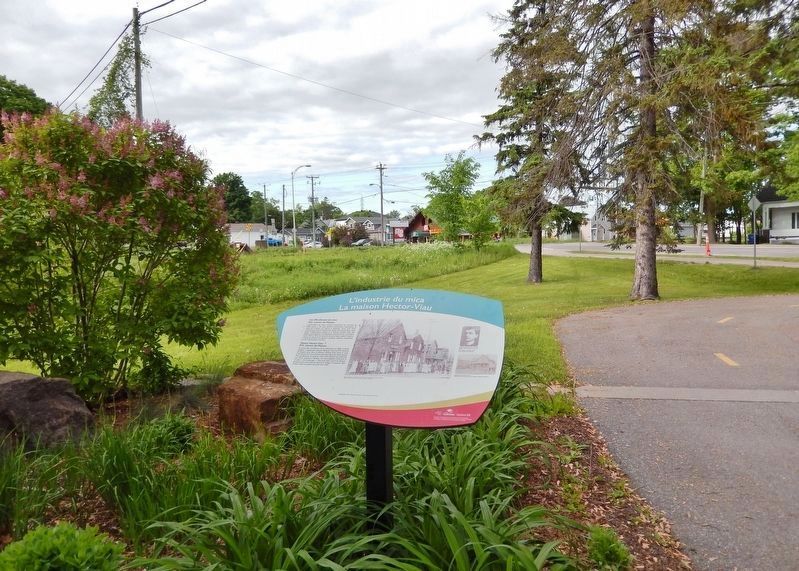
Looking north; Chemin de Masson is in the right background.
Credits. This page was last revised on June 18, 2026. It was originally submitted on June 17, 2026, by Cosmos Mariner of Cape Canaveral, Florida. This page has been viewed 15 times since then. Photos: 1, 2, 3. submitted on June 17, 2026, by Cosmos Mariner of Cape Canaveral, Florida. 4. submitted on June 18, 2026, by Cosmos Mariner of Cape Canaveral, Florida. 5. submitted on June 17, 2026, by Cosmos Mariner of Cape Canaveral, Florida.
