Manassas Park, Virginia — The American South (Mid-Atlantic)
The Naylor Family
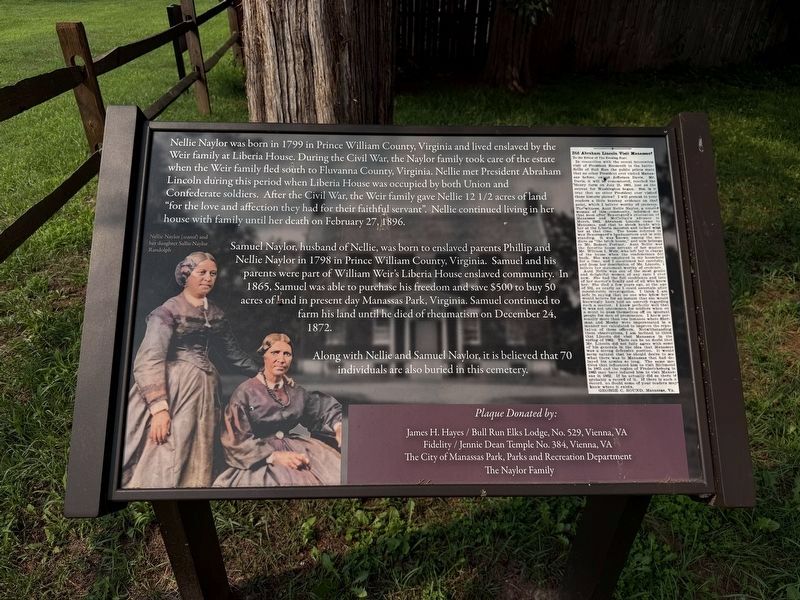
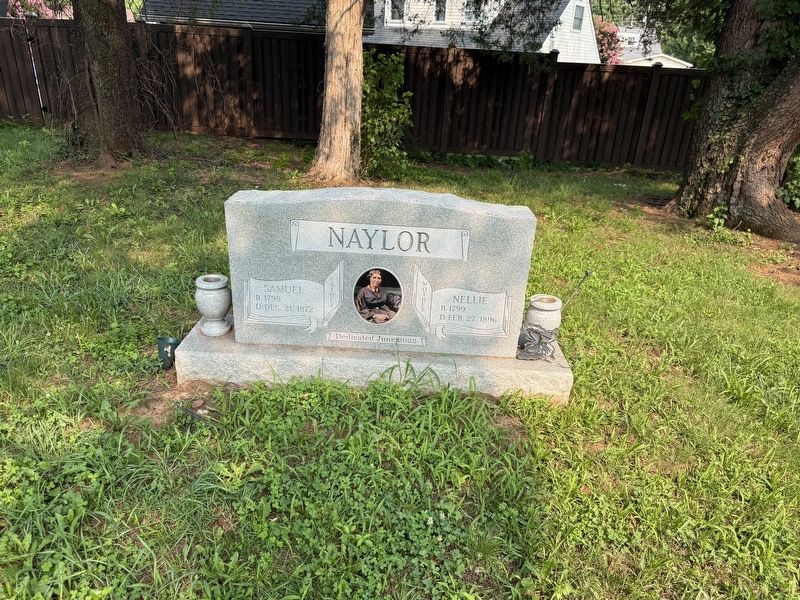
Nellie Naylor was born in 1799 in Prince William County, Virginia and lived enslaved by the Weir family at Liberia House. During the Civil War, the Naylor family took care of the estate when the Weir family fled south the Fluvanna County, Virginia. Nellie met President Abraham Lincoln during this period when Liberia House was occupied by both Union and Confederate soldiers. After the Civil War, the Weir family gave Nellie 12 1/2 acres ofland "for the love and affection they had for their faithful servant". Nellie continued living in her house with family until her death on February 27, 1896.
Samuel Naylor, husband of Nellie, was born to enslaved parents Phillip and Nellie Naylor in 1798 in Prince William County. Samuel and his parents were part of William Weir's Liberia House, enslaved community. In 1865, Samuel was able to purchase his freedom and save $500 to buy 50 acres of land in present day Manassas Park, Virginia. Samuel continued to farm his land until he died of rheumatism on December 24, 1872.
Along with Nellie and Samuel Naylor, it is believed that 70 individuals are also buried in this cemetery.
[Sidebar:]
Did Abraham Lincoln Visit Manassas?
To the Editor of The Evening Star:
Inconnection with the recent interesting visit of President Roosevelt to the battlefields of Bull Run the public prints state that no other President ever visited Manassas before, except Jefferson Davis. Mr. Davis, it will be remembered, reached the "Henry farm" on July 21, 1861, just as the retreat for Washington began. But is it true that no other President ever visited these historic plains? I will present to your readers a little hearsay evidence on that point, which I believe worthy of credence. The witness, Aunt Nellie Naylor, a colored woman of this community, informed me that soon after Beauregard's evacuation of Manassas and McClellan's advance in March, 1862, Abraham Lincoln came to Manassas, and that he shook hands with her at the Liberia mansion and talked with her at that time. The house referred to was Beauregard's headquarters and is still standing. It was known among the soldiers as "the brick house," and now belongs to Mr. Robert Portner. Aunt Nellie was the favorite house servant of her master, Mr. William I. Weir, who left her in charge of the house when the confederates fell back. She was employed in my household for
Click or scan to see
this page onlinea time, and I questioned her carefully, and from her description of Mr. Lincoln, I believe her statement worthy of credence.
Aunt Nellie was one of the most gentle and delightful women of any race I ever knew. She had the full confidence and love of her master's family and of all who knew her. She died a few years ago, at the age of 102, as nearly as I could ascertain after considerable investigation. I think I am safe in saying that no one who knew her would believe for an instant that she would knowingly have told an untruth regarding such a matter. I know perfectly well that it was not uncommon for soldiers when on a scout to pass themselves off on ignorant people for men of prominence. I knew personally more than one instance where Sherman and Mosby were impersonated in a manner not calculated to improve the reputation of those officers. Notwithstanding these observations, I am inclined to think that Lincoln did visit Manassas in the spring of 1862. There can be no doubt that Mr. Lincoln did not fully agree with some of his generals in the idea that Manassas was a strong defensive position. It would seem natural that he shoulddesire to see what there was in Manassas that had delayed his armies so long. The same motives that influenced him to visit Richmond in 1865 and the region of Fredericksburg in 1863 may have induced him to visit Manassas in 1862. If he actually did so there is probably a record of it. If there is such a record, no doubt some of your readers may know where it exists.
George C. Round, Manassas, Va.
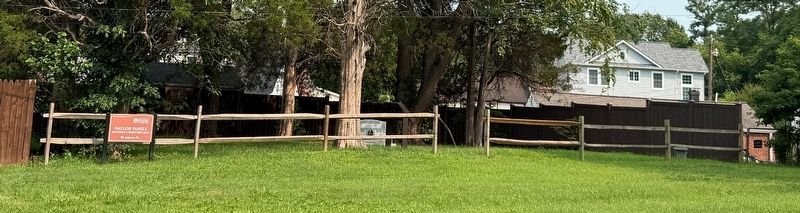
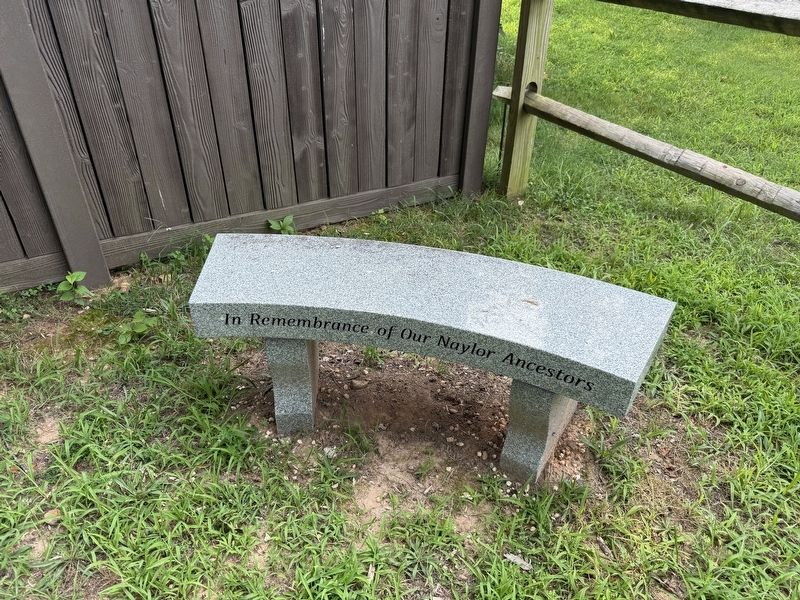
Erected by James H. Hayes; Bull Run Elks Lodge, No. 529, Vienna, VA; Fidelity; Jennie Dean Temple No. 384, Vienna, VA; The City of Manassas Park, Parks and Recreation Department; The Naylor Family.
Topics. This historical marker is listed in these topic lists: African Americans • Cemeteries & Burial Sites • Settlements & Settlers • War, US Civil. A significant historical date for this entry is February 27, 1896.
Location. 38° 46.927′ N, 77° 27.678′ W. Marker is in Manassas Park, Virginia. It is on Adams Street 0.1 miles south of Spruce Street, on the left when traveling south. Touch for map. Marker is at or near this postal address: 99 Adams Street, Manassas VA 20111, United States of America. Touch for directions.

Regionally, this
Other nearby markers. At least 8 other markers are within one mile of this marker, measured as the crow flies: Veterans Memorial (about 600 feet away, measured in a direct line); Mitchell's Ford (approx. 0.6 miles away); Wilmer McLean after the Civil War (approx. one mile away); Weir Family Cemetery (approx. one mile away); Creating a Garden (approx. one mile away); Enslaved of Liberia (approx. one mile away); Wilmer McLean's Yorkshire (approx. 1.1 miles away); McLean Farm (approx. 1.1 miles away).
Other markers no longer nearby. Battle of Bull Run Bridge (was approx. 0.9 miles away but has been permanently removed); Turberville Memorial Garden (was approx. 1.1 miles away but has been replaced with another marker now near it); a different marker also named Enslaved of Liberia (was approx. 1.1 miles away but has been replaced with another marker now near it); a different marker also named Wilmer McLean’s Yorkshire (was approx. 1.1 miles away but has been replaced with another marker now near it).
Credits. This page was last revised on July 15, 2026. It was originally submitted on July 14, 2026, by Devry Becker Jones of Washington, District of Columbia. This page has been viewed 22 times since then. Photos: 1, 2, 3, 4. submitted on July 14, 2026, by Devry Becker Jones of Washington, District of Columbia.
