Daytona Beach in Volusia County, Florida — The American South (South Atlantic)
Dr. Mary McLeod Bethune
Photographed by Brandon Cross, January 7, 2026
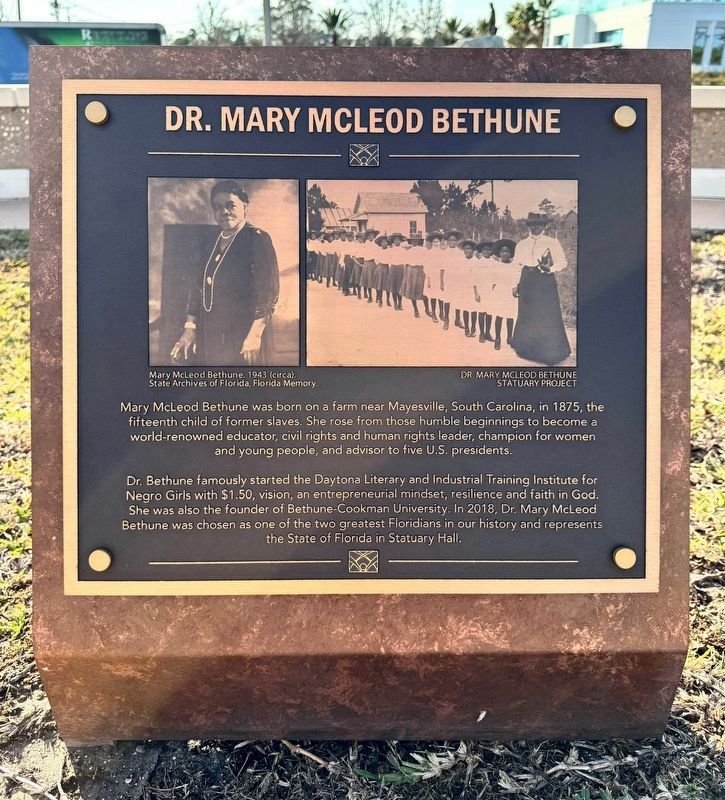
1. Dr. Mary McLeod Bethune Marker
Mary McLeod Bethune was born on a farm near Mayesville, South Carolina, in 1875, the fifteenth child of former slaves. She rose from those humble beginnings to become a world-renowned educator, civil rights and human rights leader, champion for women and young people, and advisor to five U.S. presidents.
Dr. Bethune famously started the Daytona Literary and Industrial Training Institute for Negro Girls with $1.50, vision, an entrepreneurial mindset, resilience and faith in God. She was also the founder of Bethune-Cookman University. In 2018, Dr. Mary McLeod Bethune was chosen as one of the two greatest Floridians in our history and represents the State of Florida in Statuary Hall.
Erected 2025.
Topics. This historical marker is listed in these topic lists: African Americans • Civil Rights • Education • Women. A significant historical date for this entry is July 10, 1875.
Location. 29° 13.026′ N, 81° 1.286′ W. Marker is in Daytona Beach, Florida, in Volusia County. It is at the intersection of North Beach Street and Dr Mary McLeod Bethune Boulevard, on the right when traveling north on North Beach Street.
this page online

Regionally, this marker is in Florida’s First Coast. It is also in the American South and on the Eastern Seaboard. Globally, it is in the North Atlantic Region, North America, a Gulf of Mexico state, the Western Hemisphere, the Western World, and the Anglosphere. Historically, it finds itself in what was once New Spain, the territory of the Mississippian Culture, one of the Confederate States of America, and the Antebellum South.
Other nearby markers. At least 8 other markers are within walking distance of this marker: Old Kings Road (within shouting distance of this marker); United States Post Office (approx. 0.2 miles away); 174 North Beach Street (approx. ¼ mile away); Revolutionary Soldiers Memorial (approx. ¼ mile away); Persian Gulf War Memorial (approx. ¼ mile away); 160 North Beach Street (approx. ¼ mile away); 150 North Beach Street (approx. ¼ mile away); Valor (approx. ¼ mile away). Touch for a list and map of all markers in Daytona Beach.
Another marker is no longer nearby.
Photographed by Brandon Cross, January 7, 2026
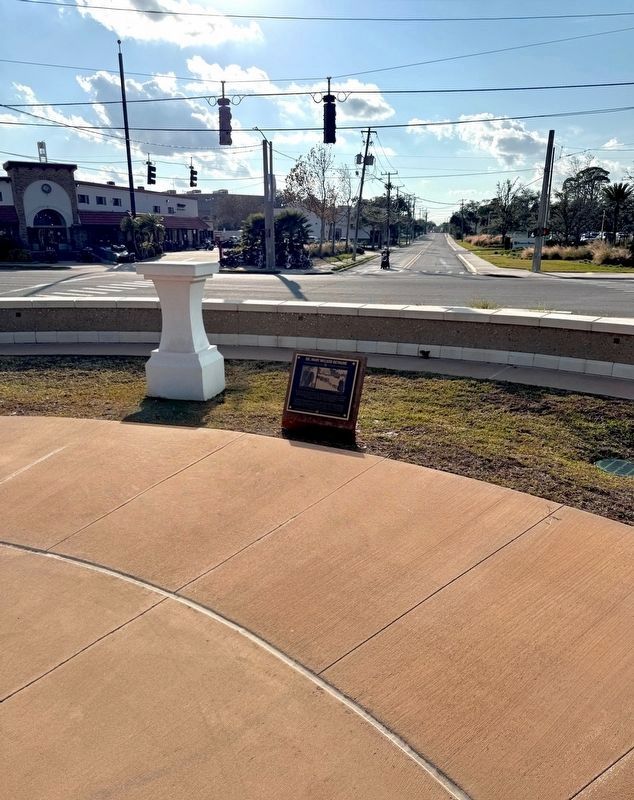
2. Dr. Mary McLeod Bethune Marker - wide view
Related marker. Click here for another marker that is related to this marker.
Also see . . .
1. Dr. Mary McLeod Bethune - Our Founder (Bethune-Cookman University). Excerpt:
Dr. Bethune famously started the Daytona Literary and Industrial Training Institute for Negro Girls on October 3, 1904 with $1.50, vision, an entrepreneurial mindset, resilience and faith in God. She created “pencils” from charred wood, ink from elderberries, and mattresses from moss-stuffed corn sacks. Her first students were five little girls and her five-year-old son, Albert Jr. In less than two years, the school grew to 250 students. Recognizing the health disparities and lack of medical treatment available to African Americans in Daytona Beach, she also founded the Mary McLeod Hospital and Training School for Nurses, which at the time was the only school of its kind that served African American women on the east coast.(Submitted on July 25, 2026.)
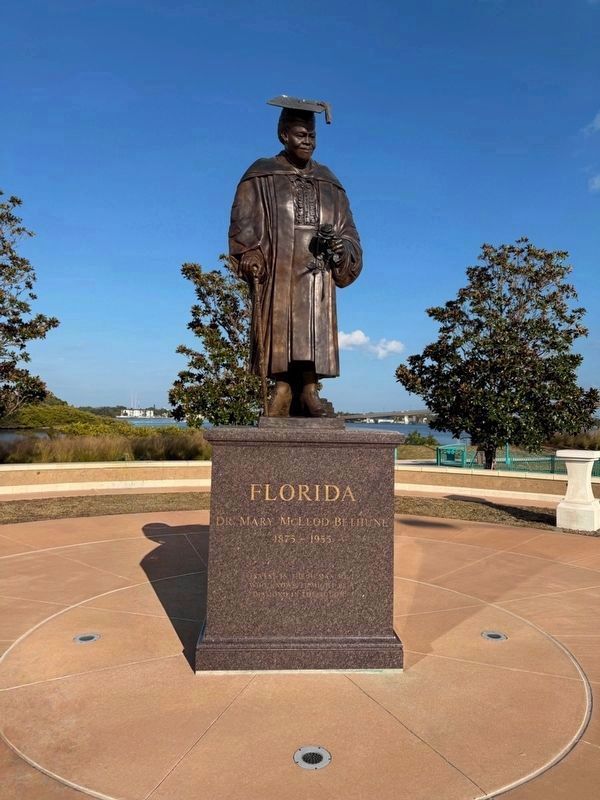
Daytona Normal would continue to increase in popularity, and merged with the Cookman Institute of Jacksonville, Florida in 1923 and becameBethune-Cookman College.Photographed by Brandon Cross, January 7, 20263. Dr. Mary McLeod Bethune StatueThis original bronze work of art was created by Puerto Rican native Master Sculptor Nilda M. Comas,… It was created as a model for the three-ton marble sculpture she won the commission to carve of Dr. Mary McLeod Bethune that was installed on July 13, 2022, in National Statuary Hall in the U.S. Capitol building in Washington, D.C., one of two figures chosen to represent the state of Florida. - City of Daytona Beach
2. Mary McLeod Bethune (National Women’s History Museum). Excerpt:
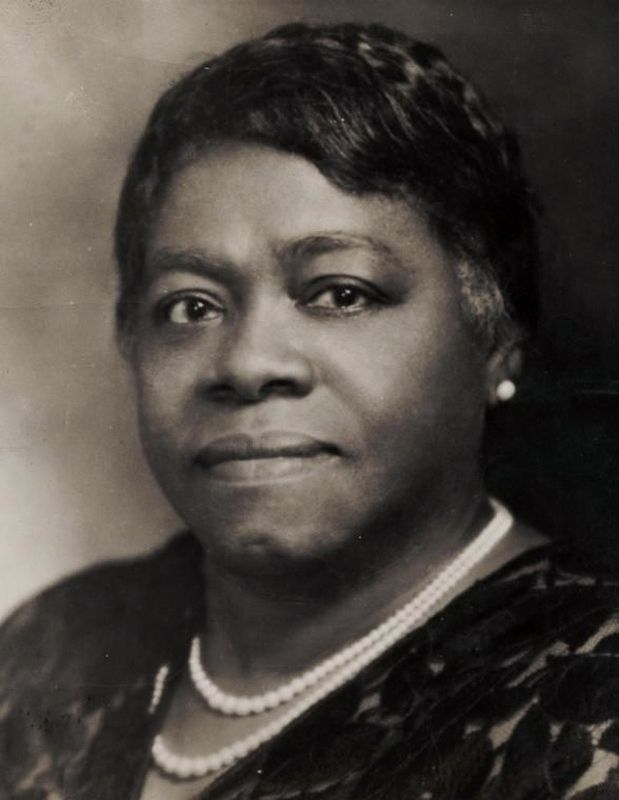
A champion of racial and gender equality, Bethune founded many organizations and led voter registration drives after women gained the vote in 1920, risking racist attacks. In 1924, she was elected president of the National Association of Colored Women’s Clubs, and in 1935, she became the founding president of the National Council of Negro Women. Bethune also played a role in the transition of Black voters from the Republican Party—“the party of Lincoln”—to the Democratic Party during the Great Depression. A friend of Eleanor Roosevelt, in 1936, Bethune became the highest ranking African American woman in government when President Franklin Roosevelt named her director of Negro Affairs of the National Youth Administration, where she remained until 1944. She was also a leader of FDR’s unofficial “black cabinet.” In 1937 Bethune organized a conference on the Problems of the Negro and Negro Youth, and fought to end discrimination and lynching. In 1940, she became vice president of the National Association(Submitted on July 25, 2026.)for the Advancement of Colored Persons (NAACP), a position she held for the rest of her life. As a member of the advisory board that in 1942 created the Women’s Army Corps, Bethune ensured it was racially integrated. Appointed by President Harry S. Truman, Bethune was the only woman of color at the founding conference of the United Nations in 1945. She regularly wrote for the leading African American newspapers, the Pittsburgh Courier and the Chicago Defender.courtesy Schomburg Center for Research in Black Culture, New York Public Library, circa 19434. Dr. Mary McLeod Bethune
Credits. This page was last revised on July 25, 2026. It was originally submitted on July 25, 2026, by Andrew Ruppenstein of Lamorinda, California. This page has been viewed 19 times since then. Photos: 1, 2, 3. submitted on July 25, 2026, by Andrew Ruppenstein of Lamorinda, California. 4. submitted on July 25, 2026.
