South Loop in Chicago in Cook County, Illinois — The American Midwest (Great Lakes)
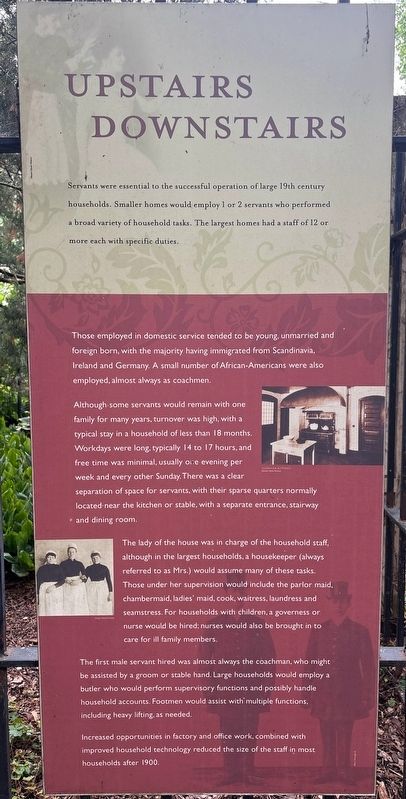
Upstairs Downstairs
Photographed by Sean P. Flynn, August 14, 2026
1. Upstairs Downstairs Marker
Those employed in domestic service tended to be young, unmarried and foreign born, with the majority having immigrated from Scandinavia, Ireland and Germany. A small number of African-Americans were also employed, almost always as coachmen.
Although some servants would remain with one family for many years, turnover was high, with a typical stay in a household of less than 18 months. Workdays were long, typically 14 to 17 hours, and free time was minimal, usually one evening per week and every other Sunday. There was a clear separation of space for servants, with their sparse quarters normally located near the kitchen or stable, with a separate entrance, stairway and dining room.
The lady of the house was in charge of the household staff, although in the largest households, a housekeeper (always referred to as Mrs.) would assume many of these tasks. Those under her supervision would include the parlor maid, chambermaid, ladies' maid, cook, waitress, laundress and seamstress. For households with children, a governess or nurse would be hired; nurses would also be brought in to care for ill family members.
The first male servant hired was almost always the coachman, who might be assisted by a groom or stable hand. Large households would employ a butler who would perform supervisory functions and possibly handle household accounts. Footmen would assist with multiple functions, including heavy lifting, as needed.
Increased opportunities in factory and office work, combined with improved household technology reduced the size of the staff in most households
this page online
Topics. This historical marker is listed in these topic lists: African Americans • Immigration • Women. A significant historical year for this entry is 1900.
Location. 41° 51.411′ N, 87° 37.253′ W. Marker is in Chicago, Illinois, in Cook County. It is in South Loop. It is on South Prairie Avenue 0.1 miles south of East 18th Street, on the right when traveling south. The marker is one of several posted along the Prairie Avenue-side fence of Chicago Women's Park. Touch for map. Marker is at or near this postal address: 1801 South Indiana Avenue, Chicago IL 60616, United States of America. Touch for directions.

Regionally, this marker is on Chicago’s South Side. It is also in the American Midwest. Globally, it is in North America, on the Great Lakes, in the Western Hemisphere, in the Western World, and in the Anglosphere. Historically, it finds itself in what was once the Viceroyalty of New France, the territory of the Mississippian Culture, and the Northwest Territory.
Other nearby markers. At least 8 other markers are within walking distance of this marker: In Chicago Palaces (here, next to this marker);
Photographed by Sean P. Flynn, August 14, 2026
2. Upstairs Downstairs Marker
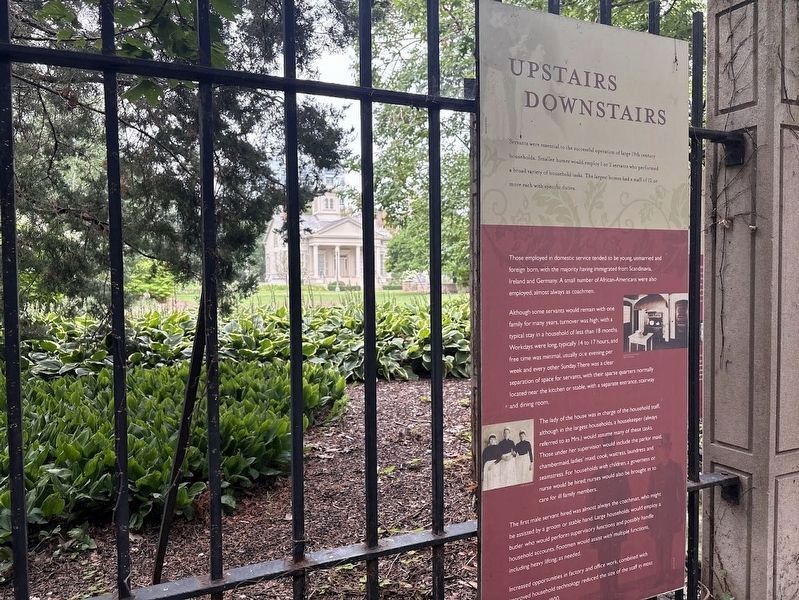
The Clarke-Ford House, the oldest structure in Chicago originally built within the city's limits, is in the background.
Photographed by Sean P. Flynn, August 14, 2026
3. Fence around Chicago Women's Park
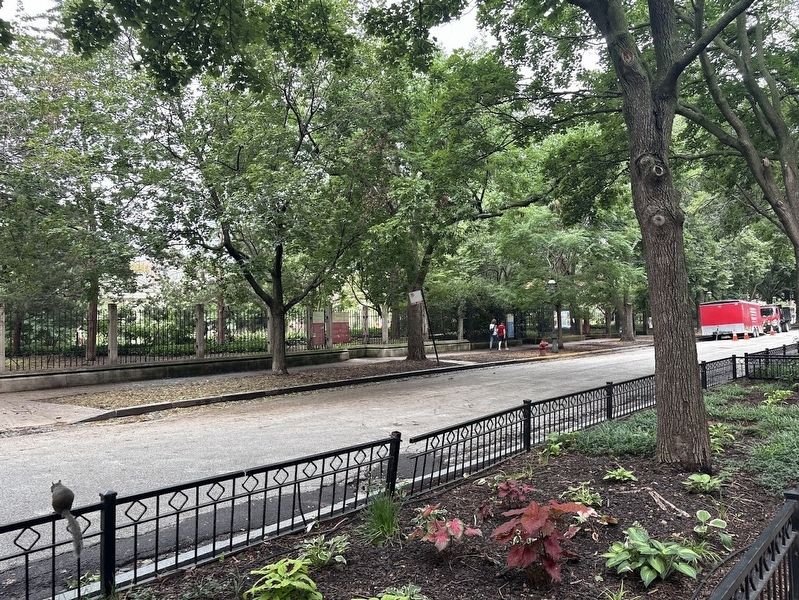
Markers are affixed to the fence along Prairie Avenue.
Credits. This page was last revised on August 19, 2026. It was originally submitted on August 19, 2026, by Sean P. Flynn of Oak Park, Illinois. This page has been viewed 10 times since then. Photos: 1, 2, 3. submitted on August 19, 2026, by Sean P. Flynn of Oak Park, Illinois.
