Naperville in Will County, Illinois — The American Midwest (Great Lakes)
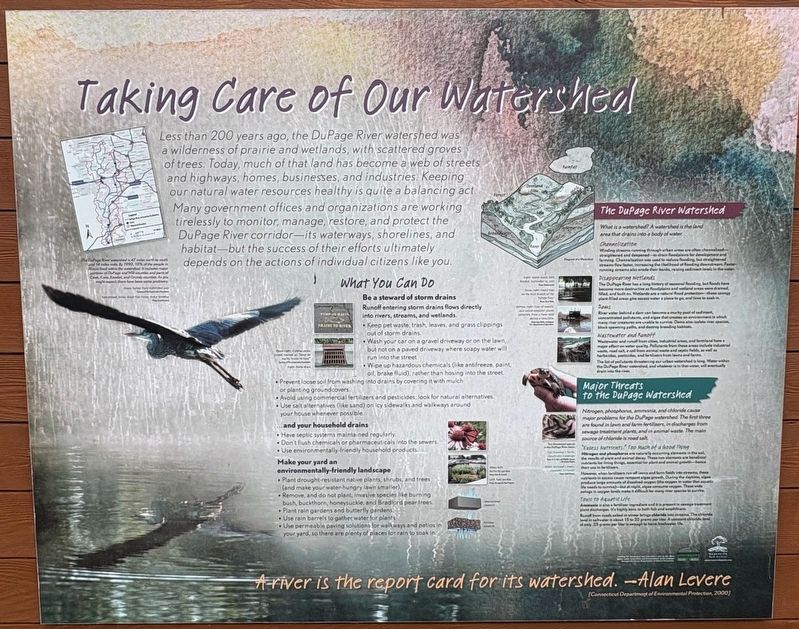
Taking Care of Our Watershed
Photographed by Sean P. Flynn, August 18, 2026
1. Taking Care of Our Watershed Marker
What You Can Do
Be a steward of storm drains
Runoff entering storm drains flows directly into rivers, streams, and wetlands.
• Keep pet waste, trash, leaves, and grass clippings out of storm drains.
• Wash your car on a gravel driveway or on the lawn, but not on a paved driveway where soapy water will run into the street.
• Wipe up hazardous chemicals (like antifreeze, paint, oil, brake fluid), rather than hosing into the street.
• Prevent loose soil from washing into drains by covering it with mulch or planting groundcovers.
• Avoid using commercial fertilizers
this page online
• Use salt alternatives (like sand) on icy sidewalks and walkways around your house whenever possible.
...and your household drains
• Have septic systems maintained regularly
• Don't flush chemicals or pharmaceuticals into the sewers
• Use environmentally-friendly household products.
Make your yard an environmentally-friendly landscape
• Plant drought-resistant native plants, shrubs, and trees (and make your water-hungry lawn smaller).
• Remove, and do not plant, invasive species like burning bush, buckthorn, honeysuckle, and Bradford pear trees.
• Plant rain gardens and butterfly gardens.
• Use rain barrels to gather water for plants.
• Use permeable paving solutions for walkways and patios in your yard, so there are plenty of places for rain to soak in.
The DuPage River Watershed
What is a watershed? A watershed is the land area that drains into a body of water.
Channelization
Winding streams running through urban areas are often channelized-straightened and deepened to drain floodplains for development and farming. Channelization was used to reduce flooding, but
Photographed by Sean P. Flynn, August 18, 2026
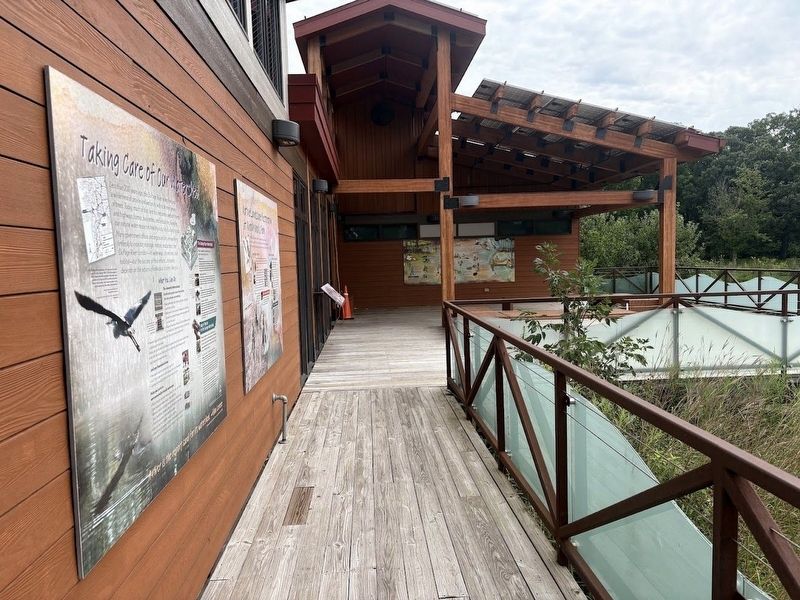
2. Markers on the back deck of the Knoch Knolls Nature Center
Disappearing Wetlands
The DuPage River has a long history of seasonal flooding, but floods have become more destructive as floodplains and wetland areas were drained, filled, and built on. Wetlands are a natural flood protection-these spongy plant-filled areas give excess water a place to go, and time to soak in.
Dams
River water behind a dam can become a murky pool of sediment, concentrated pollutants, and algae that creates an environment in which many river creatures are unable to survive. Dams also isolate river species, block spawning paths, and destroy breeding habitats.
Wastewater and Runoff
Wastewater and runoff from cities, industrial areas, and farmland have a major effect on water quality. Pollutants from these areas include industrial waste, road salt, e coli from animal waste and septic fields, as well as herbicides, pesticides, and fertilizers from lawns and farms.
The list of pollutants threatening our urban watershed is long. Water within
Photographed by Sean P. Flynn, August 18, 2026
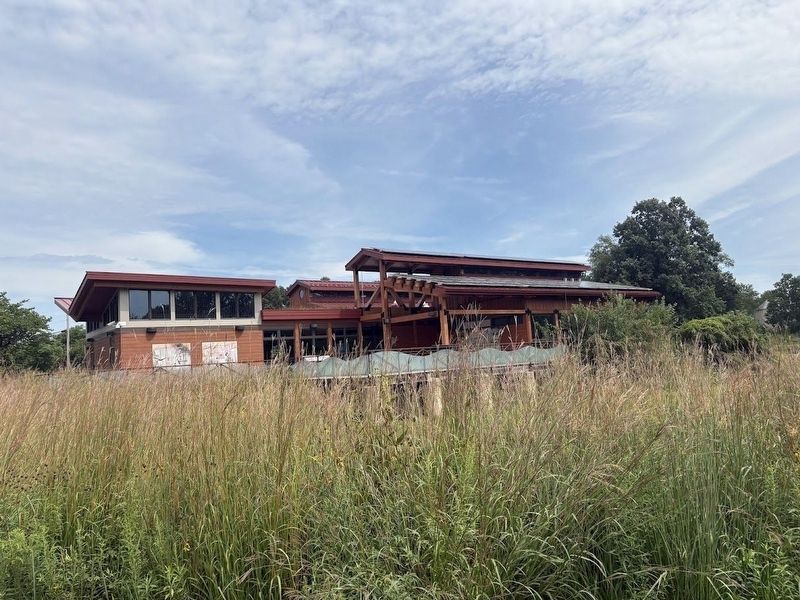
3. Knoch Knolls Nature Center
Major Threats to the DuPage Watershed
Nitrogen, phosphorus, ammonia, and chloride cause major problems for the DuPage watershed. The first three are found in lawn and farm fertilizers, in discharges from sewage treatment plants, and in animal waste. The main source of chloride is road salt.
"Excess Nutrients:" Too Much of a Good Thing
Nitrogen and phosphorus are naturally occurring elements in the soil, the results of plant and animal decay. These two elements are beneficial nutrients for living things, essential for plant and animal growth-hence their use in fertilizers.
However, when fertilizers run off lawns and farm fields into streams, these nutrients in excess cause rampant algae growth. During the daytime, algae produce large amounts of dissolved oxygen (the oxygen in water that aquatic life needs to survive)-but at night, algae consume oxygen. These wide swings in oxygen levels make it difficult for many river species to survive.
Toxic to Aquatic Life
Ammonia is also a fertilizer ingredient and it is present in sewage treatment plant discharges. It's highly taxic to both fish and amphibians.
Runoff from roads salted in winter brings chloride into streams. The chloride level in saltwater is about 15 to 20 grams per liter. A constant chloride level of only 25 grams per liter is enough to harm freshwater life.
A river is the report card for its watershed. —Alan Levere
Erected by Naperville Park District.
Topics. This historical marker is listed in these topic lists: Animals • Environment • Waterways & Vessels.
Location. 41° 42.838′ N, 88° 8.482′ W. Marker is in Naperville, Illinois, in Will County. It can be reached from Knoch Knolls Road 1.3 miles east of 95th Street, on the right when traveling east. The marker is affixed to the exterior of the Knoch Knolls Park Nature Center, on the rear part with a deck. Touch for map. Marker is at or near this postal address: 320 Knoch Knolls Road, Naperville IL 60565, United States of America. Touch for directions.

Regionally, this marker is in Greater Chicago. It is also in the American Midwest. Globally, it is in North America, on the Great Lakes, in the Western Hemisphere, in the Western World, and in the Anglosphere. Historically, it finds itself in what was once the territory of the Mississippian Culture and also the Northwest Territory.
Other nearby markers. At least 8 other markers are within walking distance of this marker: Native Landscape Restoration at Knoch Knolls Park (here, next to this marker); Green Builders Long Ago (a few steps from this marker); Where the Rivers Meet (a few steps from this marker); The Land Where the Rivers Meet (a few steps from this marker); A Reminder of Times Past (a few steps from this marker); Living Off the Land (a few steps from this marker); a different marker also named Where the Rivers Meet (a few steps from this marker); McDonald Creek (within shouting distance of this marker). Touch for a list and map of all markers in Naperville.
Also see . . . Knoch Knolls Nature Center. On the Naperville Park District website. (Submitted on August 21, 2026, by Sean P. Flynn of Oak Park, Illinois.)
Credits. This page was last revised on August 21, 2026. It was originally submitted on August 21, 2026, by Sean P. Flynn of Oak Park, Illinois. This page has been viewed 11 times since then. Photos: 1, 2. submitted on August 21, 2026, by Sean P. Flynn of Oak Park, Illinois. 3. submitted on August 20, 2026, by Sean P. Flynn of Oak Park, Illinois.
